
Teens should get off and walk an e-bike whenever riding through the space would make people move out of the way, make drivers or pedestrians guess what the rider is doing, or force the teen to handle too many decisions at once. Walking the bike is not a punishment. It is the clean switch from riding mode to people-first mode.
That switch matters because an e-bike can feel calm to the person holding the bars while still looking too fast, too close, or too unpredictable to everyone nearby. If slowing down still does not give enough space, visibility, or control, the better move is simple: step off, keep both hands on the bike, and push it through.
This page is not a full route-planning guide, a sidewalk law article, or another guide about avoiding complaints. For broader behavior around neighbors, schools, and shared spaces, use the teen e-bike complaint-avoidance guide. This page focuses on one decision: when a teen should stop riding and walk the bike instead.
Walk the Bike When Slow Riding Is Still Too Tight
Slow riding works when there is enough room for everyone to understand the situation. If the path is wide, the rider is visible, and people have space to keep moving normally, slowing down may be enough. But when the gap is narrow, the people nearby are not looking for bikes, or the rider has to thread through a doorway, corner, or crowd, slow riding can still feel pushy.
A practical test is this: if someone has to pause, sidestep, pull a child closer, move a stroller, or look back nervously because of the bike, the teen waited too long to switch modes. Getting off early makes the moment quieter. It also shows parents, school staff, and neighbors that the rider understands more than throttle and brakes.
The part teens often misread is that walking does not make the bike less cool. It protects the freedom to ride it again tomorrow. A teen who knows when to walk the bike looks more in control than a teen who tries to squeeze through every space still seated.

Crosswalks, School Gates, and Driveway Exits Need a Clear Stop
Crosswalks, school gates, parking-lot exits, apartment driveways, shop doors, and neighborhood corners all create the same problem: people or cars can appear from the side before the rider has enough time to react. These are not good places to prove balance or speed control.
If the teen needs to move through the same space as pedestrians, or if a driver might not see the bike until the last second, walking the e-bike is the safer signal. It tells everyone nearby, "I am not trying to rush through this gap." That signal can matter as much as the actual speed.
NHTSA bicycle safety guidance emphasizes predictable riding, watching for pedestrians, and slowing before crossings and turns. For teen e-bike use, the family version can be stricter: if the crossing feels crowded, unclear, or mixed with foot traffic, get off and walk it.
Push Through Crowded Spaces, Not Around Them
Some places are not meant to be ridden through, even if they are not marked with a huge warning sign. A crowded park entrance, a sidewalk outside a store, a court edge, a school pickup area, a narrow path near a field, or the front of a friend's house can change quickly. People turn, stop, talk, open doors, carry bags, and walk without thinking about a bike coming through.
In those spaces, the question is not "Can I fit?" The better question is "Will people feel like I gave them enough room?" If the honest answer is no, the teen should step off and push. That keeps the bike from becoming the thing everyone notices for the wrong reason.
This is also where friends can make a good decision harder. A group may want to keep rolling, cut through a crowd, or act like walking the bike is unnecessary. The teen who steps off first often looks more responsible than the group that keeps riding into a space where everyone else is on foot. For wider route choices, the teen e-bike route boundaries page can help families decide which places should be no-ride zones from the start.

Get Off When You Cannot See What Is Coming
A teen should not ride into a blind moment just because the bike can handle it. Parked cars, hedges, walls, garage exits, tight turns, parked trucks, and downhill corners can hide people, pets, smaller kids, and cars. If the rider cannot see the next few seconds clearly, pushing the bike is a better choice than guessing.
This matters most at low speed. Many messy e-bike moments do not happen on open roads. They happen while turning around, leaving a driveway, moving through a parking lot, or trying to pass a blocked sidewalk. The bike is heavy enough to surprise the rider, but close enough to people that a small mistake feels big.
The control check is simple: if the teen cannot stop smoothly before the hidden point, put both feet down, and push the bike past the blind spot. If the bike itself feels hard to turn, back up, or walk by hand, revisit the teen e-bike control guide before expanding the route.
Walk After a Warning, Sign, or Adult Reminder
If a sign says to dismount, if school staff asks riders to walk bikes on campus, if a park worker points to a rule, or if a parent says a certain area is walking-only, the decision is already made. The teen should get off and push without turning it into a debate in the moment.
Arguing while seated on the bike makes the rider look less in control. Getting off first changes the tone. It says the teen can respond to the place, not just the bike. Later, a parent can check the rule, ask the school, or adjust the route. But in the moment, walking the bike keeps a small reminder from becoming a bigger restriction.
The same idea applies at school racks and crowded entrances. Riding all the way up to the rack can look careless if other students are walking nearby. The teen e-bike parking at school guide covers locks and racks in more detail. Here, the rule is simpler: ride to the edge of the area, then walk the bike into place.

If the Bike Feels Wrong, Stop Riding and Push It
Walking is not only for crowded places. It is also the right choice when the bike feels wrong. If the brakes feel soft, the tire looks low, the chain sounds strange, the handlebar feels loose, the kickstand is dragging, or a backpack strap is getting near the wheel, the teen should stop riding and push the bike to a safe place.
This is where pride can get in the way. A teen may want to finish the ride, avoid looking dramatic, or keep up with friends. But a small mechanical problem is much easier to handle while walking than while trying to ride through it. The smart move is to stop, move out of the way, call or message a parent if needed, and avoid turning a small issue into a crash or damage.
Parents can make this easier by making "push it home or to a safe pickup spot" part of the house rule before the first problem happens. That way, the teen does not feel like walking the bike means they failed. It means they followed the plan.
Choose a Bike a Teen Can Handle Off the Motor
When families compare an electric bike for a teen, they should think beyond how the bike feels while moving. The rider also needs to push it, turn it around, hold it upright, park it, restart it, and walk it through places where riding is not the right move.
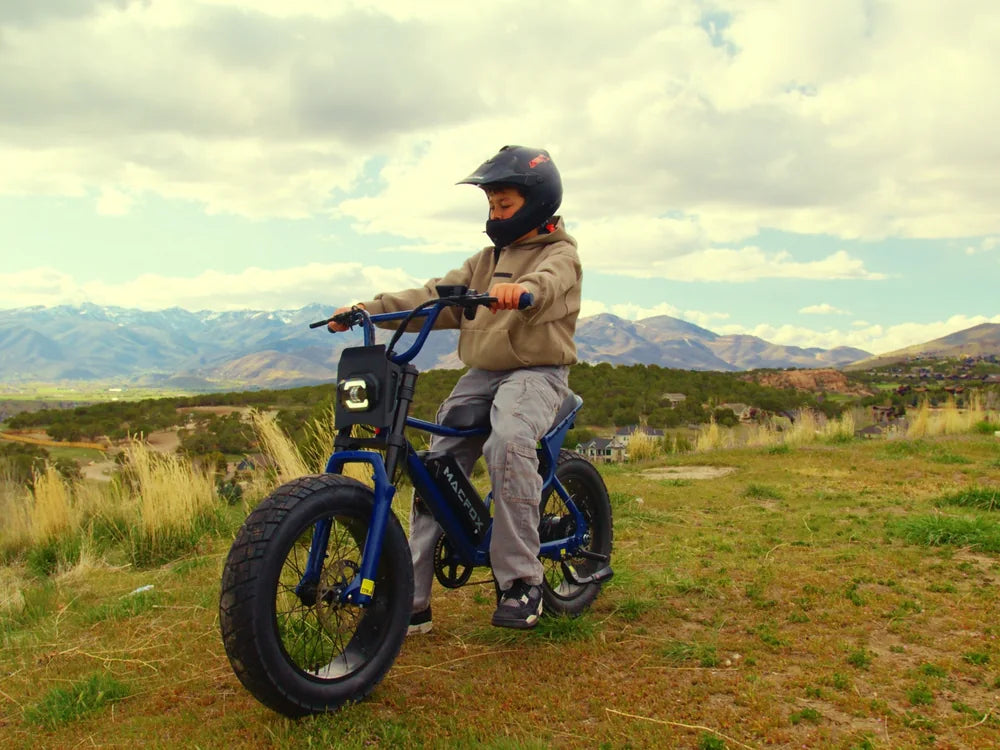
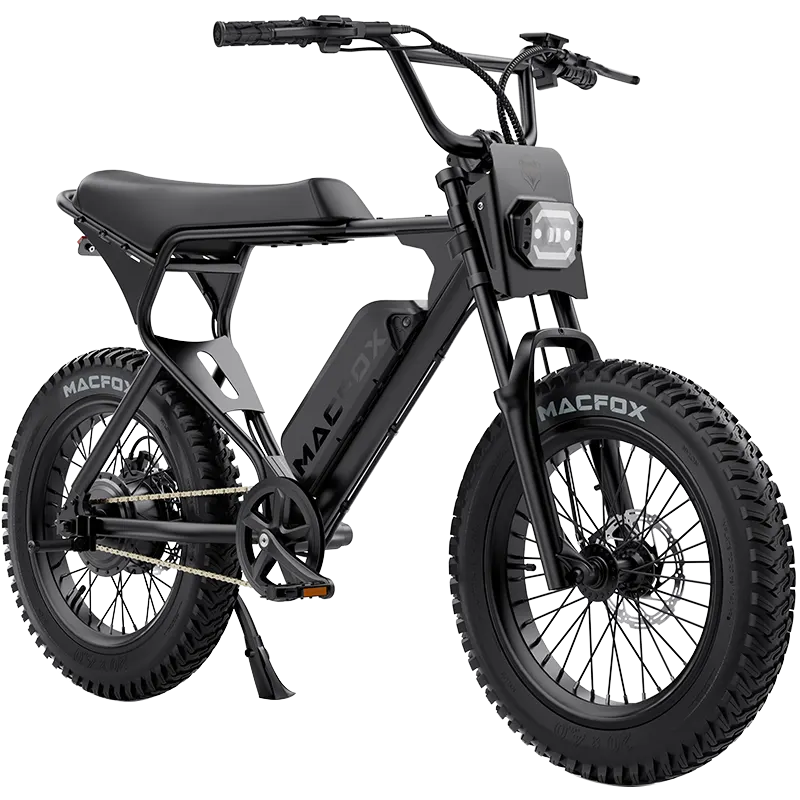
That is where product fit should stay practical. The Macfox M16 eBike fits the smaller-body, easier-control role for younger or shorter teen riders who need a lower barrier to handling the bike. The Macfox X1S eBike fits daily neighborhood riding with classic moped-style street presence. The Macfox X7 eBike adds wider fat-tire stability and a bigger visual presence for riders ready for a larger platform.
None of those choices removes the need to walk the bike in the right places. A stable bike still needs a rider who can read the scene. The best teen e-bike setup is one where the rider feels independent while riding and responsible enough to step off when the space asks for it.
FAQ
When should a teen always walk an e-bike?
A teen should walk an e-bike when the space is crowded, narrow, unclear, controlled by a sign or adult reminder, mixed with pedestrians, or affected by a bike problem that makes riding uncertain.
Should teens walk an e-bike through a crosswalk?
If the crosswalk is crowded, near a school, hard for drivers to see, or mixed with people walking, yes. Walking makes the teen's movement clearer and gives everyone more time to react.
Is riding very slowly the same as walking the bike?
No. Riding slowly still takes up moving space and can still make people step aside. Walking the bike changes the signal: the teen is moving as a pedestrian and putting people first.
What should a teen do if a teacher, guard, or park worker says to get off?
Get off first and push the bike. The rule can be checked later with a parent, but arguing while seated on the bike usually makes the situation worse.
How can parents teach this without making it a lecture?
Use real places on the teen's route. Ask, "Would you ride here, slow down here, or walk the bike here?" The goal is to help the teen recognize the switch before someone else has to correct them.