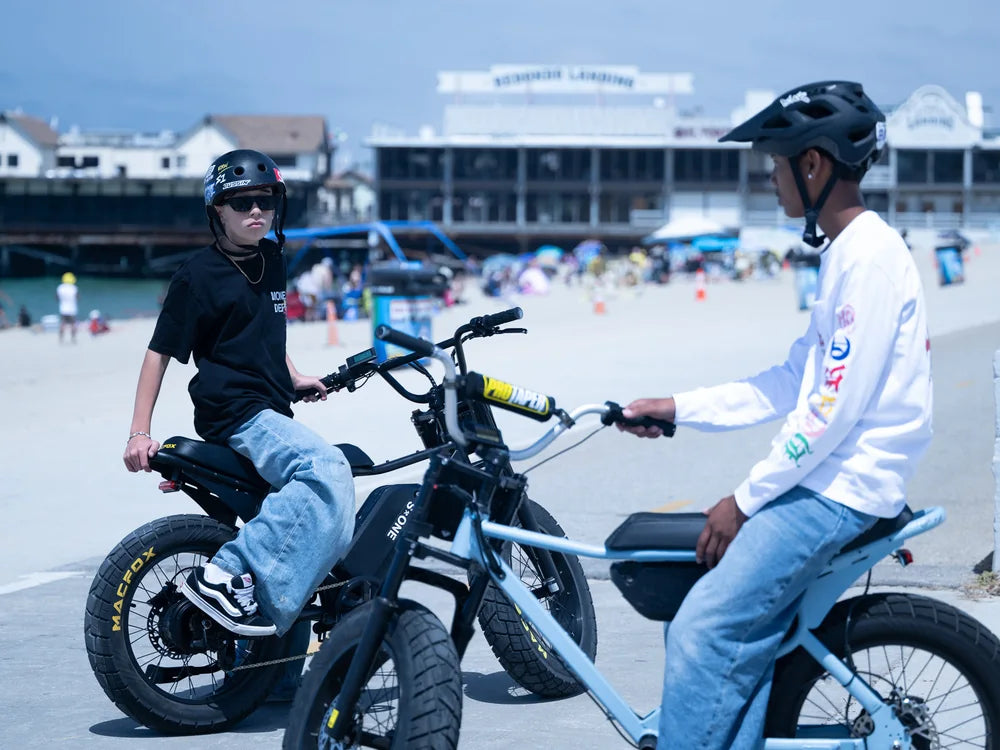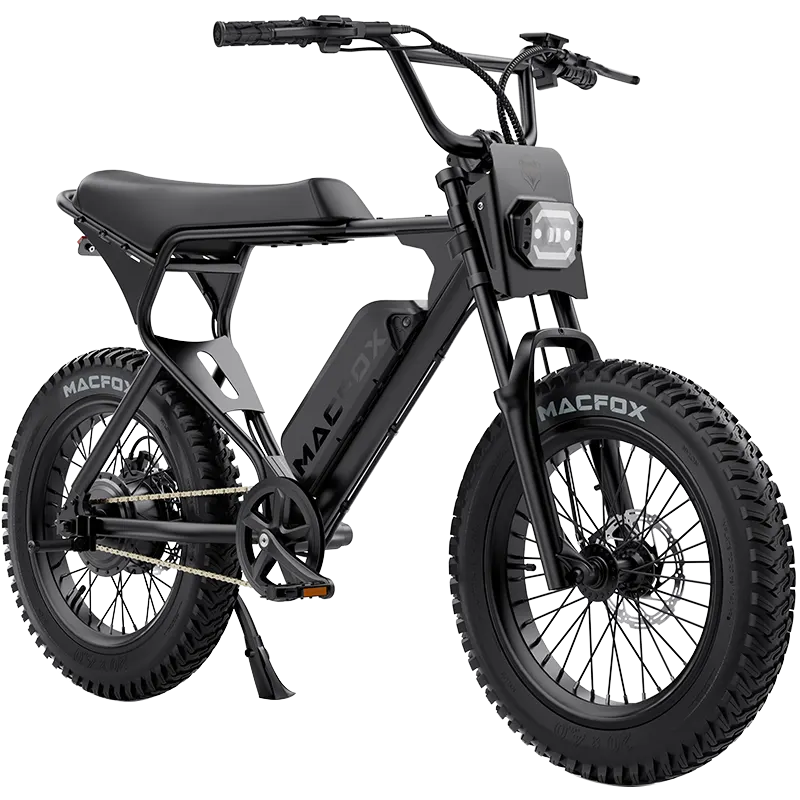

Teen e-bike parking at school should be planned before the first school ride: parents should confirm the school's rules, choose an approved rack or storage spot, teach a repeatable locking routine, remove small accessories, record the bike's serial number, and decide what the teen should do if the bike is moved or stolen.
A safe route is only half the school-ride plan. The bike may sit outside for six or eight hours, surrounded by other students, weather, crowded racks, and after-school confusion. If the parking plan is weak, a good school commute can still become a daily stress point.

Check the School Rule First
Before a teen rides to school, parents should ask whether e-bikes are allowed on campus, whether the school separates e-bikes from regular bicycles, whether registration is required, and whether there is a specific rack or storage zone. Some schools treat e-bikes differently because of speed, batteries, crowding, or local rules.
Do not rely on what other students are doing. A rack full of e-bikes does not automatically mean the school approves them. The youth e-bike law guide is a useful background page because the legal layer can vary by state, city, school district, path, and rider age. If your family is still choosing the bike itself, start with the teen's first e-bike guide before making the school parking plan.
If the school says no, parents should not solve it by telling the teen to hide the bike off campus. That creates a different risk: unattended parking in a less visible place, unclear responsibility, and more conflict if the bike blocks private property.
Walk the Parking Spot With Your Teen
Parents often check the route and forget the destination. Walk to the bike rack at the same time of day the teen will use it. Look for crowding, visibility, lighting, cameras, foot traffic, and whether the rack is bolted down. A rack near the school entrance is usually easier to supervise than a hidden rack behind a building.
Ask a practical question: can the teen roll the bike in, lock it correctly, remove accessories, and leave without blocking other bikes or pedestrians? If the rack is cramped, the routine has to be simple enough to repeat when the bell is about to ring.
Families comparing an electric bike for school use should treat parking as part of the purchase decision. If the school rack cannot fit wider tires or the bike cannot be locked through the frame, the family needs a better parking plan before daily use begins.
Do Not Trust Every Rack
A good school rack should let the rider secure the bike frame, not just the front wheel. Some older racks only hold one wheel. That can leave the frame easier to remove, tip the bike over, or make a heavy e-bike harder to park neatly.
Teach the teen to avoid thin signs, loose poles, temporary fences, trees, or anything that can be lifted, unbolted, cut, or moved. The goal is not only to make the bike look locked. The goal is to lock the frame to something fixed, visible, and allowed by the school.

Use a Repeatable Locking Routine
For school parking, a cable lock alone should not be the main lock. Cable locks can help secure accessories or a wheel, but the main routine should use a stronger lock through the frame and a fixed rack. If the school allows it and the bike will sit all day, a second lock can add time and friction for a thief.
The teen should practice the same routine at home: roll in, choose the correct rack point, lock the frame, check that the lock is closed, remove small accessories, and take a quick photo if the rack is crowded. The routine should be boring. Boring is good because rushed students make weak locking decisions.
Parents should watch the teen do the routine once or twice. If the rider only locks the wheel, leaves the key in a bag, or cannot explain where the frame is secured, the school ride is not ready yet.
Remove Easy Accessories
School theft is not always the whole bike. It can be a phone mount, small light, mirror, bag, helmet, or loose accessory. If a part can be removed by hand in a few seconds, the teen should know whether to take it inside, lock it, or leave it at home.
Helmet storage needs a family rule too. Some students clip the helmet to the bike, some carry it into school, and some use a locker. The right answer depends on school policy, weather, and theft risk. What matters is that the teen does the same thing every day instead of deciding while rushing.
Battery rules should follow the product manual and school policy. If the battery is removable, parents should decide whether the teen may remove it at school, where it can be stored, and whether the school permits it indoors. Do not improvise battery storage in a backpack or classroom without clear rules.
Register the Bike Before It Is Ever Stolen
Before the first school ride, record the serial number, purchase information, clear photos of the bike, and photos of any distinctive marks or accessories. This is not busywork. If the bike goes missing, those details make the report faster and more specific.
Parents can also consider a registration service such as Project 529 bike registration, especially if the school, city, or local police department supports bike registration. Macfox also has a practical guide on what to do if your e-bike is stolen, which is the page to use if the bike is already missing.
The teen should know where the serial number record lives. If they cannot access it, they should know which parent has it. The moment a bike disappears is not the time to search old emails and camera rolls.

Plan for After-School Confusion
Many parking mistakes happen after school, not before school. Friends want to leave quickly. A club runs late. A parent changes pickup plans. The rack is crowded. Someone else's bike is tangled with the lock. That is when a teen may skip part of the routine or move the bike to a worse spot.
Set a simple rule: if the normal rack is full, damaged, blocked, or feels unsafe, the teen should contact a parent or school staff member before choosing a new place. Do not lock to a random tree or fence because it is faster.
If the teen also rides to practices, stores, or friends' houses after school, the family's teen e-bike safety rules should include parking and locking behavior, not only riding behavior.
If the Bike Is Moved or Missing
The first step is to slow down. Teens may panic, assume it was stolen, or start searching alone. A better routine is: check the original rack, ask school staff whether bikes were moved, contact a parent, and avoid confronting anyone without an adult.
If the bike appears stolen, gather the serial number, photos, lock information, exact parking location, time window, and any school camera or witness information. Then follow the school process and local reporting process. The faster the details are organized, the easier the next step becomes.
If the bike was moved because it blocked a path, was locked in the wrong place, or violated campus rules, treat that as a parking-rule problem. The teen may need a simpler parking point or more practice, not just a warning.
When School Parking Is Not Ready
School parking may not be ready if there is no allowed rack, the rack only secures the front wheel, the area is hidden, the school does not permit e-bikes, or the teen cannot lock the bike correctly without help. In those cases, the family can still use the school-commute safety guide to work through the broader commute plan, but daily solo riding should wait.
For families with tight home storage, the e-bike storage and rack guide can help think through racks and indoor placement. School parking and home storage are different problems, but the same habit matters in both places: the bike needs a real place to live.
School Parking Checklist
- The school allows e-bikes and the family understands the rule.
- The parking spot is approved, visible, and not improvised.
- The rack lets the teen lock the frame, not only one wheel.
- The teen can complete the locking routine without rushing.
- Small accessories have a remove-or-store rule.
- The serial number, purchase proof, and bike photos are saved.
- The teen knows what to do if the rack is full or the bike is moved.
- Parents and the teen agree that no safe parking means no school ride yet.
FAQ
Can teens park e-bikes at school?
Only if the school allows it and there is an approved place to park. Parents should check campus rules before letting a teen ride to school regularly.
What lock should a teen use at school?
A stronger main lock through the frame and a fixed rack is better than a cable lock alone. A cable can support the setup, but it should not be the only theft-prevention layer for all-day school parking.
Should a teen remove the battery at school?
It depends on the bike design, school policy, and storage plan. Parents should follow the product manual and school rules instead of letting the teen improvise battery storage.
Is it safe to leave an e-bike outside all school day?
It can be reasonable only when the school allows it, the rack is visible and secure, the bike is locked correctly, and small accessories are removed or stored. A hidden or weak rack changes the answer.
What should parents record before a teen rides to school?
Save the serial number, purchase proof, clear bike photos, accessory photos, lock details, and the exact school parking location. Those details matter if the bike is moved or stolen.