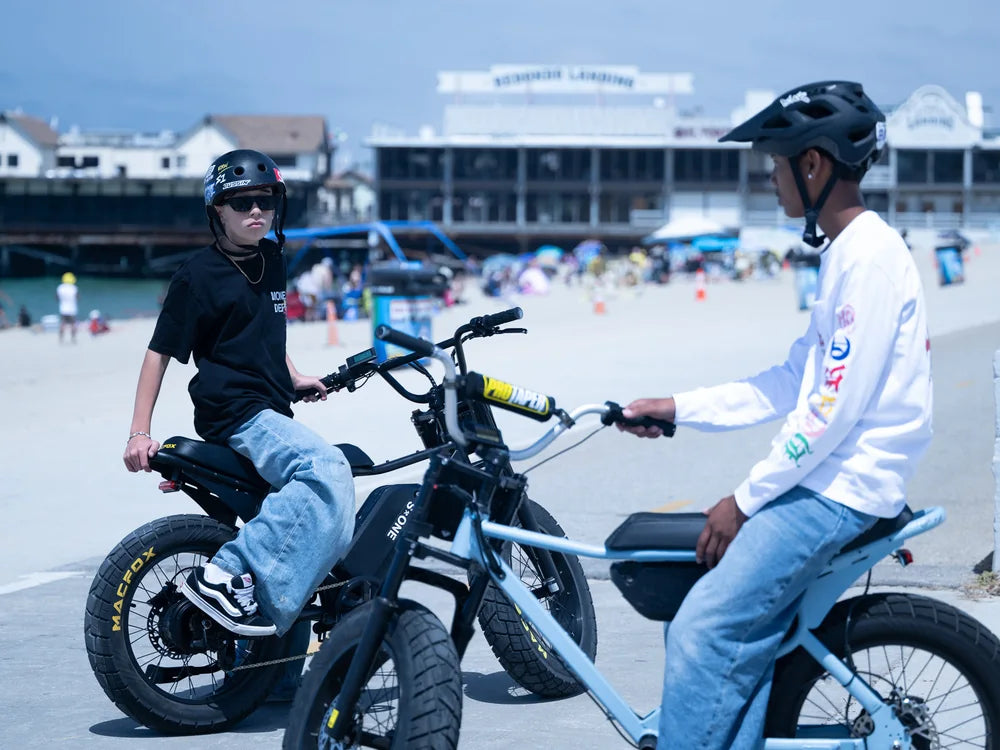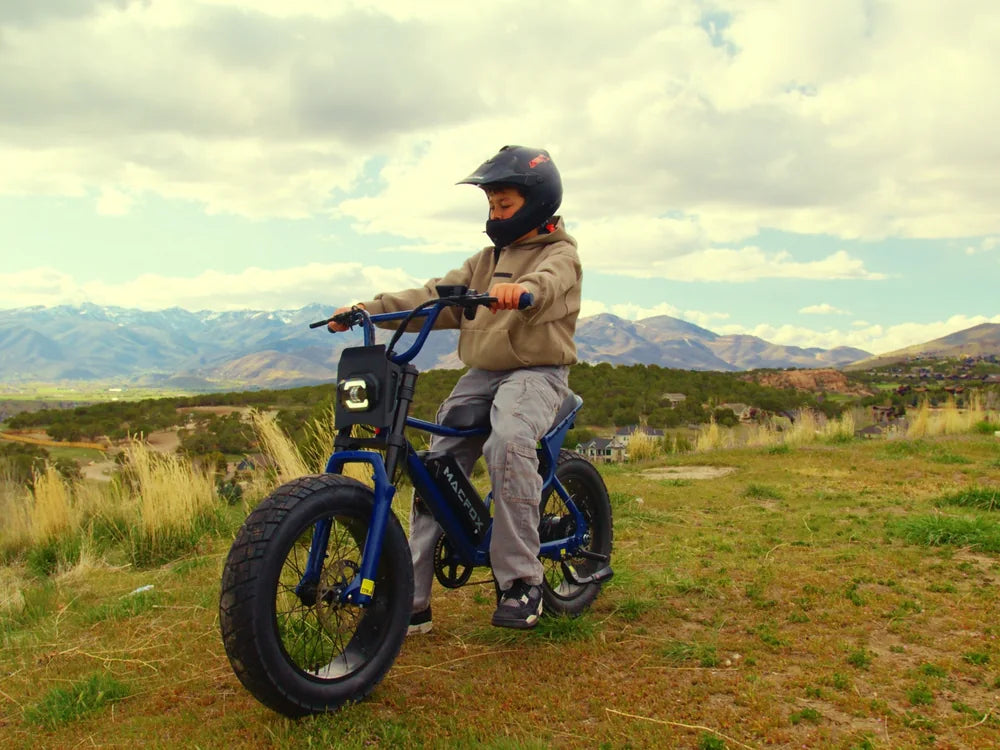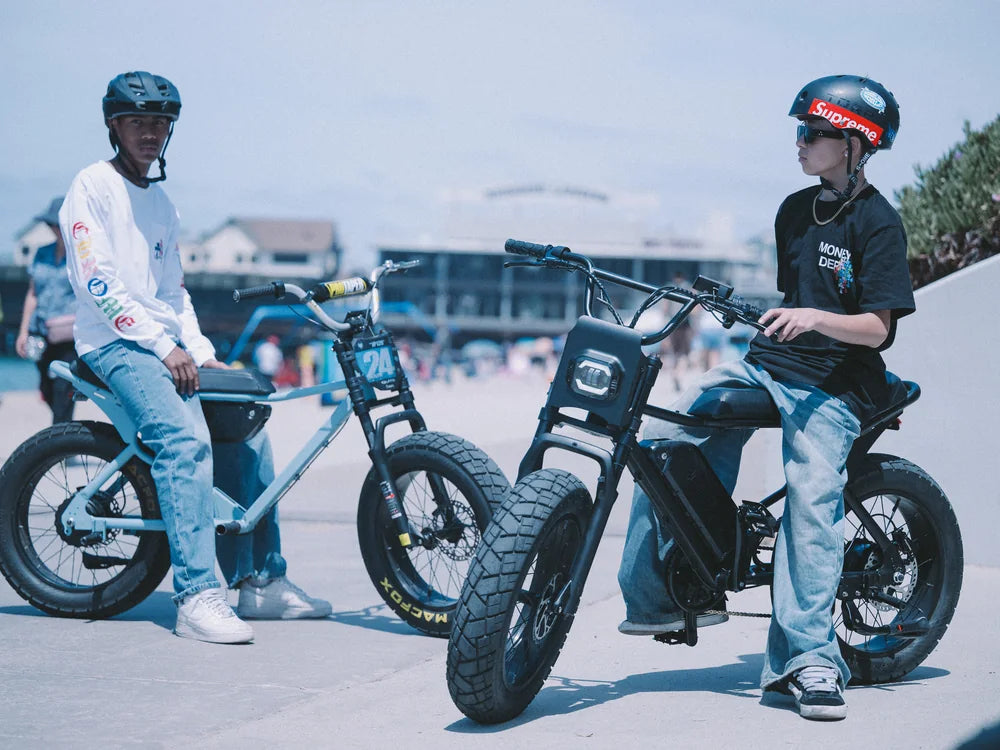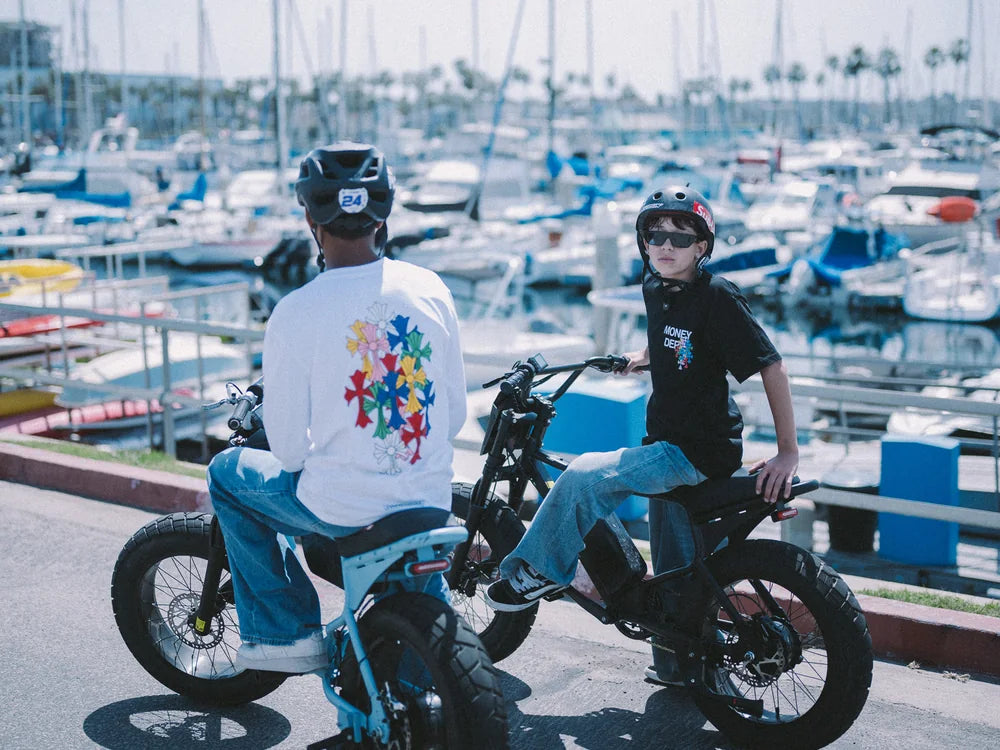

An e-bike is easier for a teen rider to control when the bike fits the rider's body, starts smoothly, stops predictably, has tires that feel stable, and can be pushed, parked, turned, and restarted without drama. The easiest teen e-bike is not always the strongest-looking model. It is the one the rider can handle calmly in normal family-approved riding situations.
For parents, control should come before style, range, or top-line specs. A teen may love the look of a bigger bike, but the real test is whether they can manage slow turns, driveway exits, uneven pavement, stop signs, parking racks, and unexpected route changes without panicking or showing off.
Start With Control, Not Just Confidence
Many teens feel confident before they are actually consistent. Confidence means they want to ride. Control means they can repeat the same safe behavior when the situation changes. Parents should look for repeatable skills, not one good test ride.

A useful first question is simple: can the rider control the bike when nothing exciting is happening? If the teen can only ride well in a straight line, on an empty street, or while a parent is watching closely, they are not ready for more demanding routes yet.
If you are still deciding whether your teen is ready for an e-bike at all, use the teen e-bike readiness checklist first. This guide is the next layer: once readiness looks possible, it helps you judge whether the bike itself is easy enough to control.
Body Fit: The Bike Should Not Feel Too Big
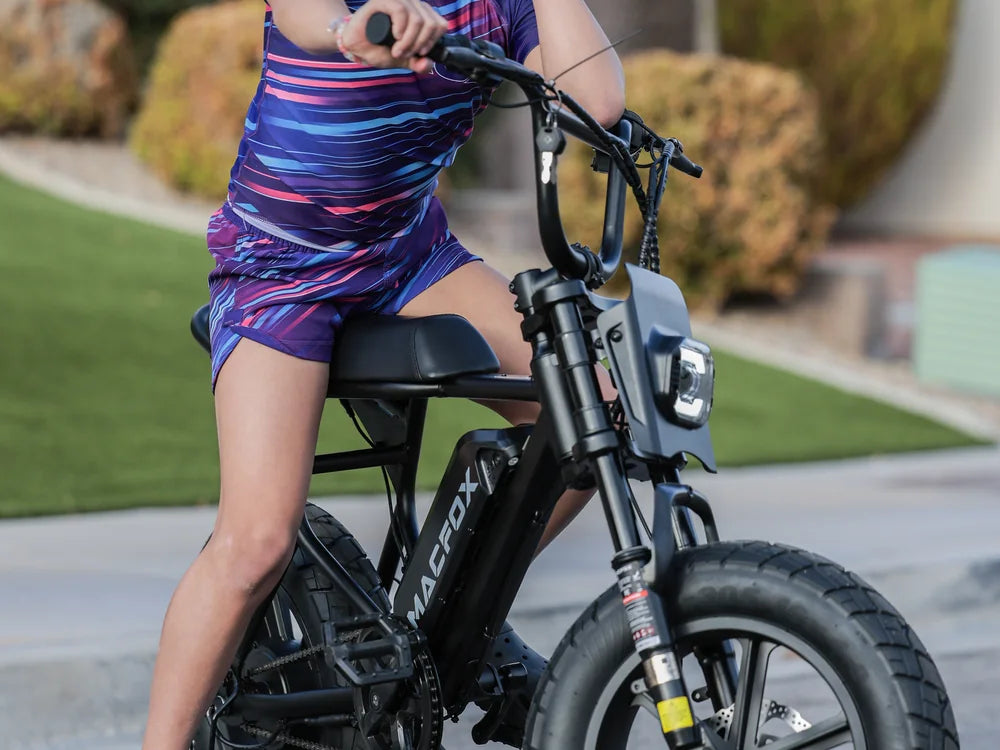
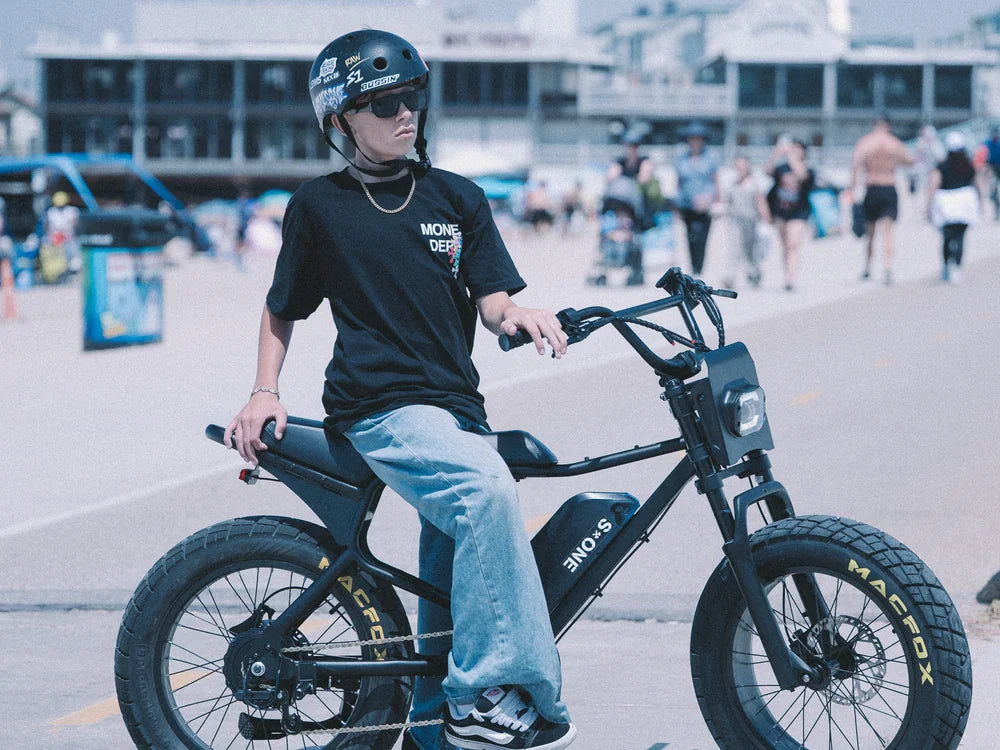
A teen rider should be able to get on and off the bike without awkward hopping, reach the bars without locking their elbows, and place a foot down with enough confidence to stop and restart. A lower, more manageable bike can make the first months of independent riding feel less intimidating.

Parents often compare motor power or range first, but fit is usually the better starting point. If the bike feels too tall, too long, or too heavy at slow speed, the rider may avoid stopping fully, rush turns, or drag the bike into parking spaces instead of controlling it cleanly.
| Control Check | What Parents Should Watch | Warning Sign |
|---|---|---|
| Mounting and dismounting | The rider gets on and off without wobbling or needing a running start. | The bike leans hard to one side or the rider has to jump down. |
| Foot-down stop | The rider can stop, put a foot down, look around, and restart calmly. | The rider rolls through stops because stopping feels uncomfortable. |
| Handlebar reach | Arms stay relaxed enough to steer and brake together. | The rider stretches forward and loses balance during turns. |
| Parking and pushing | The rider can walk the bike, turn it around, and park it without help. | The bike is only manageable while moving, not while stopped. |
Weight Matters Most at Slow Speed
Riders notice bike weight most when they are starting, stopping, pushing uphill, parking, or correcting a mistake. A heavier bike can feel stable once it is moving, but it can also be harder for a teen to handle in tight spaces.
Before buying, parents should watch the rider do slow movements: a full stop, a restart, a U-turn, a driveway turn, and a parking-rack approach. If those moments look tense, the bike may be too much for the rider's current stage.
This is also why a teen's first e-bike should not be chosen only by the model that looks most exciting. The right first fit should make the rider more predictable, not just more enthusiastic.
Throttle and Assist Should Feel Predictable
For teen riders, smooth power delivery matters. The rider should understand when the bike starts helping, how quickly it responds, and how to reduce assistance before turns, driveways, crossings, and crowded areas. Sudden power can turn a simple mistake into a bigger one.

Parents can test this in a low-pressure area. Ask the rider to start from a stop, ride slowly, stop again, then repeat several times. The goal is not speed. The goal is a calm start, a straight line, and no surprise lurches.
Family rules should support the bike setup. The teen e-bike safety rules can be used as the house-rule layer, while this page is the bike-control layer.
Brakes Should Feel Easy to Trust
Good control depends on stopping as much as moving. Teen riders should be able to brake early, brake in a straight line, and stop before the exact place they choose. If a teen squeezes too late, grabs too hard, or avoids braking because it feels jumpy, the route should stay supervised.
A practical parent test is to mark a stopping point in an empty area and ask the rider to stop before it from different speeds. Repeat the test after a turn and after a slow start. Predictable braking builds the kind of confidence parents can actually trust.
Tires Affect Stability and Steering Feel
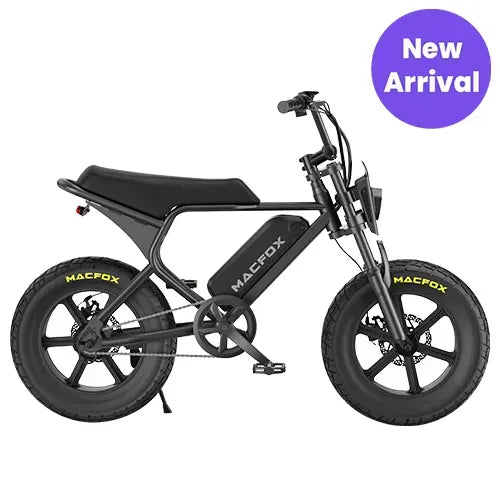
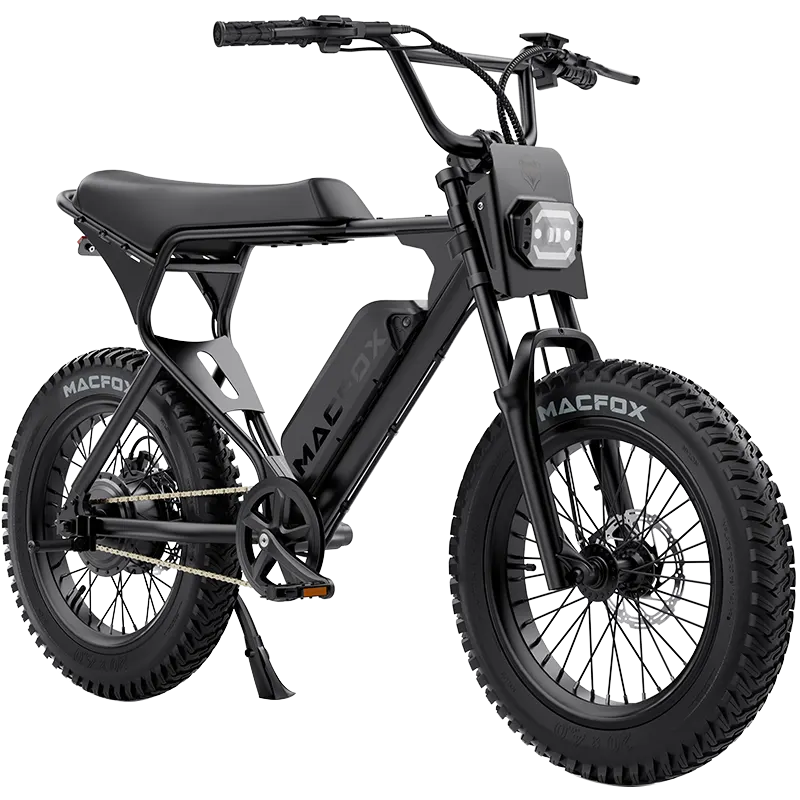
Fat tires can help a bike feel more planted, especially when the rider is learning how the bike reacts to small bumps, driveway lips, gravel patches, and imperfect pavement. Wider tires can also make the bike look stronger and more youth-oriented, which matters for Macfox's style language.
That does not mean the widest tire is automatically best for every teen. Parents should think about the rider's size, route, parking needs, and slow-speed handling. Bigger tires can add presence and grip confidence, but the full bike still has to be manageable.
Model Fit: How Macfox Should Be Explained
Macfox should stay focused on young riders, teen independence, family-approved riding, and a cooler personal style within legal and responsible boundaries. Model choice should make that positioning clearer, not blur it.
| Model | Control-Focused Role | How to Explain It to Parents |
|---|---|---|
| M16 | Small body, easy control | A compact entry option for shorter teen riders who need a bike that feels less intimidating, with 16x4.0 fat tires and simple handling. |
| X1S | Classic punk-style commuter | The core Macfox model for daily familiar routes, personal expression, and young riders who want a stylish but practical ride. |
| X7 / X7L | 20x4.5 / 20x5.0 fat-tire stability | A wider-tire upgrade path for riders who want stronger grip confidence, a bolder look, and more stable-feeling contact with the ground. |
| X2 | Full suspension and longer range | An advanced choice for riders who need more comfort and capacity on more complex routes, not the default first answer for every teen. |
For a focused model comparison inside the Macfox line, use the M16 and X7 comparison. For a broader starting point across the lineup, compare the bikes after you know which control problem you are trying to solve.
The Parent Test Ride Checklist
Do not judge the bike only by a short straight-line ride. Ask the teen to complete a simple control routine before you approve the model for regular use.
- Walk the bike forward, turn it around, and park it.
- Get on, start slowly, and stop with one foot down.
- Ride a wide figure-eight without cutting the turn too sharply.
- Brake before a marked stopping point three times in a row.
- Look over one shoulder while keeping the bike straight.
- Restart after a stop without rushing or swerving.
- Explain when to reduce speed before turns, crossings, and shared spaces.
If the rider can do those steps calmly, the bike is closer to being a fit. If they can only do them once after several tries, keep practicing before expanding the route.
Check the Route Before You Decide
A bike that is easy to control in one place may be too much in another. A quiet neighborhood ride, a school approach, a shared path, and a route with hills all test different skills. Parents should match the bike to the real route, not the ideal route.
Families comparing any electric bike for a teen should also check local rules before treating the route as approved. The youth e-bike laws every parent should know can help with state-level background, while NHTSA bicycle safety guidance is a useful reminder that predictable behavior, visibility, helmets, and traffic-law habits matter even on short rides.
When the Bike Is Not the Right Fit Yet
Wait if the teen cannot stop confidently, cannot put a foot down, struggles to push or park the bike, rushes turns, argues about route limits, or treats power as the main reason to ride. Those are not permanent problems. They are signs that the rider needs a smaller step, more practice, or a different model fit.
Parents should not frame this as a punishment. The message is simple: the bike has to match the rider's current control level before it becomes part of everyday independence.
Parent Decision Summary
The best teen e-bike fit is the one that makes safe behavior easier to repeat. Look at size, weight, starts, stops, brakes, tires, route demands, and the rider's ability to stay calm when something changes. A cool-looking bike still has to be a controllable bike.
Macfox can speak to style and independence, but the parent-facing explanation should always bring the conversation back to control: Can the rider stop, turn, park, restart, and follow the route without drama? If yes, the model discussion becomes much clearer.
FAQ
What makes an e-bike easy for a teen to control?
Fit, manageable weight, smooth starts, predictable braking, stable tires, and a route the rider can handle. The bike should feel calm at low speed, not just exciting in a straight line.
Should parents choose the most powerful model?
No. Start with the rider's control level and route needs. More capability only helps if the teen can manage the bike consistently.
Are fat tires good for teen e-bike riders?
They can help the bike feel more planted and confident, especially on imperfect surfaces. Parents should still check whether the whole bike is easy for the teen to stop, turn, and park.
When should a teen move from M16 to a larger Macfox model?
When they can handle the smaller bike calmly, need more fit or route capacity, and can pass the same control checks on the larger model.
Is X2 a good first teen e-bike?
It depends on the rider. X2 has full suspension and longer range for more complex routes, but many families should start by asking whether the teen needs that level of bike yet.