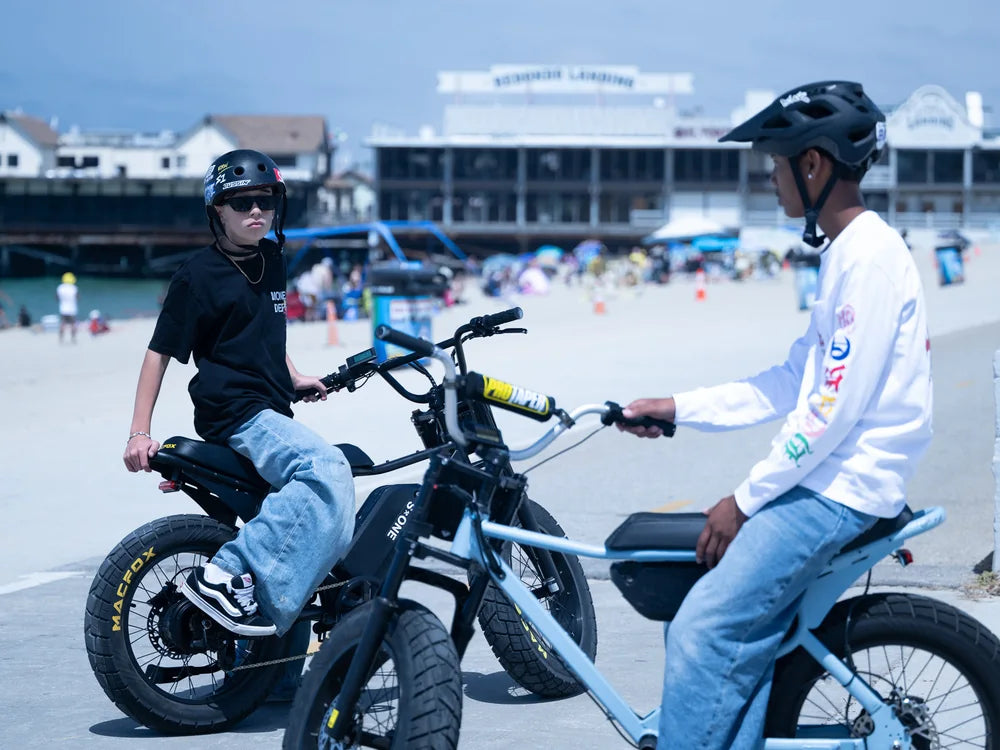

If a school changes its e-bike rules, pause the usual school ride until you know exactly what changed. Confirm whether the new rule affects campus entry, a particular grade, a permit, parking, or a type of e-bike. Then put one dependable plan in place for the next school day before debating what the family should do for the rest of the term.
Do not ask a teen to improvise at the school gate or hide the bike somewhere nearby. A parent may be worried about getting to work on time, while the teen may feel that a routine and a piece of independence have disappeared overnight. Both reactions are reasonable. The immediate job is to make tomorrow predictable without treating the rule change as proof that the teen did something wrong.

Find the Rule That Actually Changed
Start with the school's own email, website, handbook, or transportation office. A summary from another parent or a screenshot in a group chat may leave out the detail that determines whether the interruption lasts one day or the whole school year.
Write down the answers to five questions:
- When does the change take effect?
- Which schools, grades, or students does it cover?
- Does it affect riding on campus, parking on campus, or bringing the e-bike onto school property at all?
- Is a permit, training course, parent signature, registration sticker, or designated parking area now required?
- Does the notice apply to every e-bike or only to vehicles with certain modifications or characteristics?
School requirements can be narrower than they first appear. Irvine Unified's bicycle and e-vehicle reminders, for example, distinguish access by school level and connect middle- and high-school use with a safety and registration process. Saddleback Valley Unified's e-bike requirements include a permit process, training, a parent signature, and a campus parking decal.
Those examples do not decide another school's policy. They show why the exact notice matters. A missing permit calls for a different response than a campus-wide restriction. A relocated bike rack is not the same problem as a grade-level rule. Once the family can name the change in one sentence, the next step becomes much clearer.
Fix Tomorrow Before You Fix the Semester
The first backup plan only needs to cover the next school day reliably. Choose one option the family already knows how to use: the school bus, public transit, a fixed carpool, a split drop-off and pickup, walking, or a regular bicycle on an already approved route. Do not build the plan around a service that has not been checked, a route the teen has never used, or a neighbor who has not agreed to help.
Make sure the plan covers the entire day. A morning ride from a parent does not solve the commute if the teen has practice, a club, a study session, or a part-time shift after school. Confirm the return time, pickup point, phone contact, and what happens if the activity ends late.
Let the teen help choose among the workable options. Losing an established e-bike routine can feel like losing freedom, not merely changing transportation. Giving the teen a real role in the replacement plan preserves some ownership without asking them to solve an adult scheduling problem alone.
If the restriction is likely to last, compare repeatable alternatives in the guide to commuting without a car. For tomorrow, however, favor the option with the fewest untested parts. A plain plan that works both ways is better than an ambitious plan that falls apart after dismissal.
Do Not Turn Off-Campus Parking Into a Loophole
When an e-bike cannot enter school property, parking just outside the boundary can look like an easy compromise. It often creates a second problem instead. A fence, tree, storefront, apartment entrance, or side street is not automatically an approved place to leave a bike. The location may belong to someone else, have no secure rack, or leave the teen responsible for a bike that school staff cannot monitor.
Off-campus parking should only be considered when the location clearly allows it, the family has verified the arrangement, and the teen can reach school without crossing a new unsafe area or arriving late. It should never mean hiding the bike and hoping nobody objects.

If the school still allows e-bikes but has changed the rack, lock, or parking procedure, use the teen e-bike school parking guide to check the actual parking setup. That is a parking problem. If the bike is no longer permitted on campus, a better lock does not change the access rule.
Build a Short-Term Plan and a Long-Term Plan
A short-term plan covers the waiting period. The family may be waiting for a permit, training date, parent form, parking decal, or written answer from the school. Pick a transportation routine that can survive that delay without being renegotiated every morning. Write down who handles the trip to school, who handles the return, where the teen waits, and what happens when an activity runs late.
A long-term plan is only necessary when the restriction is expected to stay. At that point, compare the school bus, carpool, public transit, walking, a regular bicycle, or a mixed commute in which the teen travels part of the way with a parent. The best choice is the one the teen can repeat on ordinary days, including days when the weather, family schedule, or after-school plan is less convenient.
Independence does not have to be all or nothing. A teen who cannot ride an e-bike onto campus may still manage the bus independently, walk from an approved drop-off point, organize a carpool, or handle a different route on certain days. The goal is to preserve useful responsibility while respecting the rule that actually applies.
If the backup changes the streets, crossings, or time of travel, treat it as a new route rather than a minor detour. Review the teen e-bike route boundary guide before the teen uses that route alone. A familiar destination does not make an unfamiliar way there automatically suitable.

Set Clear Conditions for Returning to the E-Bike
A return date should come from completed conditions, not frustration with the backup commute. Before the teen resumes riding to school, confirm that:
- The school allows that student and e-bike onto the relevant campus.
- Any required permit, training, registration, parent signature, or parking identification is complete.
- The approved parking location is known and available.
- The teen can explain the new arrival, parking, dismissal, and return routine.
- The family knows what happens if the school withdraws permission or the parking arrangement is unavailable.
Write the new school terms into the family plan you already use rather than creating a completely separate set of rules. Record where the bike may go, what paperwork must stay current, and which backup plan starts if access changes again.
If the family still needs to decide whether the school route is appropriate at all, return to the broader youth e-bike school commute guide. It covers the overall readiness and safety decision that comes before a daily routine.
Only compare another electric bike if the written rule shows that the vehicle itself is the issue and the school has explained what it accepts. A different model cannot solve a permit, grade, parking, or campus-access restriction. Policy comes first; product comparison comes after it.
A good backup plan does more than get a teen through one disrupted morning. It separates a temporary inconvenience from a permanent decision, gives the teen a voice without making them carry the whole problem, and sets a clear path back to independent travel when the school permits it.
FAQ
Can a teen park an e-bike just outside school property?
Only when the location clearly permits bike parking, the family has verified that permission, and the bike can be secured without blocking or using private property. A teen should not hide the bike nearby or assume that a public-looking fence or storefront is available for school-day parking.
Does a school rule change mean the e-bike is illegal?
Not necessarily. A school campus rule and the rules for riding on public roads answer different questions. Check the school's official policy for campus access and the applicable local or state rules for the route. Meeting one does not automatically satisfy the other.
Can a teen keep riding while a permit is pending?
Follow the school's written instructions. If permission or a completed permit is required before the bike may enter campus, use the backup commute until approval is confirmed. Do not rely on a verbal assumption that the paperwork will be accepted later.
Should a family sell the e-bike after a school restriction?
Not based on the first notice alone. Confirm whether the restriction is temporary, grade-specific, permit-related, or permanent. The e-bike may still fit other legal, family-approved neighborhood or after-school routes even when it cannot be used for the current school commute.