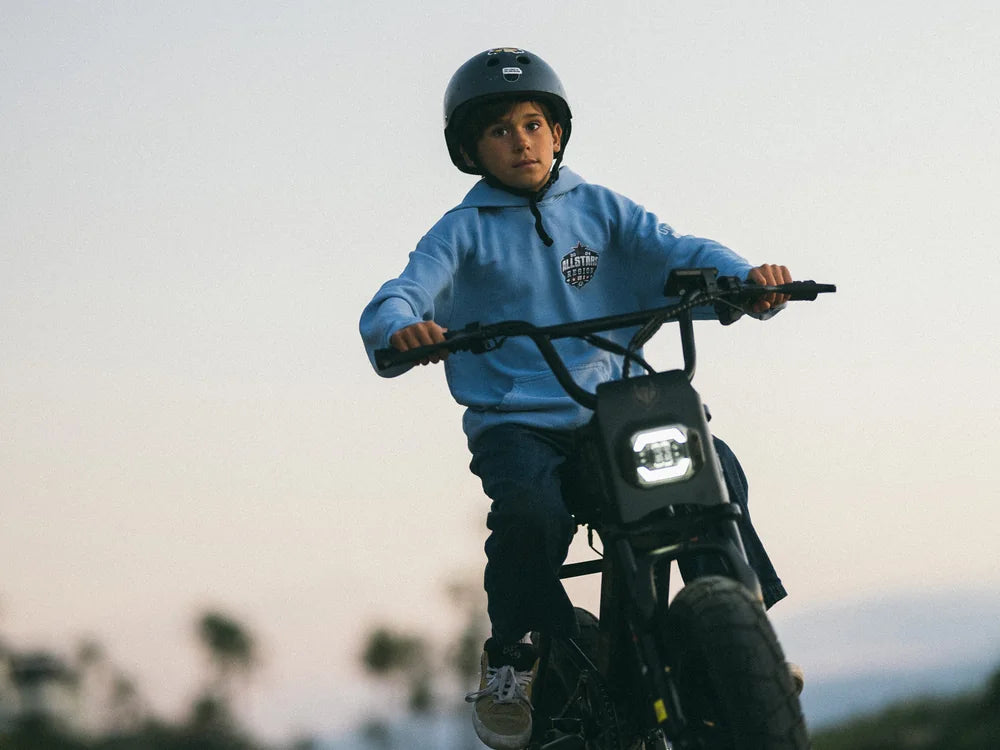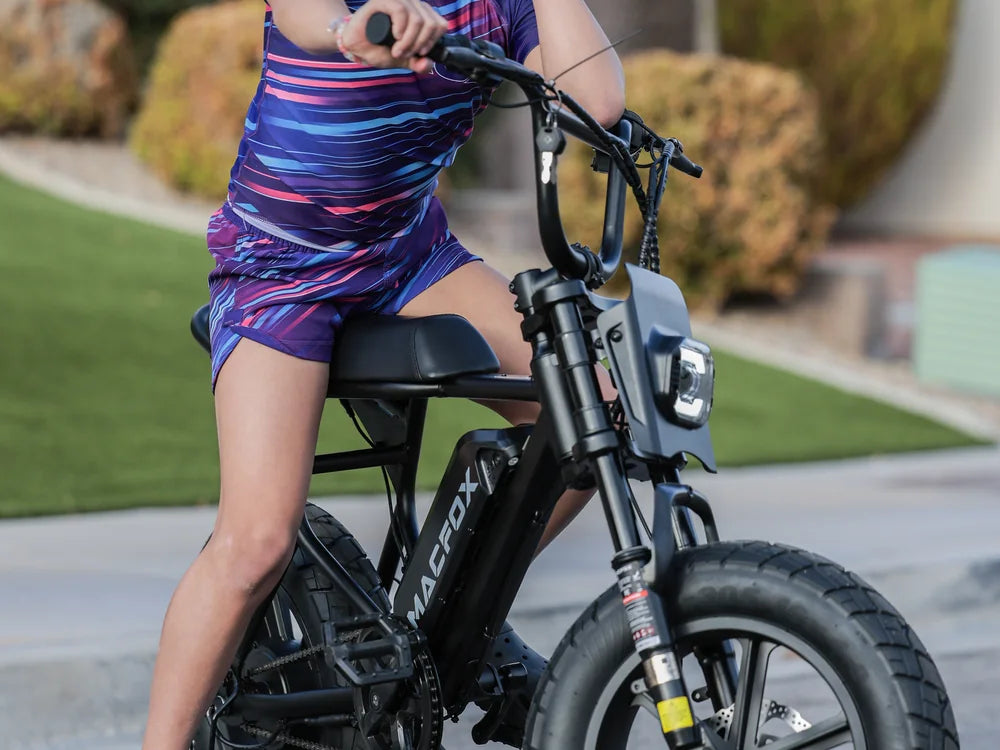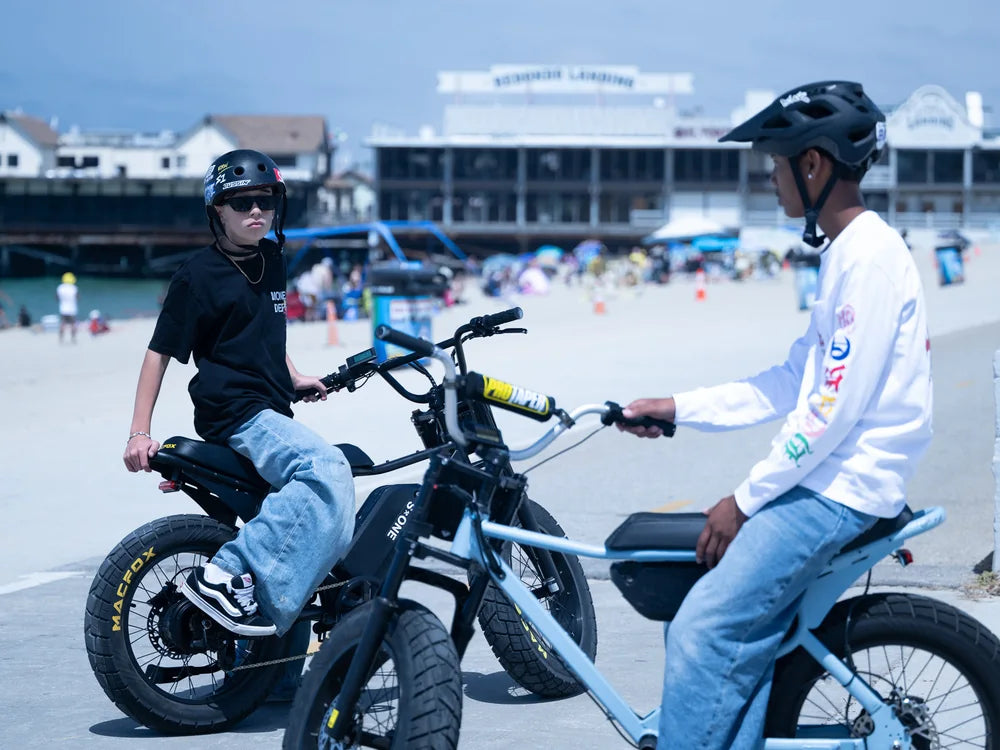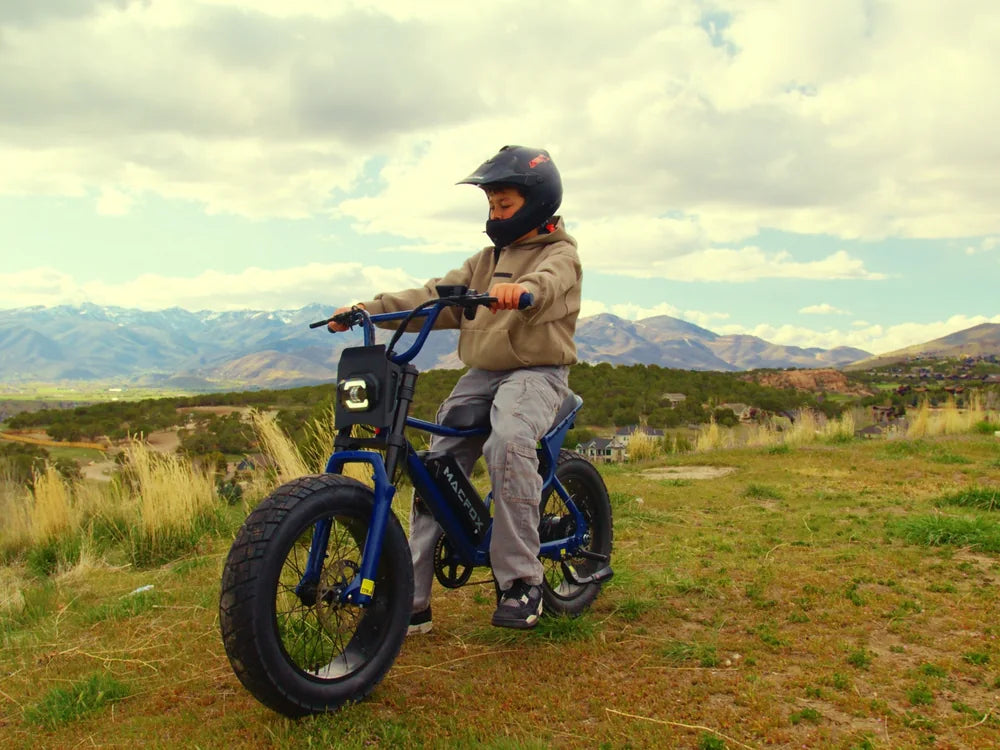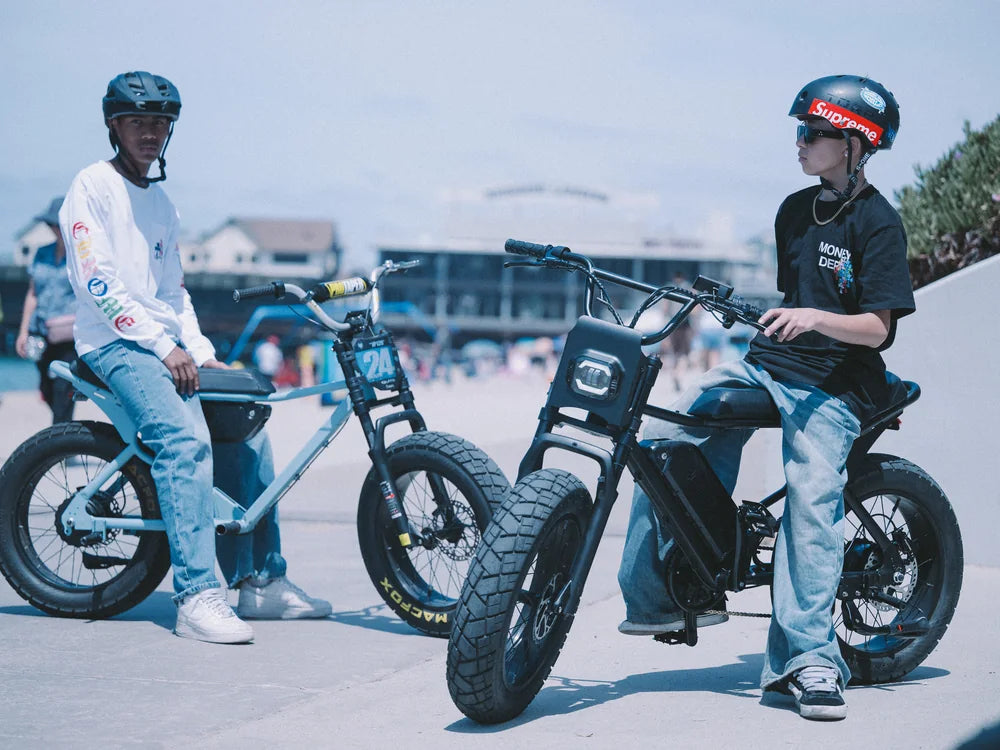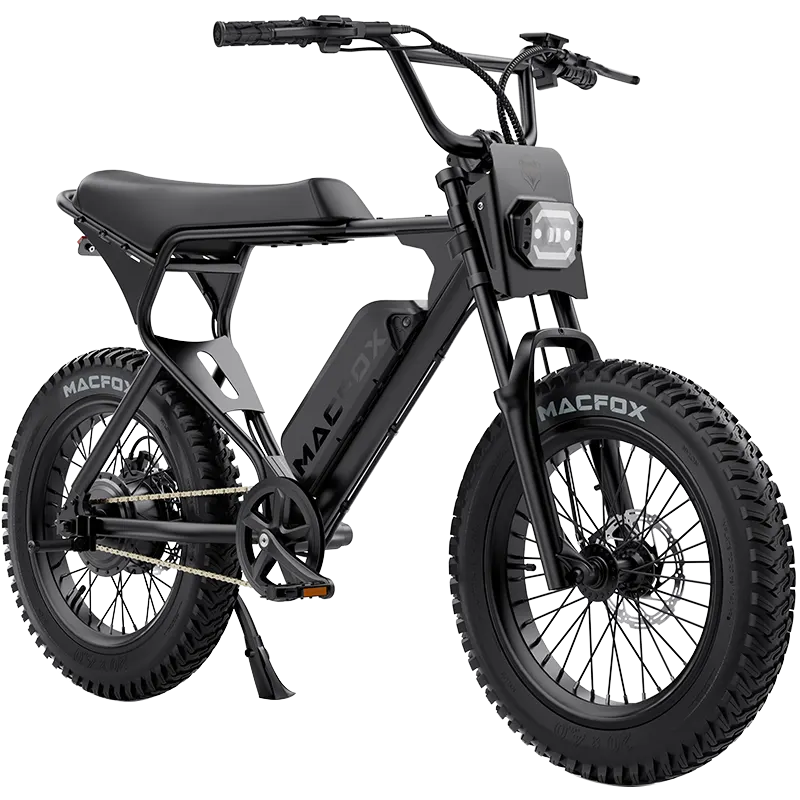

For a Macfox, a parent and teen should not plan to take turns using the same e-bike. Choose the bike around the teen or young rider who will use it most, then let the parent take the role of buyer, setup checker, and supervisor. A parent can test the bike, but that is different from treating it as a shared household ride.
Two people can fall inside the same published height range and still need different reach, stopping position, and control setup. More importantly, sharing changes the daily routine: Who charged the battery? Who moved the bike? Did anything feel different on the last ride? For a young rider building independence, one familiar setup is usually more useful than a bike that changes hands every day.

Overlapping Height Ranges Do Not Create a Shared Fit
Height is the first filter, not the final answer. A rider also has to get on and off without struggling, reach the handlebar without leaning forward, operate the brakes without stretching, turn at low speed, and put a foot down with control. Two riders who are both, for example, “within range” can experience the same frame very differently.
Some e-bikes are deliberately sold for a broad set of riders, and their manufacturers publish multi-rider sizing guidance. That does not make every e-bike a natural household-share model. Frame proportions affect the relationship between the saddle, pedals, and handlebar, while good bicycle fit also requires the rider to reach and operate the controls without an awkward stretch. The practical standard is not “Can both people sit on it?” It is “Can each person control it cleanly in the situations they will actually face?”
Macfox publishes model-specific rider-height and seat-height information. Use the Macfox e-bike size guide as a starting point, then judge the intended young rider in person. Do not buy for an adult body and assume a teen will grow into the controls later.
Choose the Teen as the Primary Rider
If the bike is being bought for a teen, the teen should be the primary rider in the decision. Start with the trips that prompted the purchase: getting to school, meeting friends nearby, reaching a part-time job, or handling neighborhood errands. Then judge whether that young person can repeatedly start, stop, turn, push, park, and secure the bike without needing an adult to rescue the moment.
The parent still has an important role. They can verify the route, review local rules, check that the purchase fits the household budget, and watch a low-pressure practice ride. What they should not do is use their own comfort on the bike as proof that it fits the teen. An experienced adult can compensate for a poor reach or an awkward stop in ways a new rider may not.
A young rider also notices things a parent may overlook: whether the bike feels too bulky in a tight parking area, whether it is easy to push beside friends, and whether the riding position feels natural enough to repeat every day. The teen e-bike control guide gives parents and teens a clearer way to judge those moments together.

Switching Riders Changes More Than Who Has the Key
Picture a normal school morning. A parent used the bike the evening before, returned it with less charge than expected, and parked it in a different place. The teen is now late, assumes the bike is ready, and discovers the change only when it is time to leave. Nothing dramatic happened, but the shared routine created uncertainty at the exact moment the young rider needed consistency.
The same problem appears in smaller ways. One person may change the mirror angle, leave the key somewhere new, move a lock, or notice a sound without telling the other rider. When one teen is clearly responsible for the bike, charging, storage, pre-ride checks, and reporting a problem all have a clear owner. Independence works better when responsibility is visible.
A familiar setup also helps a young rider build repeatable habits. The bike should feel the same when leaving a driveway, making a slow turn, approaching a stop, or walking it through a crowded area. Constantly changing riders turns a stable routine into repeated guesswork, even if neither person intended to make a major adjustment.
This is also why alternating use should not be confused with carrying a passenger. Taking turns means one person rides at a time. Two-up riding adds a separate set of equipment, weight, balance, and legal questions, which belong in the teen passenger and two-up riding guide.
If the Budget Covers One Bike, Pick One Job
“We can only buy one” is a real budget boundary, but it does not make a shared bike the best answer. It means the household has to decide what job the purchase is supposed to do.
| Primary need | Better decision |
|---|---|
| The teen needs reliable local transportation | Choose and set up the bike for the teen; the parent supervises rather than shares daily use. |
| The parent is the actual daily rider | Choose around the parent and do not promise that the same bike will automatically work for the teen. |
| No one has a clear route or regular need | Wait, test, and define the use before buying. |
If the teen is not yet ready to manage the bike independently, sharing it with a parent does not solve that gap. The teen e-bike readiness checklist helps separate excitement from the skills and judgment needed for regular use. Parents who are still deciding whether an e-bike makes sense at all can also use the first e-bike guide for teens for the broader purchase decision.
Waiting is a valid choice. It is better to delay the purchase than to buy one compromise bike that feels wrong for the teen, becomes the parent's ride, and never solves the trip that started the conversation.
Ride Together on Two Properly Fitted Bikes
A parent who wants to ride with a teen does not need to use the same bike. The cleaner plan is two separately fitted bikes, one shared destination, and an agreed route. The parent can model predictable stops, calm turns, and considerate passing while the teen learns on a bike that remains familiar.
For a younger or shorter rider, a smaller-body model such as the M16 can lower the practical barrier to handling the bike. For a taller young rider who wants a classic moped-style commuter look, the X1S may be a more natural model to compare. Those are starting directions, not substitutes for checking fit and control with the actual rider.
After fit and control are settled, the teen can have a real voice in color, style, and the way the bike fits their everyday life. That balance matters: the young rider gets a bike that feels personal, while the parent knows the choice was not made on appearance alone. Families can compare the current Macfox electric bike lineup around the teen's own height, route, and control needs.

The final question is simple: Who is this bike really for? If the honest answer is the teen, build the decision around that young rider and keep the setup consistent. The parent can still test, teach, supervise, and ride alongside them on another properly fitted bike.
FAQ
Can a Parent and Teen Share an E-Bike If They Are the Same Height?
They may both clear the first height check, but that does not confirm equal fit. Compare reach, braking comfort, low-speed turning, stopping position, and the ability to push and park the bike. For a Macfox bought for a teen, keep the teen as the primary rider instead of planning daily parent-teen sharing.
Can Seat Height Alone Make One E-Bike Fit Two Riders?
No. Seat position is only one part of fit. Handlebar reach, control access, frame proportions, and confidence at a stop still matter. A bike should not be treated as a universal fit simply because both riders can sit on the saddle.
Does This Mean Adults Cannot Ride a Macfox?
No. This is not a claim that adult use is prohibited. It is advice for a parent buying a Macfox for a teen or young rider: choose around the intended young rider rather than treating the purchase as one bike for two different users.
Should a Parent Test-Ride the E-Bike Before Buying It for a Teen?
A parent can test basic operation and observe the bike, but the teen still needs their own supervised fit and control check. The parent's comfort does not prove that the teen can start, stop, turn, push, and park the bike consistently.
What If the Budget Only Covers One E-Bike?
Choose one primary job and one primary rider. If the teen needs the bike for regular transportation, fit and set it up for the teen. If the parent is the real daily rider, buy for the parent and wait before promising the same bike to the teen.