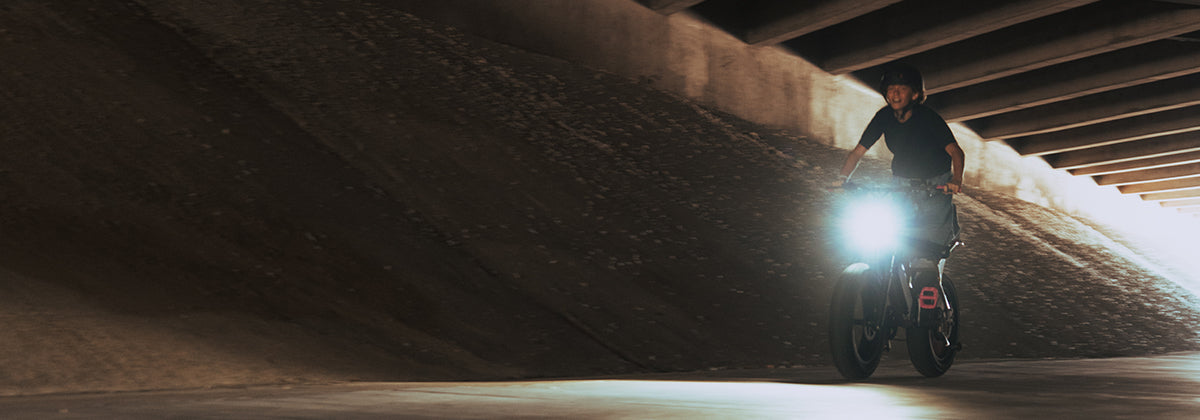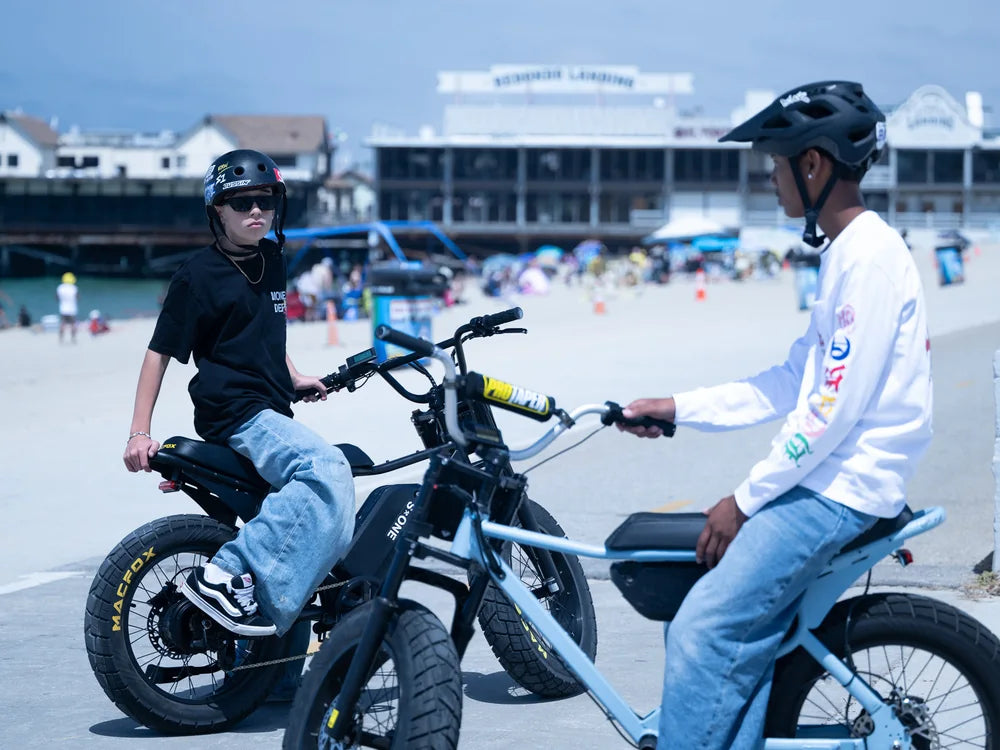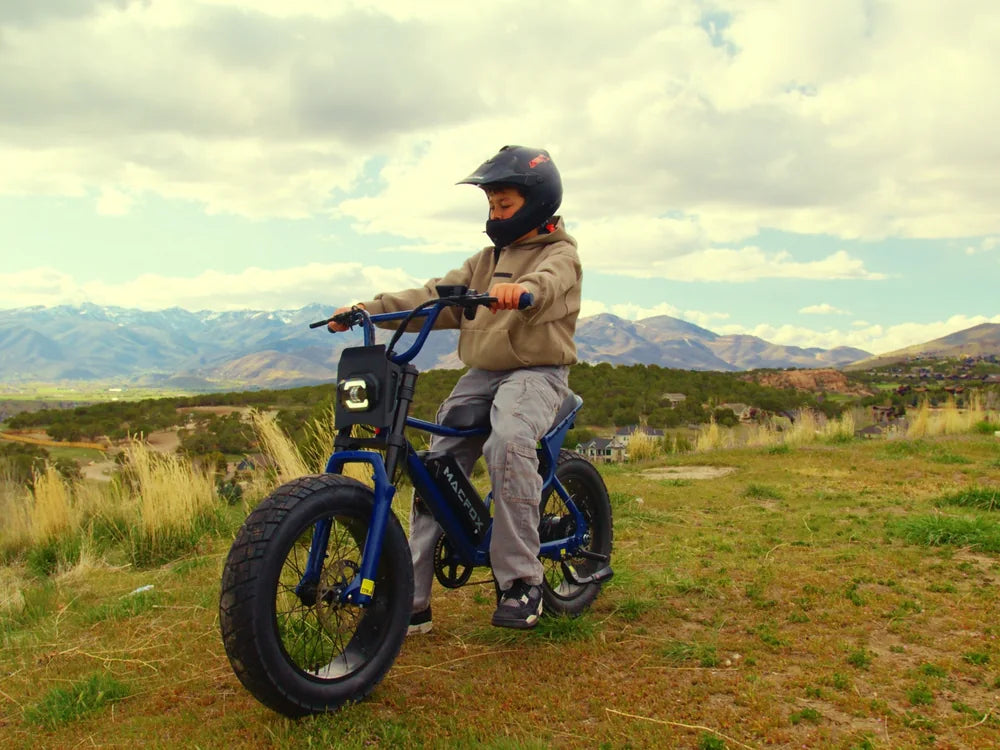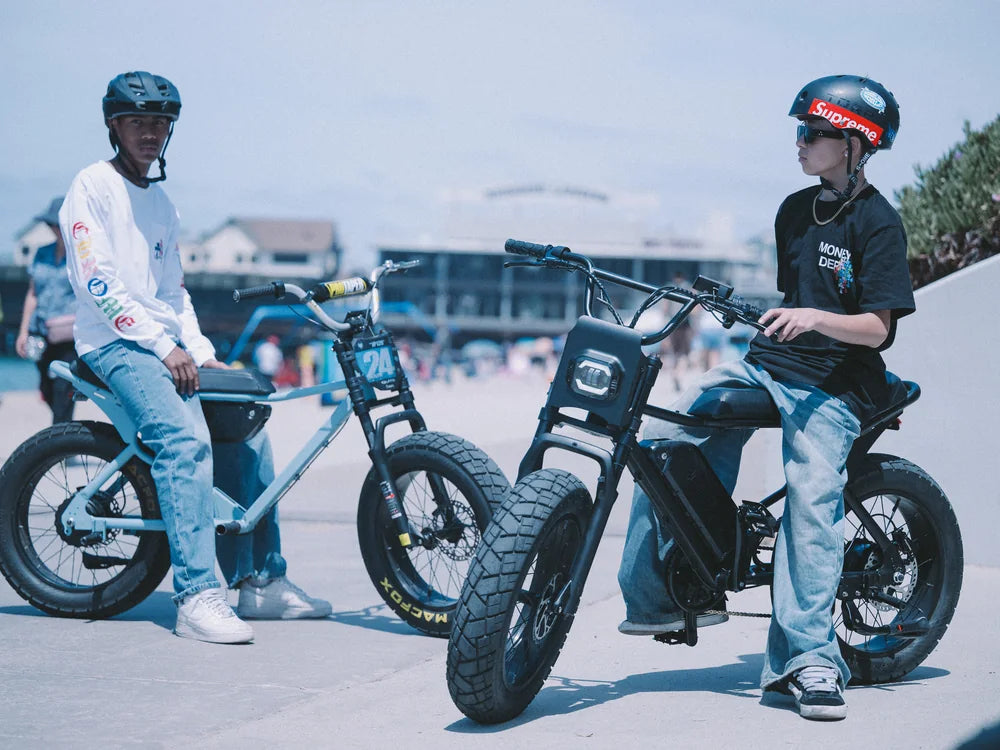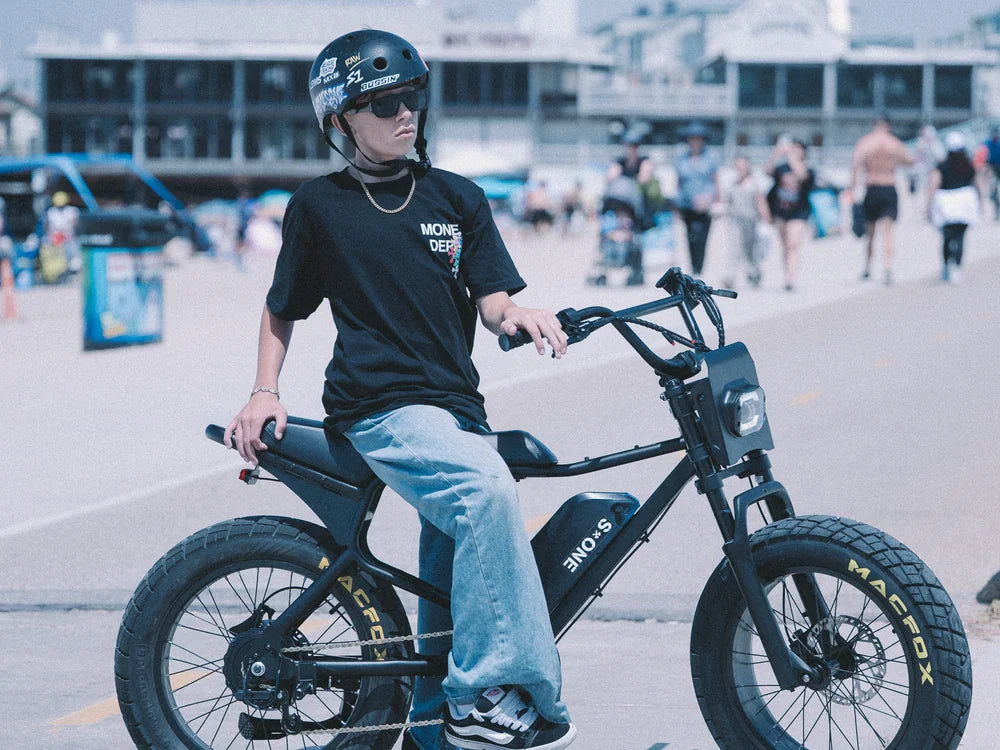

If your teen is choosing between an e-bike and an electric scooter, start with the route, not the product. For school and neighborhood rides, the better choice is the one your child can control calmly, park legally, use without constant reminders, and still feel good riding in front of friends. A scooter may look simpler because it is smaller and easier to carry. An e-bike may make more sense when the route is repeated, the pavement is uneven, the ride needs to feel stable, and your teen wants something that feels like a real personal vehicle.
This is not a city-commuter comparison about taking a scooter into an office or saving space in a train station. This page is about the teen version of the decision: school entrances, neighborhood streets, short social rides, parking spots, parent approval, and whether the choice will still feel right after the first week.
Start With the Route, Not the Vehicle
A short ride can still be a serious daily route. The distance may be small, but the route might include school drop-off traffic, driveways, stop signs, parked cars, curb cuts, slopes, rough pavement, or a busy parking lot. That matters more than whether the tool looks easy in a product photo.
Daily Routes Need Repeatable Control
Parents should ask one practical question first: can your teen repeat the same safe actions every day? They need to start smoothly, slow down early, stop where they choose, cross only where allowed, and park without turning the last five minutes into a rush. If those steps are not predictable yet, the vehicle is not ready to become an everyday route tool.
A scooter can work for very short, smooth routes where the rider stays slow and knows exactly where to stop. An e-bike often works better when the ride has more surface changes, longer stretches, or places where seated control and larger tires make the route feel less twitchy.
Weekend Fun Is Different From a School Routine
A teen may handle a scooter or bike well in front of the house and still struggle when the ride becomes a school routine. Morning traffic, a backpack, friends waiting, and a crowded parking area all change the decision. If the route is going to become regular, use the same standard you would use for any teen independence decision: is the setup easy to repeat without drama?
If you are still defining where your teen is allowed to ride, use the teen e-bike route boundaries guide before treating either option as a daily ride.

Stability and Control Matter More Than Looking Easy
The part parents often misread is that smaller does not always mean easier. A stand-up scooter can feel light and quick, but the rider is balancing on a narrow deck with smaller wheels and a different braking feel. For a confident adult on a smooth city path, that may be fine. For a teen learning daily route judgment, it can make small surface changes feel bigger.
Seated Control Changes the Feeling of the Ride
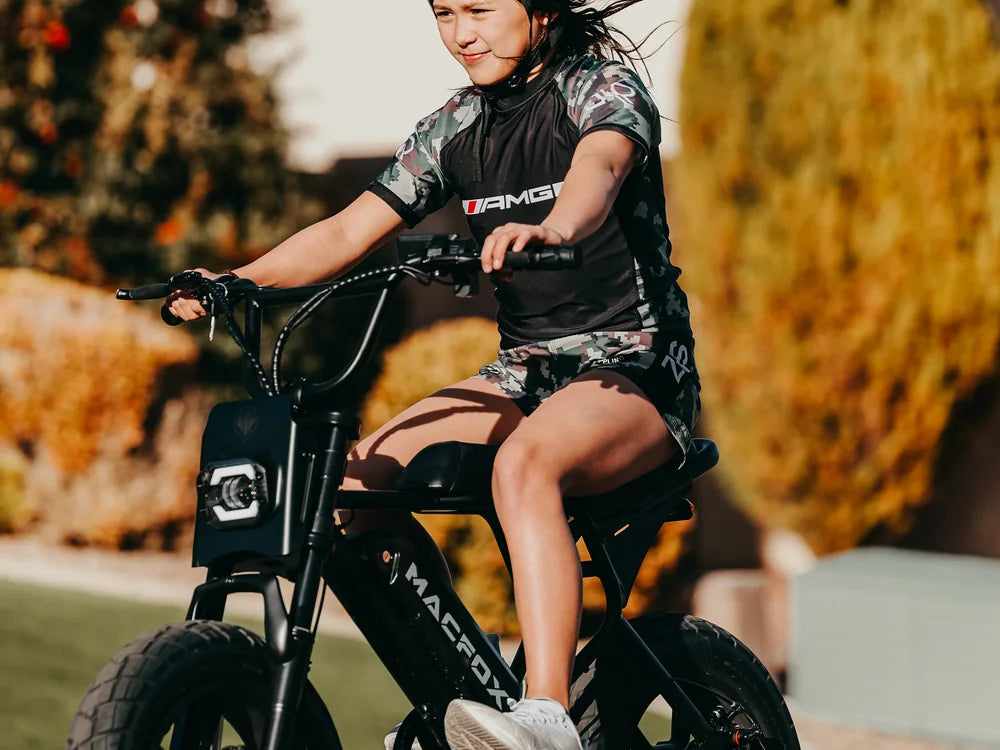
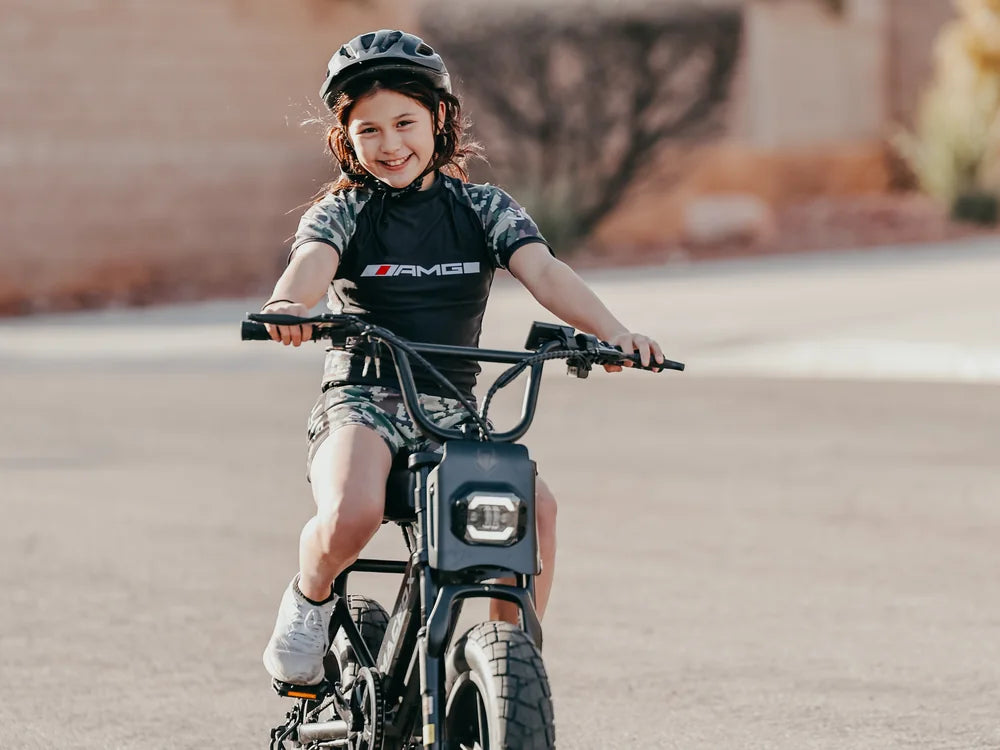
An e-bike gives your teen a seated position, handlebars that feel closer to a bicycle, and more contact with the ground through larger tires. That does not make every e-bike automatically safer, but it can make the ride easier to understand. Your child can settle into the bike, look ahead, and manage starts and stops without balancing everything through a standing posture.
The teen e-bike control checklist is the better next step if the real question is not scooter versus bike, but whether your teen can manage starts, stops, turns, and parking without panic.
Wheel Size Shows Up on Real Streets
Driveway lips, cracks, gravel patches, storm-drain edges, and parking-lot transitions are easy to ignore until your teen rides over them every day. Smaller scooter wheels can feel more sensitive to those changes. Fat-tire e-bikes give a wider contact patch and a more planted feel, which can help a young rider stay calmer on imperfect pavement.
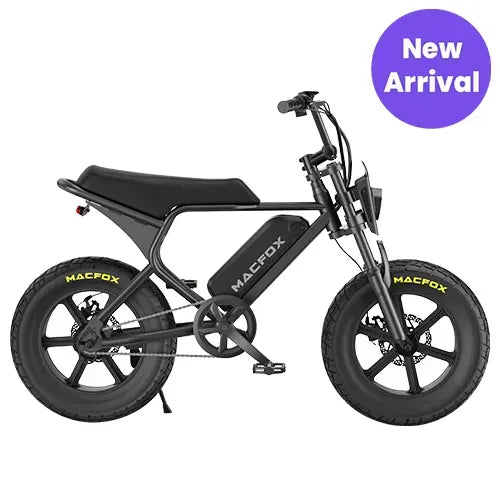
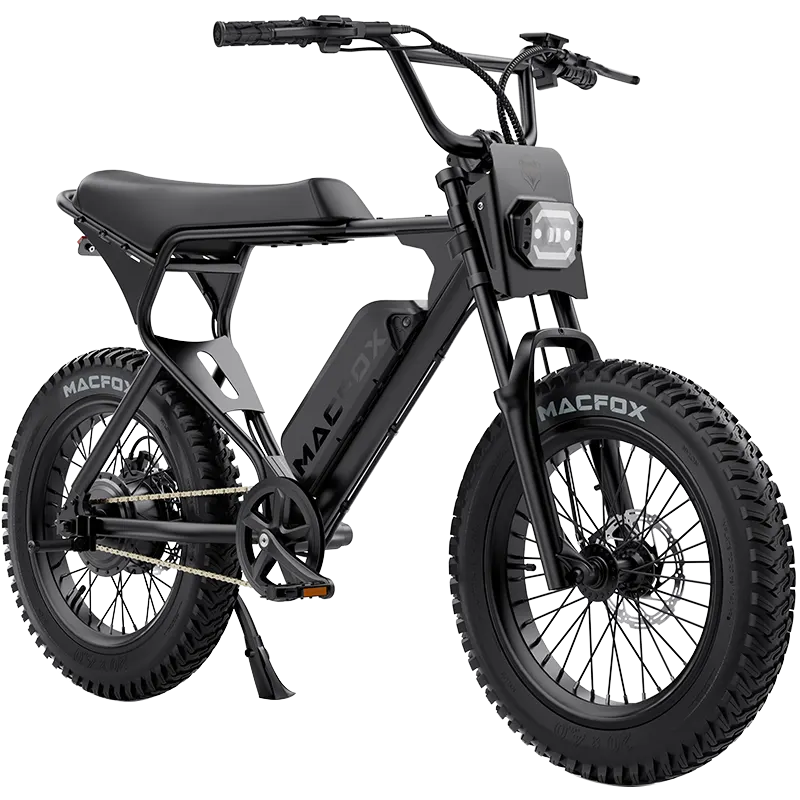
This is where a model like the Macfox M16 fits the discussion. It is not here as a generic recommendation. It fits because the smaller body, easier control, and 16x4.0 fat tires match the parent question: what lowers the barrier for a teen who needs a more manageable everyday ride?

School Rules, Parking, and Storage Can Decide the Answer
Before buying either option, parents should check how the school or campus treats e-bikes and electric scooters. Some places care about where they are parked. Some care whether they are used on campus paths. Some may allow one type of vehicle but limit where it can be stored. The wrong answer here can make a technically good choice unusable.
If It Must Be Carried Indoors, a Scooter Has an Advantage
If the school allows a scooter to be brought inside, stored near a locker area, or kept in a supervised space, that can be a real advantage. A scooter can also make sense for a very short ride where the main problem is getting from home to a nearby school entrance and then putting the vehicle away.
But that advantage disappears if the scooter still has to be locked outside, left in a crowded rack area, or used on rough paths where the smaller wheels make the ride nervous. Carrying is only a deciding factor when carrying is actually part of the daily routine.
If It Must Be Locked Outside, Think Like a Bike Owner
If your teen needs to use a rack, lock the vehicle outside, or park near a school entrance, the e-bike decision becomes more natural. The bike can be treated like a real daily vehicle: lock, parking point, return time, route rule, and visibility habit. The teen e-bike parking at school guide covers that layer in more detail.
For many parents, parking clarity is the moment the decision becomes less abstract. If your teen can explain where the vehicle goes, how it is secured, and what happens after school, you are no longer just comparing specs. You are judging whether the whole daily system works.

Do Not Ignore What Your Teen Actually Wants
This decision can become too parent-focused if the only question is risk. Your teen is also choosing a thing they will be seen using. That does not mean style should override safety, but it does mean the vehicle has to feel acceptable enough that they will use it the right way instead of hiding, rushing, or trying to prove something.
A Scooter Can Feel Easy, but Maybe Too Temporary
Some teens like scooters because they feel quick, casual, and low-commitment. They do not look like a big purchase, and they can feel less intimidating. That can be useful for a short route, but it can also make the vehicle feel more like a toy than a responsibility. If your teen treats it as something to hop on and off without thinking, that is not a good sign for school traffic or mixed community spaces.
An E-Bike Can Feel More Like Their Own Vehicle
An e-bike usually feels more serious. It has a seat, tires, a frame, lights, a lock routine, and a clearer sense of ownership. For a teen who wants independence, that can matter. They are not only getting from one place to another; they are getting a vehicle that looks like part of their identity.
That is why the broader teen first e-bike guide starts with fit, maturity, route, and family rules instead of only asking which model looks best. The goal is not to shut down what your teen likes. The goal is to turn that interest into a choice they can keep using responsibly.
When an E-Bike Makes More Sense, and When a Scooter Might Fit
There is no useful answer that says one vehicle wins for every teen. The right answer depends on the route and the behavior you need to see every day.
| Situation | Better fit | Why it matters |
|---|---|---|
| Repeated school or neighborhood route with mixed pavement | E-bike | Seated control and larger tires usually make the route feel more stable. |
| Very short, smooth route where the vehicle must be carried inside | Scooter | Light handling and storage may matter more than ride feel. |
| Your teen wants a vehicle that feels personal and long-term | E-bike | Ownership, style, parking, and route habits are easier to build around a bike. |
| The school does not allow either option | Neither yet | Rules come first; buying before checking creates the wrong problem. |
| The route includes busier crossings, parking lots, or rough edges | E-bike | Control, visibility, and tire stability become more important than compact size. |
For a smaller teen or a lower-pressure first ride, the M16 keeps the decision focused on easier handling and a compact fat-tire setup. For a more confident teen who wants stronger street presence and wider tire grip, the Macfox X7 can fit the next step, especially when the route still stays within approved school and neighborhood boundaries.
If you are still comparing the broader lineup, use the electric bike collection after the route decision is clear. A model comparison is more useful once you know whether your teen needs easier first control, stronger tire stability, or a more confident daily ride.
FAQ
Is an e-bike safer than an electric scooter for teens?
Not automatically. Safety depends on the route, speed, rules, rider judgment, and how well your teen controls the vehicle. For many school and neighborhood routes, an e-bike can feel more stable because of the seated position and larger tires, but it still needs clear rules and practice.
Is a scooter better because it is easier to carry?
Only if carrying is part of the real daily plan. If the scooter can be carried into an approved storage area and the route is very short and smooth, that advantage matters. If it still has to be parked outside or ridden over rough surfaces, carrying should not be the main reason to choose it.
What if my teen only cares which one looks cooler?
Do not ignore that completely. A teen who dislikes the vehicle may not use it consistently. The better response is to connect style with responsibility: the cooler choice is the one they can ride calmly, park correctly, keep within rules, and use without turning every ride into an argument.
Which Macfox model fits this decision best?
For this specific decision, start with M16 if the priority is a smaller body, easier control, and a lower entry point for daily teen routes. Consider X7 for a more confident teen who wants wider fat-tire stability and stronger street presence. Do not choose by looks alone; match the model to the route, parking setup, and your teen's current control.