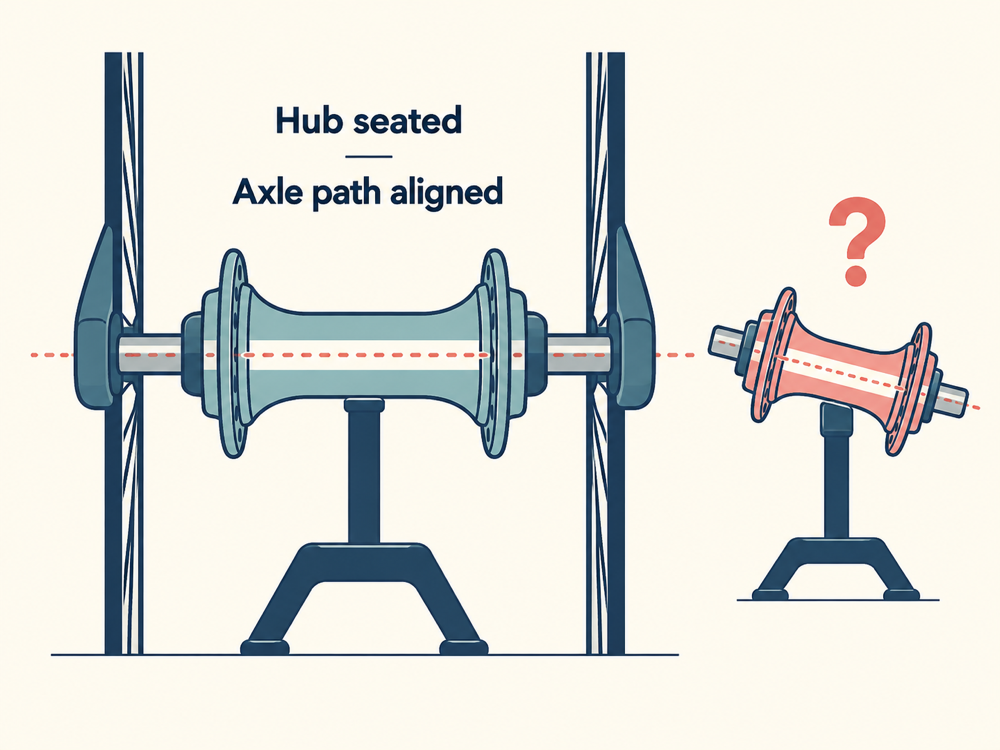

For a slotted flat-bar brake lever, align the installation slots, seat the matching cable head in its holder, then lay the wire into the slots. The enlarged head does not go through the narrow wire slot. If the head is the wrong shape, get the correct cable; if the holder is damaged or blocked, stop rather than force it.
Match the Cable End to the Lever

Many flat-bar levers take a barrel-shaped cable head, while many drop-bar levers use a mushroom- or pear-shaped end. A shift cable is not a substitute for a brake cable, even if its wire passes through the opening.
Order by the lever's identification and cable specification, not just the name of your electric bike. Compare the replacement with the intact old head if that cable was known to fit correctly. Treat the shape as a useful clue, not proof that every similar-looking replacement will fit.
Open the Intended Installation Path
Switch the bike off and keep it stationary. On a slotted lever, look for the openings in the lever body, barrel adjuster and locknut. Aligning them creates a sideways entry for the wire. Pulling the lever exposes the holder where the cable head belongs.
There must be enough slack to place the head without dragging it into position under tension. If creating slack requires releasing the cable fastening at the brake, that connection must later be restored and adjusted correctly. Have a mechanic finish the job if you are not equipped for that step.
After seating the head and routing the wire, secure the adjuster and housing as the lever instructions specify. A lever without this slotted arrangement needs its own installation route.
Check the Holder, Not Just the Opening
A head caught on the edge can look installed without sitting in the pocket that carries the pull. Check its position against the lever's installation diagram. The question is whether it bears on the intended seat, not whether all the metal disappears from view.
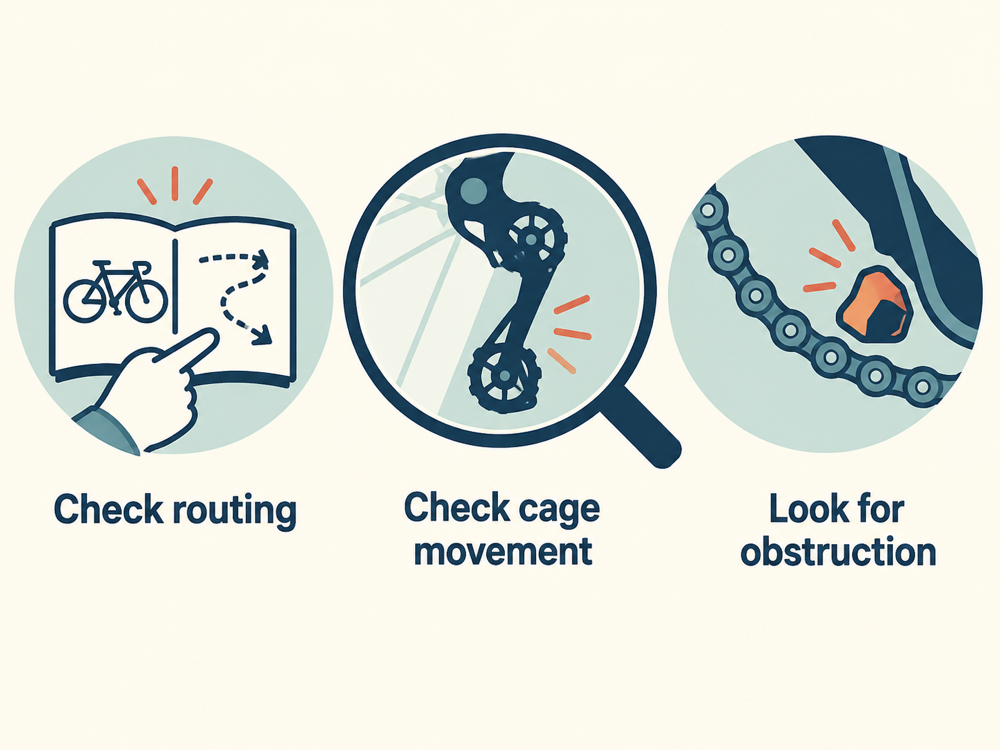
If a matching head still cannot seat, look for an obstruction or visible damage. A retained fragment, crack or distorted pocket means stop. Do not file the head smaller, widen the slot or pry out a broken piece. Bring the cable packaging, lever identification and a clear photo of the obstruction to a bike mechanic.
Finish the Brake Before Riding
Getting the head into place is not the end of the repair. The cable fastening, housing and brake adjustment must all be restored. During stationary applications and releases, the head should stay seated, lever travel should remain consistent and the brake should release normally.
If the head shifts, fresh slack appears or the lever behaves unpredictably, do not ride to see whether it settles. Have the installation checked and the complete brake function verified first. Once this fitting problem is resolved, regular mechanical disc brake maintenance helps keep cable wear from becoming the next interruption.