
If the chain hangs slack only on the smallest rear cog, check its route through the derailleur and whether the cage can take up the loose chain before removing links. A replacement chain may be too long, but shortening it can create a different fault if the largest cog already needs its full length. A blocked cage or an incompatible gearing combination will not be fixed by cutting the chain shorter.
Look at the Chain Path First

This check applies to an electric bike with an actual rear derailleur. A single-speed drivetrain uses a different tension arrangement. Switch the power off, support the bike securely, and keep fingers clear of the chain and teeth.
Look at how the chain passes around the derailleur's pulley wheels and through the cage. It should follow the intended route, not rub across a cage tab or bypass a pulley. Compare it with the instructions for that derailleur, especially if the chain was just removed.
Also look for an obstruction or damaged cage preventing normal take-up. Do not bend the cage back or force it against resistance. A routing or movement problem needs correction before chain length can be judged meaningfully.
Compare Both Ends of the Gear Range
The smallest rear cog needs less chain wrapped around it, leaving the derailleur to take up more of the excess. The largest cog needs more chain. Both conditions matter.
During a properly supported, power-off inspection, check the opposite end of the gearing without forcing a shift against a taut chain. If the chain is already pulling the derailleur close to its travel limit on the largest cog, removing links to cure small-cog slack is not a safe answer.
With multiple front chainrings, the front-ring choice also changes the demand. These are inspection conditions, not a recommendation to ride in cross-chained combinations. There is no reliable universal link count for this symptom.
Check What Changed
Tell the mechanic whether the chain, cassette, chainring, or derailleur was recently replaced. A wider gear range can ask the derailleur to take up more chain than it is designed to manage.
Capacity and alignment are different issues. Limit screws control lateral travel; cable indexing aligns shifts. Neither creates extra chain take-up. Once the parts and chain length are correct, the derailleur tuning guide covers that separate alignment task.
Do Not Trade Slack for a Chain That Is Too Short
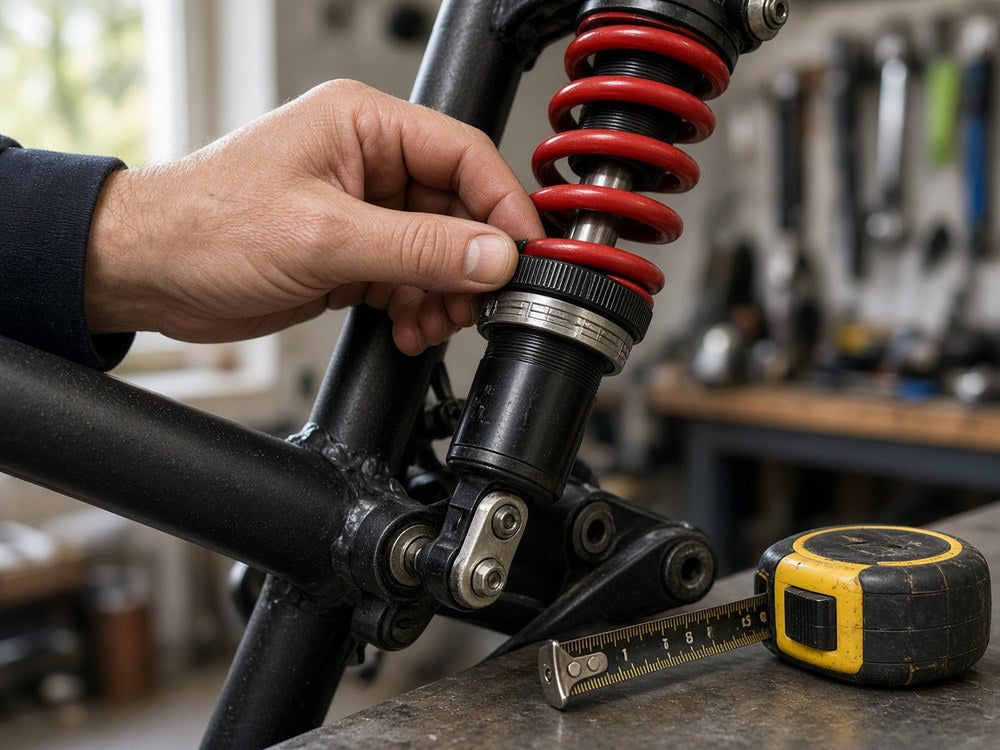
If the bike has rear-frame suspension, chain demand may also change as the suspension moves. A stationary check in one position cannot establish adequate length throughout its travel. Have someone familiar with that frame follow its specific sizing procedure; do not disconnect or depressurize the shock to experiment.
The finished setup must take up slack while retaining enough chain for the required gearing and movement. If those requirements cannot both be met, correct the compatibility or mechanical fault before riding.