
If the brake cable slips through its anchor bolt, stop riding and have the attachment corrected. That means checking the cable route and clamping parts, tightening to the brake maker's specification, and replacing damaged parts where needed. A barrel adjuster cannot secure a cable that is sliding through its clamp.
Confirm Movement at the Anchor

With your electric bike switched off and stable, look at the exposed inner cable where it is fastened to the brake's actuating arm. Keep the wheel installed and let the brake cool. The arm and its clamp normally move together when you pull the lever; that movement is not cable slip.
What matters is whether the cable changes position relative to the clamp. Compare an identifiable point on the cable with the clamp's edge before and after a gentle lever pull, keeping fingers away from the mechanism. Same-angle photos can help. If sliding is already obvious, stop testing rather than repeatedly pulling harder.
A longer lever pull can also follow an outer housing end settling into its stop. That changes slack without necessarily moving the cable through the anchor. A soft lever alone does not tell you which happened, and unexplained looseness still needs checking before riding.
Inspect Cable Condition and Routing
Check the visible working section for broken strands, corrosion, sharp kinks or obvious crushing. A damaged cable needs replacement, not more pressure from the bolt. If the clamped section is hidden or its condition is uncertain, let a bike mechanic inspect it rather than loosening the fastening just to look.
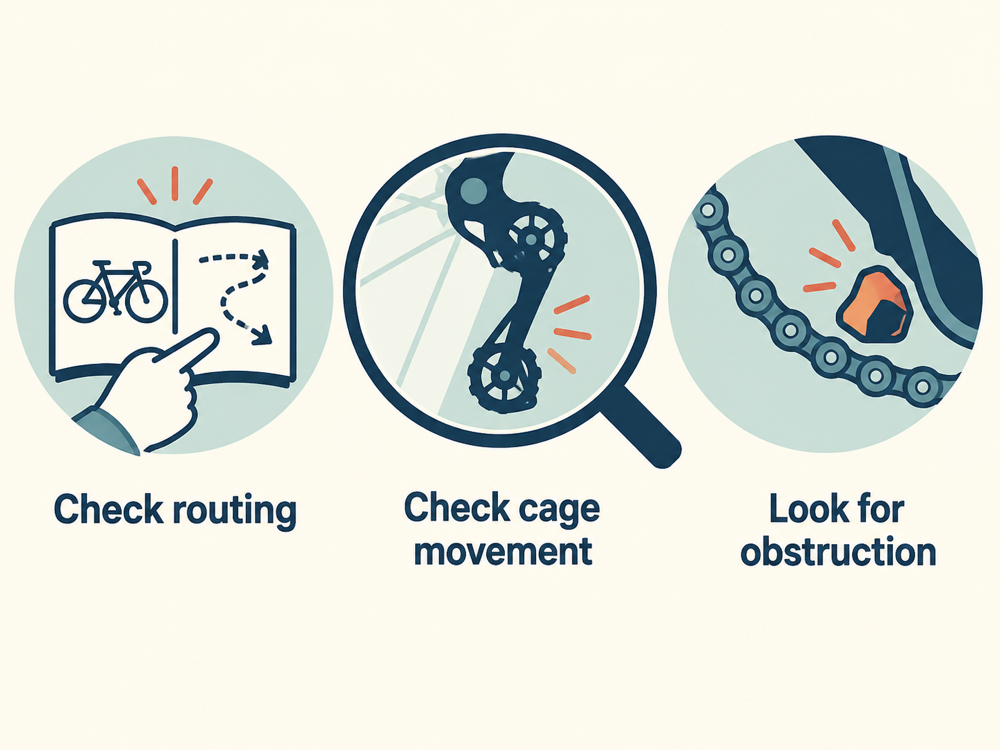
Compare the cable's path and the clamp arrangement with the instructions for that brake. A displaced clamping piece or cable outside its intended path can prevent reliable grip. Do not guess which side of a washer the cable belongs on from a similar-looking brake.
Likewise, a bolt that will not hold its specified tightening torque needs attention to the fastening parts or threads. A longer wrench or an extra washer is not a repair. The little cap on the cable's free end only limits fraying; it does not hold the braking load.
Require a Secure Repair and Stationary Recheck
An intact cable installed incorrectly may need correct routing and fastening. Damaged cable or clamp hardware needs the appropriate replacement. The repairer should follow the brake's specified arm position, clamping arrangement and tightening torque; there is no universal anchor-bolt setting to apply by feel.
After repair, have the brake checked through repeated applications and releases. The cable must stay fixed in its clamp, lever travel should remain consistent, and the brake should release properly. If the cable moves again or slack returns, the cause has not been resolved.
A single squeeze that feels firm does not prove the brake is ready for road use. Have the complete brake function verified before riding, rather than using traffic or a descent as the test. Once the attachment is reliable, keep up with mechanical disc brake maintenance to catch cable wear before another failure.