
If a wider rear tire is useful, why not put the same tire on the front? Because adding tire volume at the driven wheel and changing the bike's steering are two different decisions. A narrower-front, wider-rear setup can balance rear-wheel support and traction under power with the steering feel wanted up front. The aim is not to make one end grip and the other end turn. Both tires need traction, but their jobs and loads are different.

Why the Rear Tire May Get More Volume
Start with what happens when you accelerate. On a rear-wheel-drive e-bike, the rear tire pushes against the ground to move the bike forward. It has to carry its share of the rider and bike while transmitting that drive force. Acceleration also transfers load toward the rear, although the weight carried by each wheel depends on the bike's layout and your riding position.
A wider tire usually holds more air than a narrower tire of similar diameter and construction. That extra volume gives the setup more room to balance support with cushioning. The tire needs enough support to avoid deforming excessively under load, but it also needs to yield as it rolls over uneven pavement. A larger tire can offer that cushioning without relying on a small tire being run too soft for the weight it carries.
This is why tire pressure and load belong in the same conversation. Air volume is useful, but pressure still has to suit the load. A big rear tire with insufficient pressure can feel squirmy rather than planted. Making it wider does not remove the need to support it properly.
The tire's construction matters, too. Its casing, the structure beneath the tread, influences how readily it flexes. The tread and rubber affect how it interacts with the riding surface. For the driven wheel, the goal is a tire that can absorb irregularities while remaining well supported as it pushes the bike forward. Width gives a designer another way to tune that balance; it does not supply traction on its own.
Why the Front Does Not Always Need the Same Width
Now consider the other end. Through the handlebar, you feel how the front wheel responds to small corrections and how naturally the bike enters a turn. Upsizing that tire changes more than its appearance. With otherwise similar construction, a larger tire generally adds material and weight, while its inflated shape and pressure also influence steering behavior.
Keeping the front relatively narrower can avoid adding the same bulk to the steering end just because extra tire volume is useful at the rear. The intended balance is a supported rear end without making the front feel unnecessarily heavy or reluctant to change direction. A narrower tire does not guarantee lighter steering, though. Tire profile, pressure, and the bike's geometry still determine how the combination feels.
That does not make the front tire's grip less important. Under braking, load shifts forward, and the front tire must handle the increased load while transmitting braking force to the road. The front brake supplies a substantial share of stopping power, while the rear brake also contributes. Both tires need lateral grip through corners. A front tire chosen for steering response still has serious braking and cornering work to do.
Nor does the wider rear automatically put more rubber on the ground. At the same load and pressure, wider and narrower tires can have approximately the same contact-patch area, with the wider tire producing a wider, shorter patch. The distinction is explained in Schwalbe's guide to tire deformation and rolling resistance. Pressure, diameter, casing, and tread also influence how a tire rolls.
So the tradeoff is not "more grip at the back, less grip at the front." It is choosing the size and construction at each end to get the desired steering, support, and behavior under power and braking. Equal-width tires can satisfy those needs, too. A narrower front and wider rear is one approach, not an upgrade every e-bike needs.

What This Looks Like on the Macfox X7
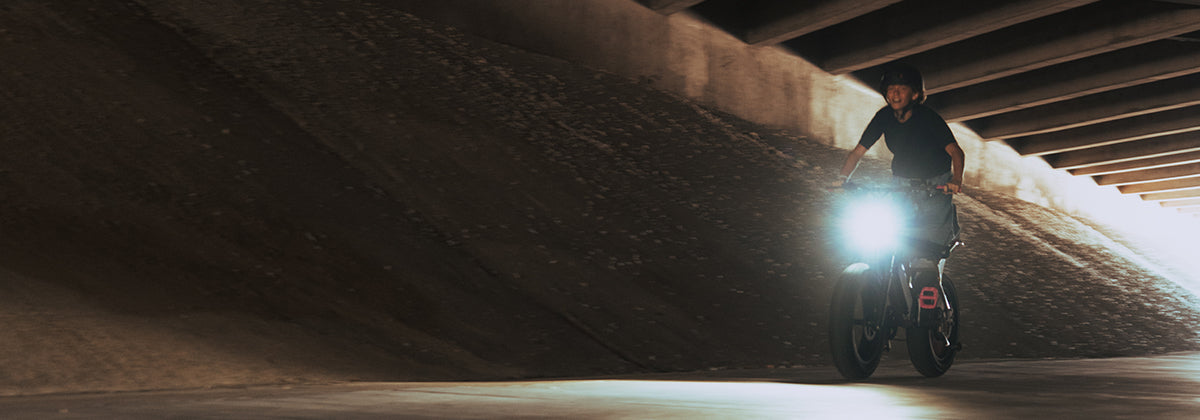
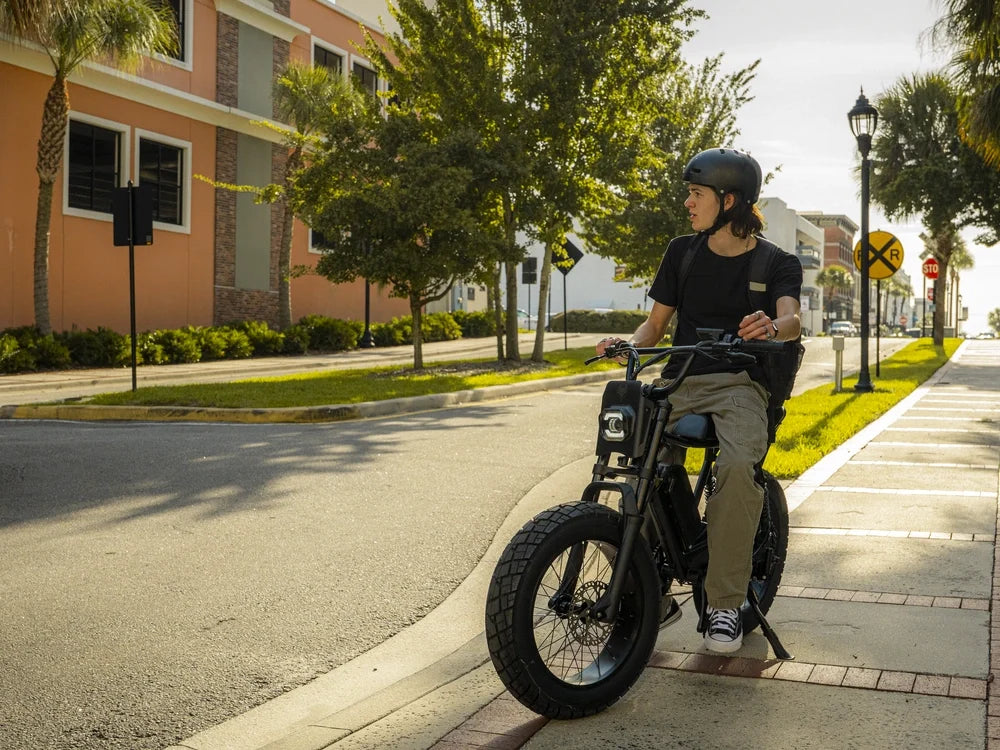
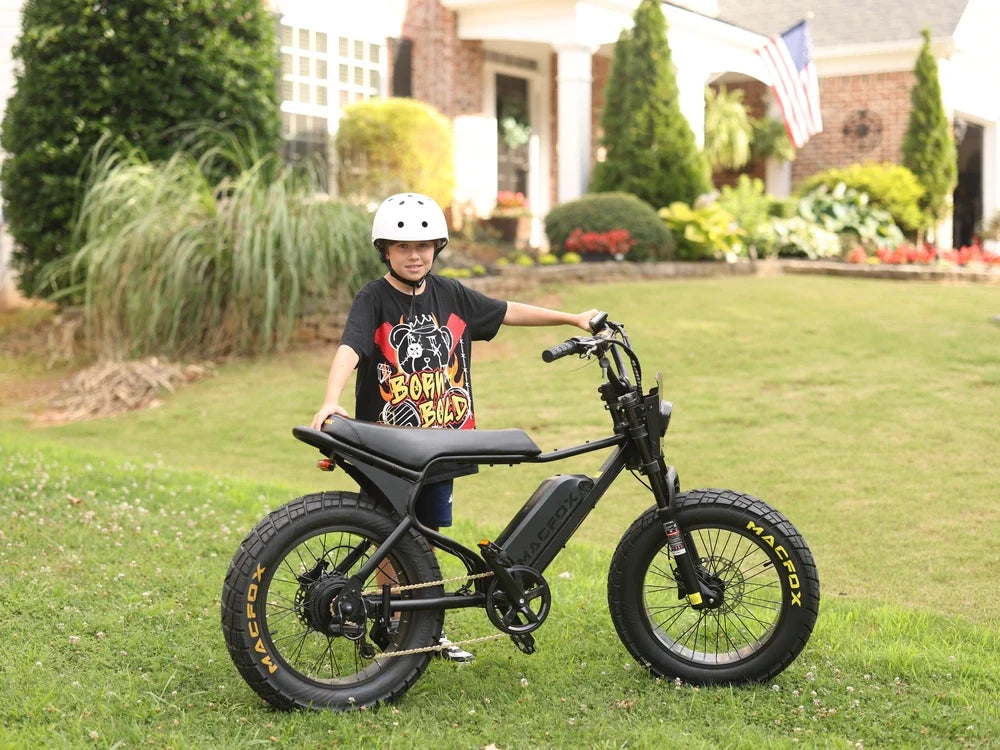
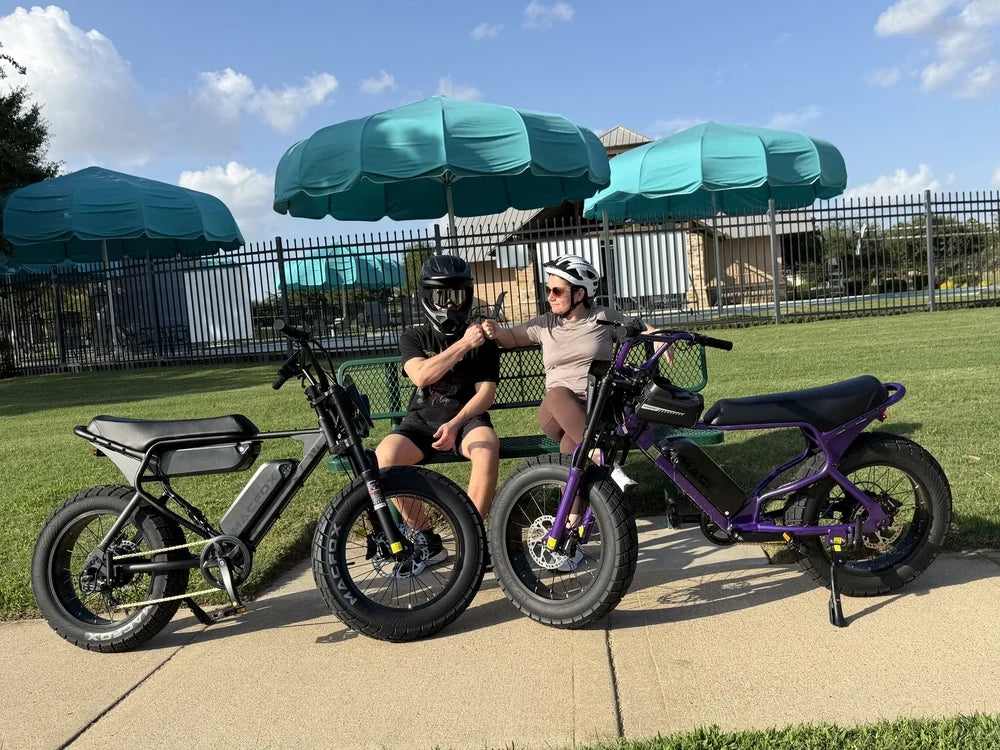
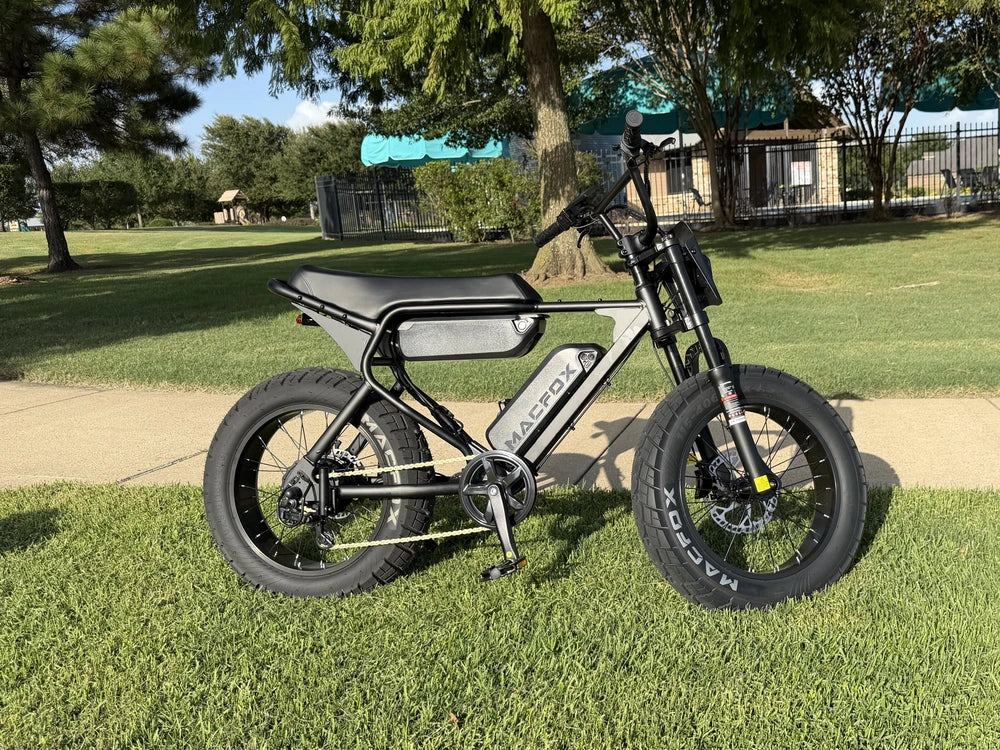
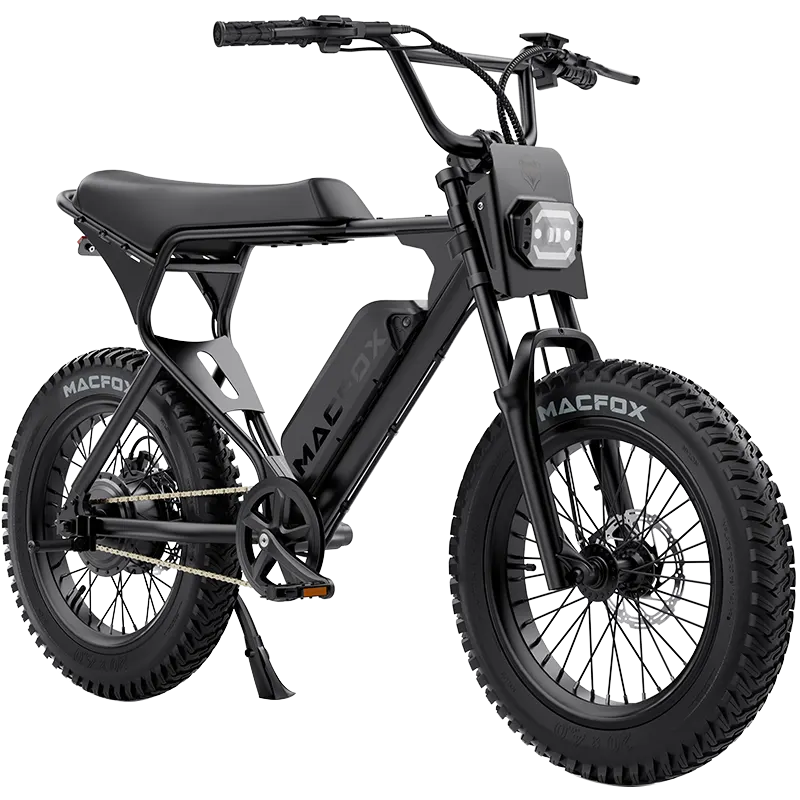
The Macfox X7 eBike uses a wider rear tire as part of its factory configuration. Its stability-focused, planted ride pairs these two fat-tire sizes:
| Position | Nominal tire size |
|---|---|
| Front | 20 x 4.5 inches |
| Rear | 20 x 5.0 inches |
The front is narrower only in relation to the rear. At 4.5 inches, it is still a fat tire. Both tires have a nominal 20-inch size designation, so this is a width difference rather than a mixed-wheel-diameter setup. Nominal sizing does not mean their actual inflated outside diameters are exactly identical.
A wheelie makes the rear tire's support role particularly clear: with the front wheel off the ground, the rear becomes the bike's only ground contact. Support and control at that end are essential, but rear-tire width is not a substitute for rider control or a reason to attempt stunts on public roads.

What to Check Before Buying or Changing Tires
When comparing an electric bike with your other options, look at both tire specifications rather than treating the widest number as a performance score. Consider the intended steering feel, the load the bike will carry, and the surfaces you expect to ride.
For a replacement, start with the specified size for that wheel. A "20-inch" label alone does not establish compatibility. The tire's bead diameter must match the rim, its width must suit the rim's internal width, and the fork or frame must have sufficient clearance. These tire-and-rim fit requirements matter more than making the two sidewalls show the same numbers. Use the applicable pressure guidance for the bike, tire, and rim rather than guessing from width.
For the X7, the original replacement tires are offered as Front (4.5-inch) and Rear (5.0-inch) options. Order for the position you are replacing. A worn rear tire calls for the correct rear replacement, not an automatic change to the front.