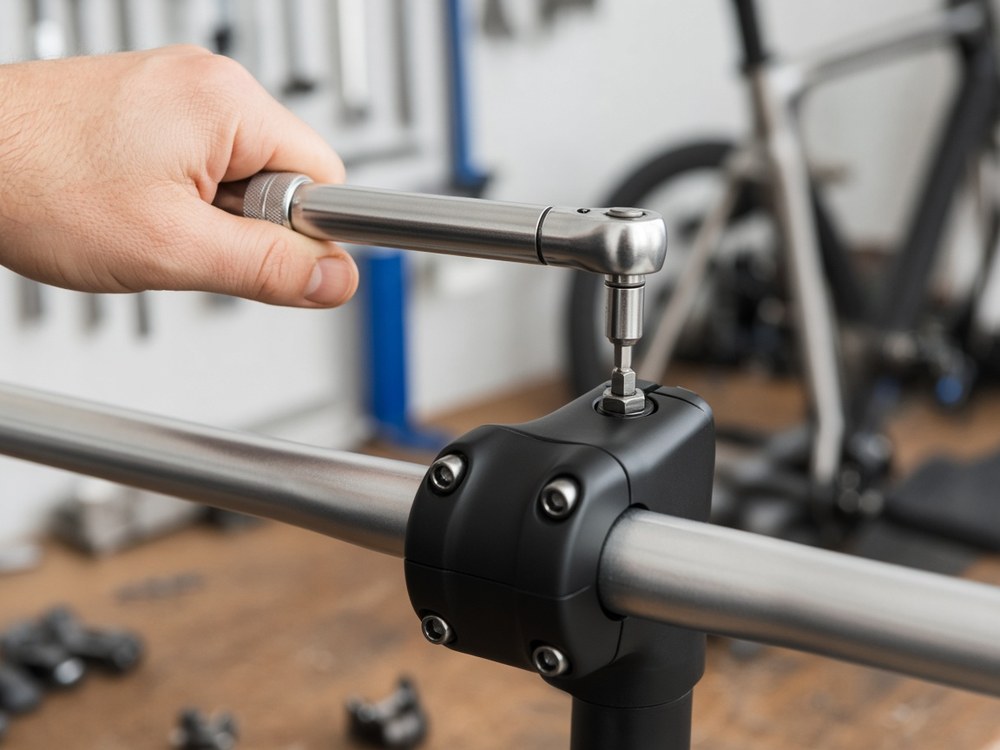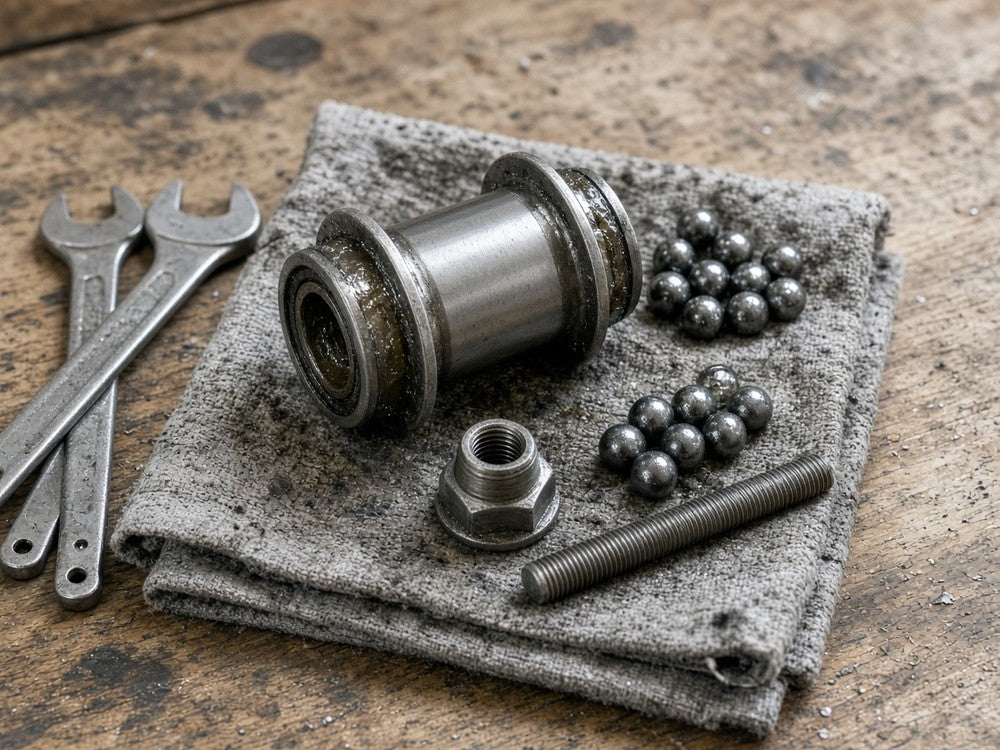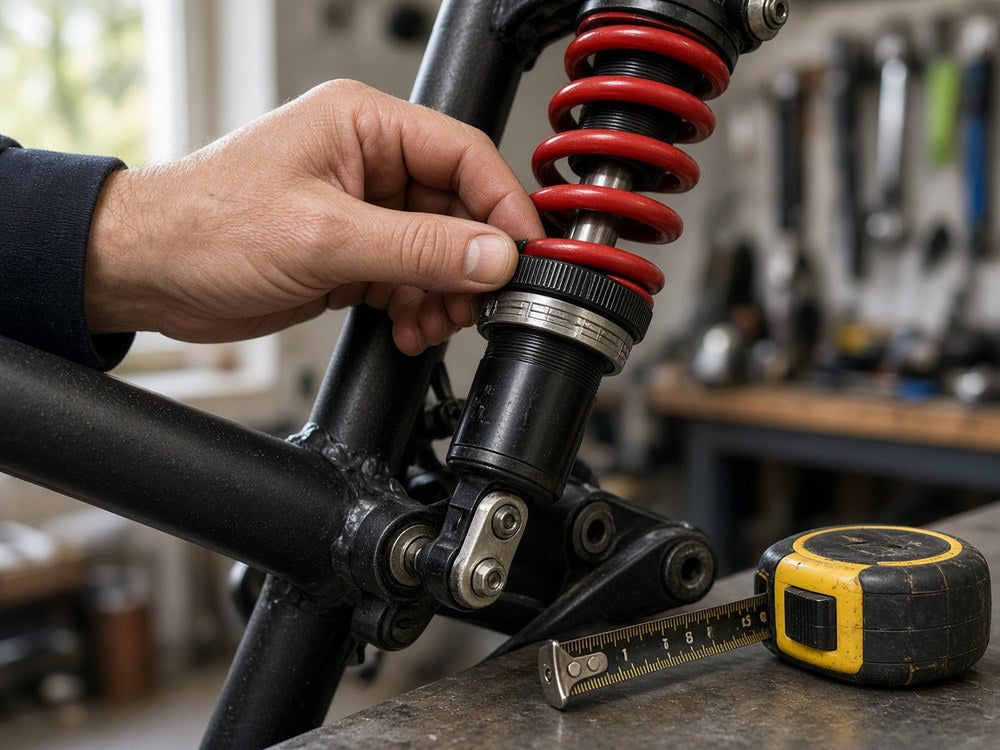

If the headset's bearing cover scrapes the frame after reassembly, check the cover, compression ring, and upper bearing fit before tightening anything further. For example, a cover fitted over the wrong or poorly seated ring can contact the head tube instead of allowing normal bearing preload. Some integrated headsets need dedicated upper-assembly shims, but adding an ordinary stem spacer or loosening the headset until it stops scraping is not an equivalent repair.
Locate the Cover That Is Touching

The bearing cover sits just above the frame's head tube. It is different from the top cap above the stem, where the preload bolt usually sits. Identifying the actual contact point keeps you from changing the wrong part.
Switch off your electric bike and support it securely. Look for a hard edge touching the frame or a fresh scrape that follows the cover's movement. Do not force the bars through resistance. A hose rubbing outside the cover is a different problem from the cover itself bearing against the frame.
Restore the Correct Upper Assembly
Start with what changed. Was only the stem removed, or did the upper bearing, compression ring, or cover come off too? Was a replacement cover installed because it looked similar?
The parts have to work together, not merely slide onto the same steering tube. Use the correct assembly diagram to identify the bearing, ring, cover, and their order. If a part is missing, mismatched, or not seated as intended, restore that arrangement before considering a shim.
Have a mechanic handle unfamiliar internal assembly. For a recent bar swap, our handlebar replacement guide helps with bar fit and cable reach; those checks do not establish whether a bearing cover fits.
When a Dedicated Shim Is the Right Part
In certain integrated headsets, an approved thin shim works within the upper bearing-cover assembly so the compression ring can load the bearing without the cover bottoming against the head tube. That is a specific remedy for a specific assembly, not a universal instruction to raise the handlebars.
Ordinary stem-height spacers sit elsewhere and do a different job. Do not substitute them, grind the cover's edge, or copy a shim thickness from an unrelated bicycle. The correct parts and placement depend on the headset's instructions.
More clearance is not automatically better, either. Raising the cover too far can compromise the seal's protection. Ask the mechanic to check both contact and sealing, rather than simply making the visible scrape disappear.
Check Clearance and Steering Together
A successful correction leaves no hard cover-to-frame rubbing, keeps the seal properly positioned, and allows smooth steering without headset play. The stem must also be securely aligned and clamped.
If the cover clears only when the headset is loose, the problem is not solved. Likewise, a silent cover does not clear a notchy or binding bearing. Keep the bike out of use until the assembly can meet all of those conditions together.