
One stationary pad is normal on a single-sided mechanical disc brake. The moving pad pushes the rotor against the fixed pad to stop the wheel. If the brake is designed to move both pads, however, an inactive side needs checking. And weak braking is not normal just because one pad is supposed to stay still.
Identify the Caliper Design

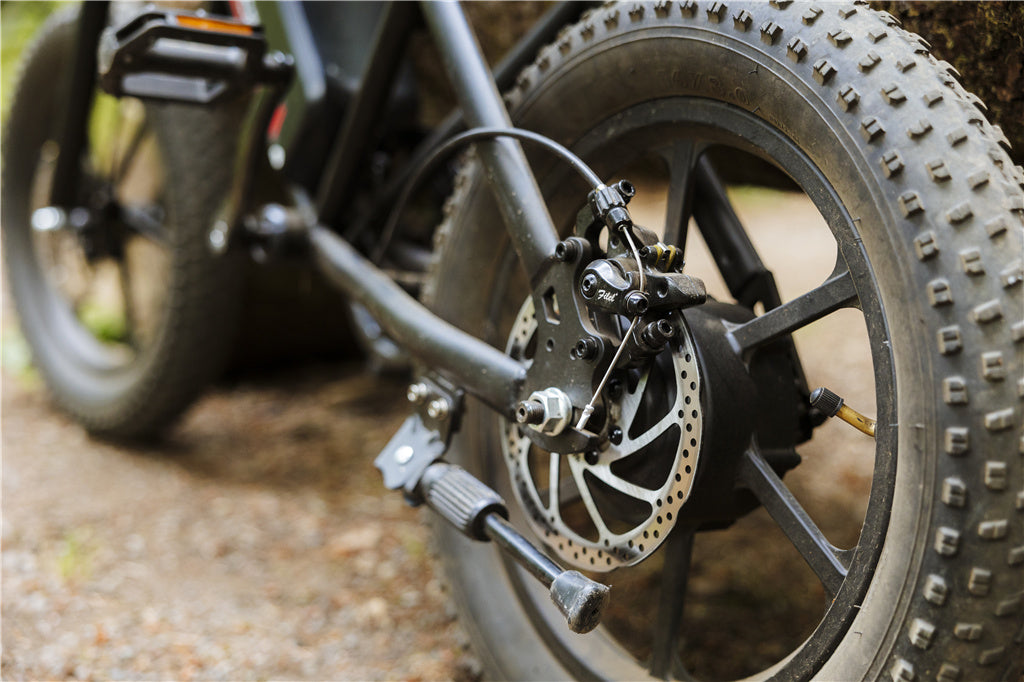
Look at what connects to the caliper, the assembly around the brake rotor. A cable pulling an external arm points to cable actuation; a hydraulic hose carries fluid. But a cable alone does not settle the question: some mechanical calipers move both pads.
The name of your electric bike is not enough to identify how its fitted brake works, especially if parts have been replaced. Match the markings on the caliper to its manufacturer's instructions.
For a closer look, switch the bike off, keep it stable with the wheel properly installed, and let the brake cool. Use a light without putting fingers near the rotor. If the markings or mechanism remain unclear, a shop can identify it before anything is adjusted.
Check the Stationary Pad and Clearance
Fixed does not mean unused. That pad still needs friction material and must meet the rotor when the brake is applied. A missing pad or one worn down to its metal backing is not a normal stationary side. Do not ride with either condition.
Look for the friction layer facing the rotor, not just the metal plate behind it. If the view is too restricted to judge its condition, have it checked rather than guessing. Do not pry the pad loose to make it move, and keep oil away from both pads and rotor.
A slight sideways rotor movement toward a fixed pad can be part of normal operation. A large gap that makes the rotor bend noticeably, or contact with the caliper body, needs attention. Follow the actual brake's clearance and wear limits; there is no single gap measurement that fits every caliper.
Separate Normal Motion From Inadequate Braking
Once the design and pad condition are clear, gently apply the lever with the wheel installed. The pads should grip before the lever runs out of travel. On a cable-operated brake, watch whether the external arm hits its stop before effective clamping occurs.
An arm that bottoms out can point to excessive clearance or worn pads. Do not keep tightening the cable to disguise the problem. The correct adjustment depends on the caliper; some brakes use dedicated pad adjusters rather than cable tension to compensate for wear.
Stop riding if braking is weak, the lever reaches the grip, or a pad that should move remains inactive. A wheel resisting a stationary push does not establish that the brake will stop you properly at speed.
For a confirmed mechanical setup, continue with mechanical disc brake maintenance. Follow the component instructions or have a qualified shop make the repair before returning to the road.