
Why Parents Need to Understand Youth eBike Laws
For many American families, the electric bike has become more than a passing trend—it’s now a common choice for teens and young riders. Parents see youth electric bikes as a way to give their children independence, confidence, and a convenient ride to school or activities. But unlike traditional bicycles, e-bikes are regulated under specific laws that vary by state.
If you are a parent considering an electric bicycle for your child, it’s critical to understand the rules. Questions like “How old does my teen need to be?” or “Is a helmet required?” can mean the difference between safe, legal riding and unexpected fines or risks. This guide explains the key youth eBike laws every U.S. parent should know, so you can make informed choices for your family.
Minimum Age Requirements for Youth Riders
-
Class 1 e-bike (pedal assist only) – Many states set no statewide minimum age, though a few set one for every e-bike: New York and Pennsylvania require riders to be 16, and New Jersey 15.
-
Class 2 e-bike (pedal assist + throttle, up to 20 mph) – Usually treated the same as Class 1 for age. Illinois will set 15 as the minimum for Class 1 and 2 from January 1, 2027.
-
Class 3 e-bike (pedal assist up to 28 mph) – The class most often restricted by age, commonly to 16 and older (Texas sets 15, Michigan 14).

Helmet Laws and Safety Gear
-
Reflective clothing for evening riding.
-
Lights and bells for visibility.
-
Proper shoes, not flip-flops or sandals.
Throttle Rules and Safe Riding for Teens
-
Making sure helmets and safety gear are always worn.
-
Setting boundaries for where and when the bike can be used.
-
Explaining how to combine pedal assist with throttle for balanced riding.
Parental Responsibility and Liability
-
Fines and tickets – Where a state or city sets a minimum age, an underage rider may be cited, and rules on who receives the citation vary.
-
Insurance coverage – Standard homeowners’ or auto insurance may not cover e-bike accidents, especially if the rider is underage or not following helmet laws.
-
Civil liability – Depending on the state, parents may share financial responsibility if a minor causes an injury. Ask your insurer or an attorney about your situation.
Key State Variations Parents Should Know
-
California: Class 3 riders must be at least 16. Helmets are required for riders under 18 and for all Class 3 riders.
-
New York: Riders must be at least 16 to operate any e-bike, and Class 3 e-bikes are allowed only in New York City.
-
Texas and Florida: Texas sets 15 as the minimum for Class 3. Florida has no statewide minimum, lets cities and counties set one, and requires helmets for riders under 16.
-
Colorado: Riders must be at least 16 for Class 3; younger riders may ride a Class 3 only as a passenger. Helmets are required for Class 3 riders under 18.
Choosing the Right Youth eBike for Your Teen
For a side-by-side look at teen-friendly models, sizing and speed settings, browse our e-bikes for teens collection.
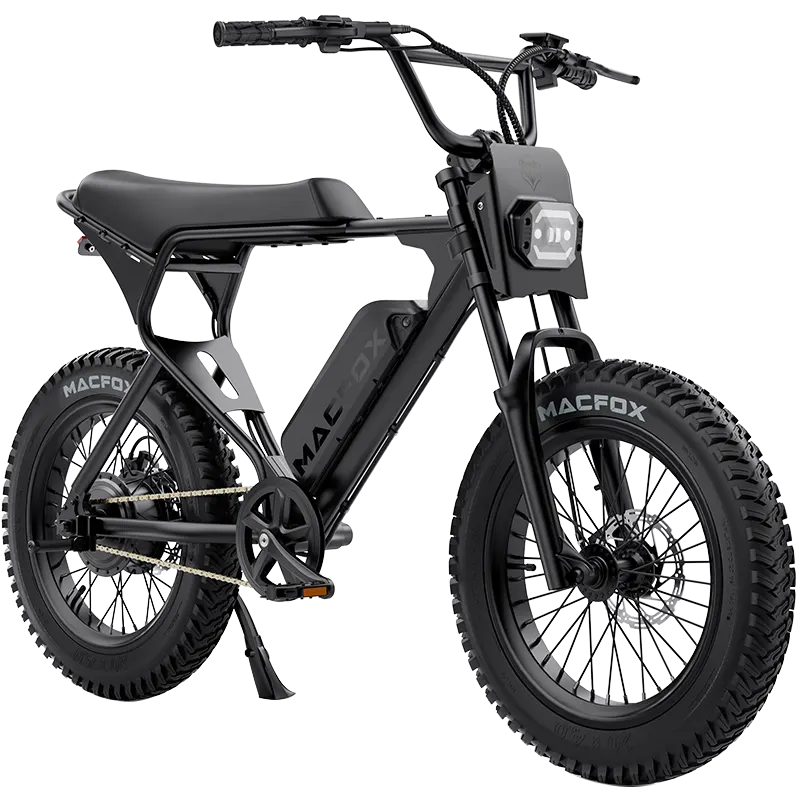
Macfox M16 Youth Electric Bike
Macfox X1S Commuter Electric Bike

Checklist for Parents Before Buying
-
✅ Confirm your child’s age matches state law for the intended e-bike class.
-
✅ Make a well-fitted helmet part of every ride.
-
✅ Check the class on the bike's label and any local limits on where it can be ridden.
-
✅ Review insurance coverage for e-bike use.
-
✅ Choose a model sized for your rider, such as the Macfox M16 or X1S.
Beyond the Law: Building Safe Riding Habits
-
Practice riding in safe areas before hitting busy streets.
-
Teach hand signals and road awareness.
-
Limit night riding for younger teens.
-
Encourage riding in groups for visibility and safety.

Conclusion
Youth eBike laws in the U.S. can be complex, but they all share one purpose: to protect young riders and those around them. For parents, understanding age limits, helmet requirements, throttle rules, and liability concerns is essential before buying an electric bike.
By choosing the right electric bike, such as the Macfox M16 Youth Electric Bike for younger riders or the Macfox X1S commuter electric bike for older teens, and pairing it with clear ground rules, you can give your child freedom and confidence on every ride.
As electric bicycles become a normal part of youth life, parents who stay informed about e-bike laws will be best positioned to guide their children toward responsible riding.
Sources
- California Vehicle Code 21213 and 21212
- New York VTL 1242
- Texas Transportation Code ch. 551
- Florida Statutes 316.20655 and 316.2065
- Colorado General Assembly: Electric Bicycles
- Illinois Secretary of State: Know the Rules
- New Jersey MVC: e-bikes
This article is general information, not legal advice. Last updated October 2026.