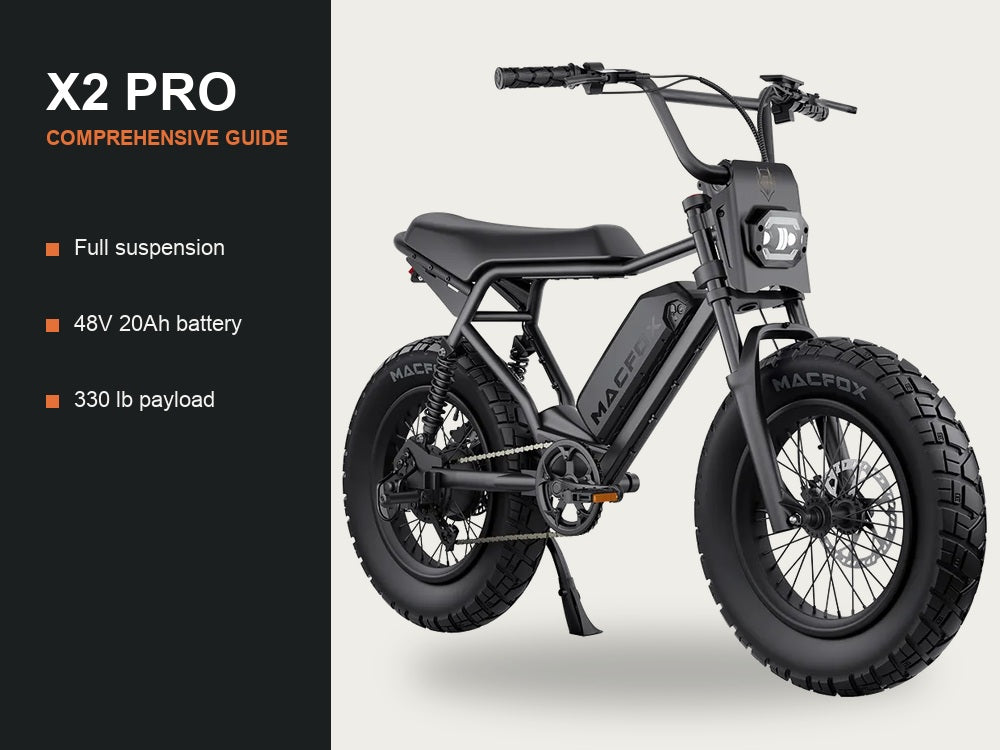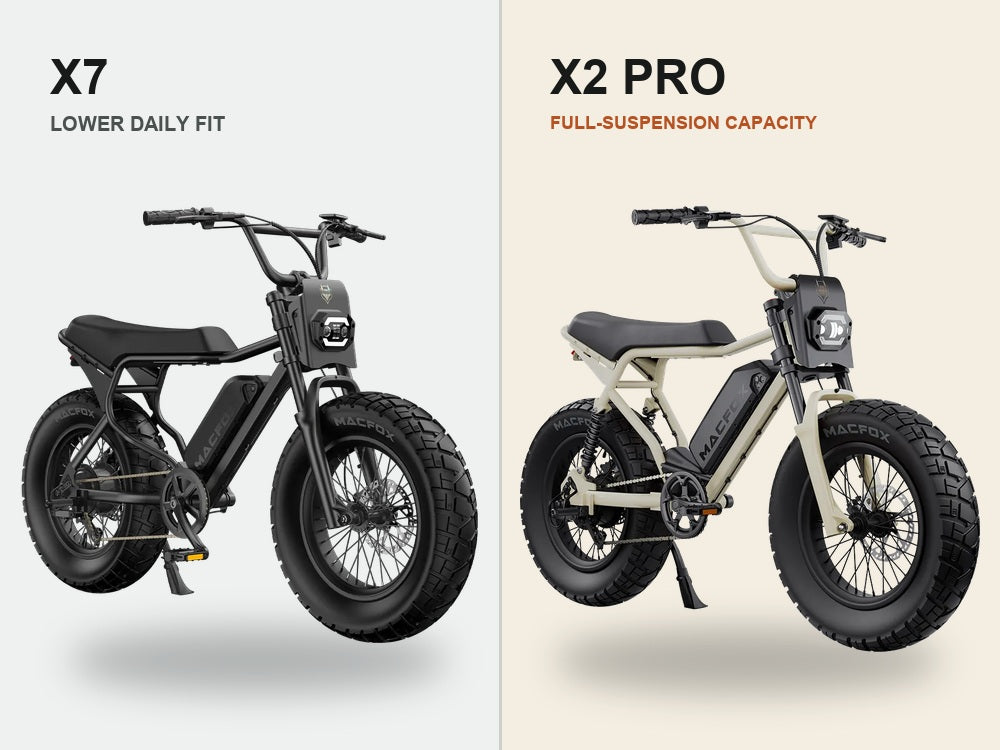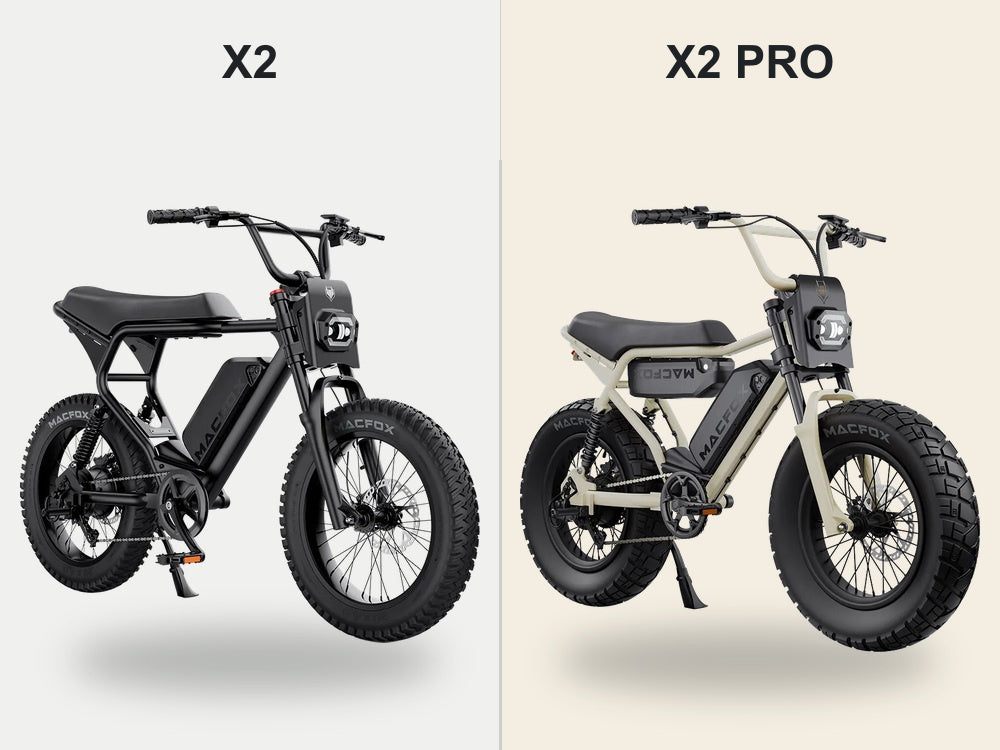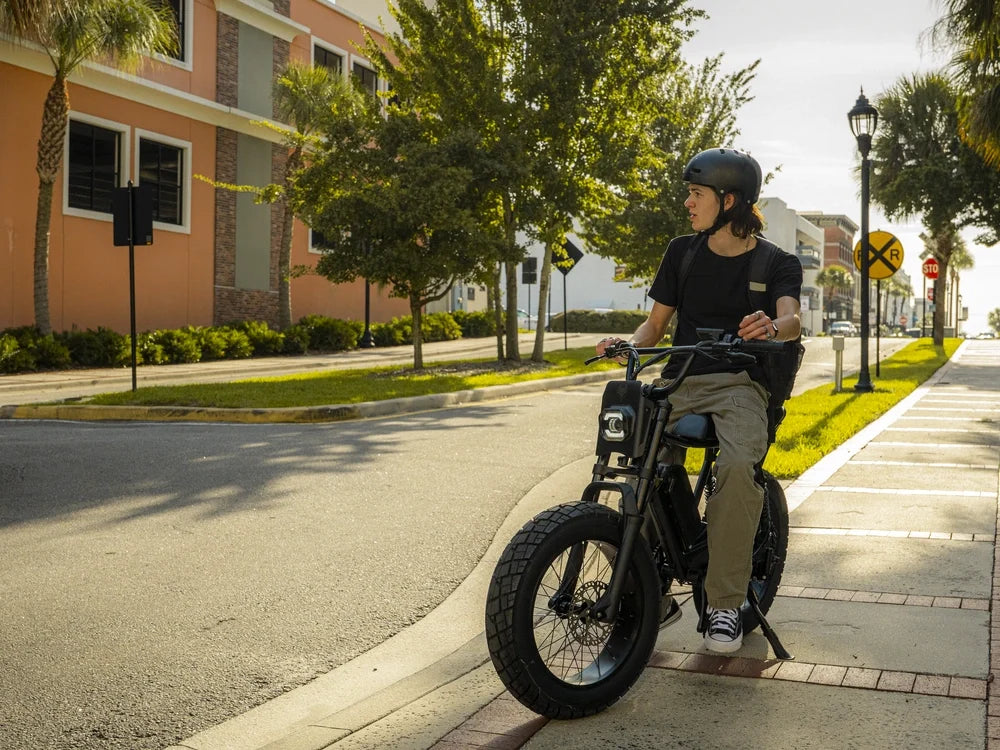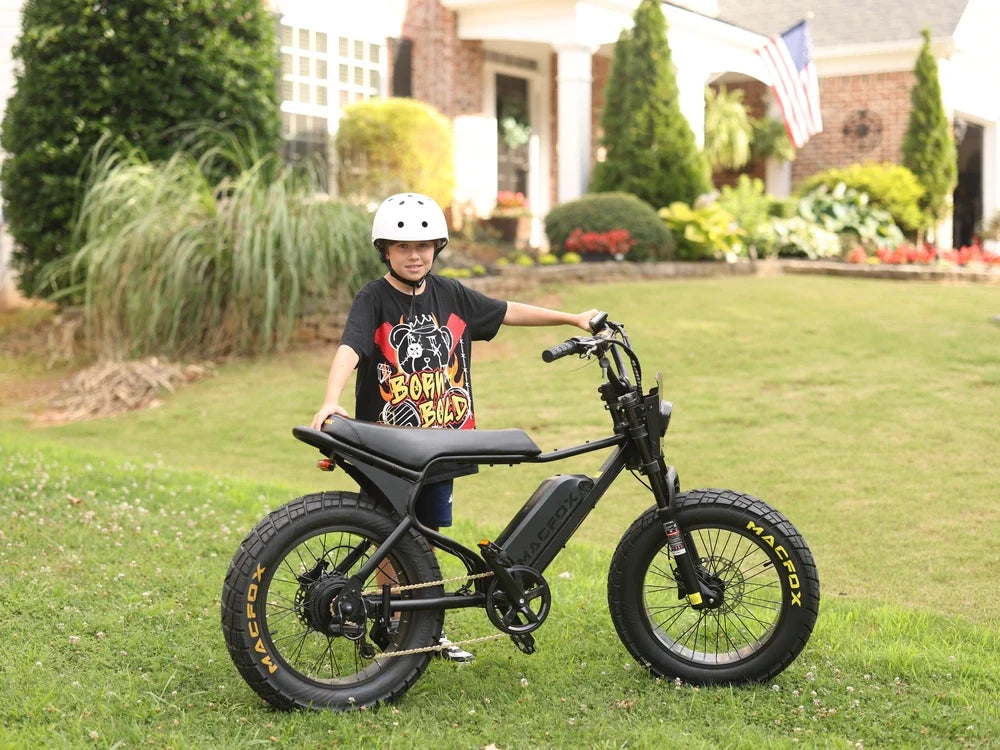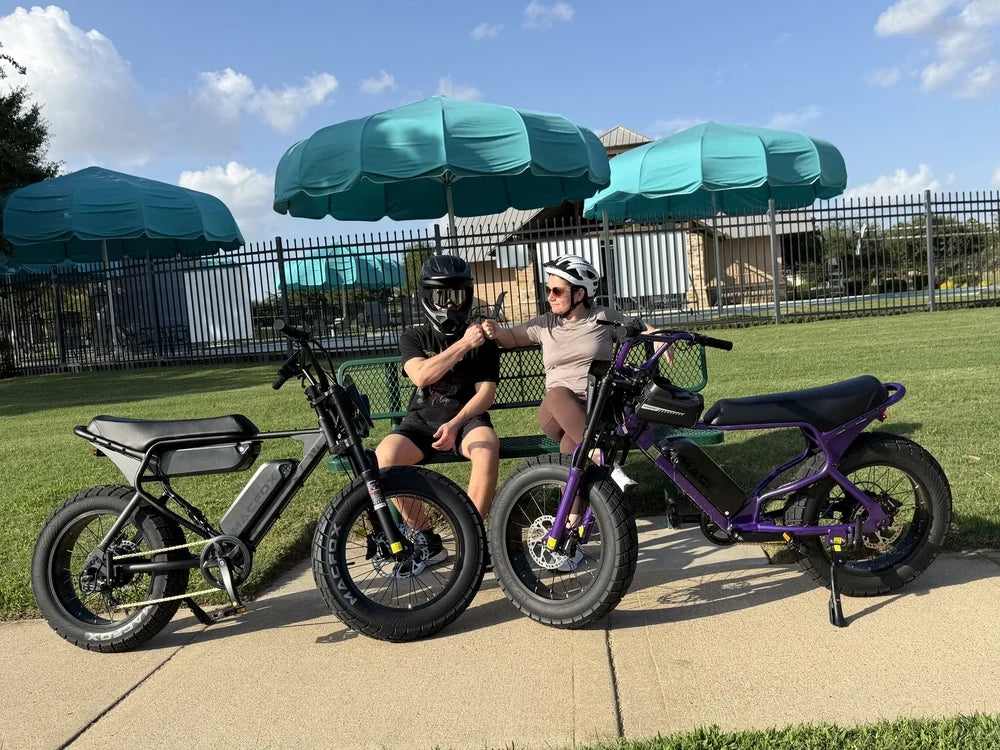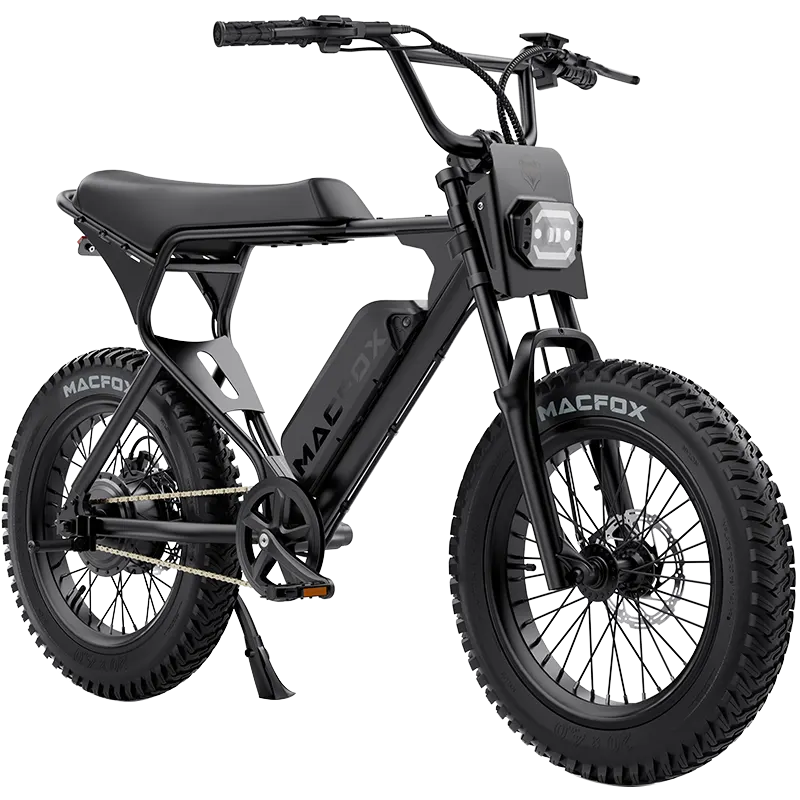

Our recommendation is to start with the route, not the larger number. Choose the single-battery Macfox X2 Pro eBike when normal trips are predictable, sit comfortably below the published range, and end near dependable charging. Choose dual when the hardest normal day includes longer round trips, changing destinations, hills, added gear, cold weather, or limited outlet access. The extra battery buys route reserve, not a faster bike.
Macfox currently lists the single-battery configuration at $2,199 with up to 40 miles of range and the dual-battery configuration at $2,798 with up to 80 miles. The $599 difference belongs in the context of a young rider's week, not in a contest between two headline numbers. Within our broader Macfox electric bike lineup, battery choice changes how long the advanced X2 Pro platform can stay in the day; it does not change its full-suspension ride or street identity.
If you are still deciding whether the model itself fits your height, route, and riding style, start with the X2 Pro comprehensive guide. Once X2 Pro is the right model, the remaining decision is one battery or two.
When One Battery Is Already Enough

A single battery is our sensible default when the rider knows the destination, the full distance home, and the next charging opportunity. A short school, work, or neighborhood route where local rules allow does not need an 80-mile headline simply because the option exists. What matters is whether the real route leaves a comfortable margin after weather, assist use, stops, and unexpected plans are considered.
That margin matters because an “up to 40 miles” figure is not a guaranteed 40-mile result on every ride. Higher assist, frequent starts, faster cruising, hills, heavier loads, cold temperatures, and low tire pressure can all reduce range. A repeatable 8-, 12-, or 18-mile day with dependable charging is very different from a 40-mile day that depends on reaching the published maximum.
Choose single when all three statements are true:
- Your hardest normal round trip sits well below the published 40-mile maximum.
- You can charge consistently at home or at another dependable location.
- A surprise detour would not leave you anxious about completing the ride.
For this rider, choosing single is not settling for less. It keeps the same X2 Pro street character, suspension, braking, and listed speed while avoiding $599 of battery capacity the weekly routine may never use.
Single vs Dual Battery: What You Actually Get
| Decision point | Single battery | Dual battery |
|---|---|---|
| Current listed price | $2,199 | $2,798 |
| Published range | Up to 40 miles | Up to 80 miles |
| Price difference | Baseline | $599 more |
| Best route pattern | Shorter, predictable days | Longer or variable days |
| Charging routine | Regular access is easy | More reserve between charging opportunities |
| Motor and top-speed setup | Same 20 mph listed top speed | Same 20 mph listed top speed |
The dual configuration doubles the published range figure, but we do not recommend it simply because 80 looks safer than 40. It earns the extra cost when a rider regularly combines destinations, cannot count on charging, or needs more margin for hills, cold weather, and a changing schedule. In that situation, the second battery supports independence without changing the bike into a different performance model.

Choose by Your Hardest Normal Day
Our editors use the hardest normal day as the decision test. Write down the longest trip repeated at least a few times each month, include the return leg, then add the conditions that make it harder: sustained climbs, a backpack or approved gear, frequent stops, colder weather, or a destination where charging is uncertain.
A five-mile round trip with overnight charging points strongly toward single. A 25-mile round trip can also point toward single when the route is consistent and the rider is comfortable with the available margin. A 40-mile winter commute is different. Because 40 miles is the single-battery published maximum rather than a guaranteed planning distance, dual is the more practical choice when completing that route without mid-day charging is essential.
Changing plans can matter more than the original destination. A young rider may leave for class, work, or a friend's house and add another stop before returning home. Dual can make sense when that pattern is normal. A long ride once or twice a year is different; it rarely justifies paying for capacity that sits unused through most weeks.
For a deeper look at the conditions behind advertised mileage, see our e-bike range guide. Use those variables to build a margin instead of treating the published figure as a promise.
What a Second Battery Changes and What It Does Not
The dual-battery X2 Pro is a range decision, not a status or speed decision. Both configurations retain the same listed 20 mph top speed. Macfox pairs the 750W-rated drive system with that 20 mph limit as part of X2 Pro's Class 2 street-use configuration. A second battery adds energy reserve but does not change motor output or speed. Local age, helmet, throttle, and access rules still apply.

That distinction is important when comparing value. The additional $599 is worthwhile when it removes a recurring charging stop, gives the route home a realistic margin, or lets a changing day stay manageable. It is difficult to justify when the bike returns to the same charger after a short, consistent ride.
On the current Macfox X2 Pro eBike configurations, both choices keep the same full suspension, wide tires, hydraulic disc brakes, and listed 20 mph system. The battery decision should preserve the reason the rider chose X2 Pro in the first place: confident control and enough route margin, without buying more hardware than the week requires.
Check These Five Things Before You Order
- Measure the full round trip. Include the return leg, routine detours, and the distance between reliable charging locations.
- Plan below the maximum. Leave room for hills, temperature, load, tire pressure, assist level, and battery aging.
- Count charging opportunities. A secure outlet at the destination can make single practical; uncertain access makes reserve more valuable.
- Compare the $599 difference with the problem it solves. Pay for dual when it removes a recurring route constraint, not just for a larger specification.
- Choose the simpler answer unless dual solves a weekly problem. More capacity is valuable when it changes what the rider can complete confidently; otherwise single keeps the purchase and charging routine clearer.
Is single battery enough for a five-mile round trip?
For most riders, that route points toward single, especially with reliable charging. The dual configuration is difficult to justify unless the five-mile trip is only a small part of a much longer, variable day.
Should I choose dual for a 40-mile winter commute?
Dual provides the more practical route margin when 40 miles must be completed without charging. The single configuration’s 40-mile figure is an “up to” estimate, and cold weather plus real route conditions can reduce available range.
Does dual battery increase top speed?
No. Both configurations are currently listed with a 20 mph top speed. Dual adds published range reserve, not a higher top speed.
Is the published 80-mile range guaranteed?
No. It is an upper published estimate. Real range depends on assist level, speed, terrain, rider and cargo load, temperature, tire pressure, stops, and battery condition.
Can I buy single now and add another battery later?
Do not make that assumption without confirmation. Battery compatibility and the correct supporting hardware matter. If a future change is part of your plan, ask Macfox support about the exact bike and battery configuration before ordering.
Our final recommendation: buy single when the hardest normal day fits comfortably inside a realistic range margin and charging is dependable. Buy dual when longer or changing routes make reserve part of the requirement. Both keep the same X2 Pro identity; the right battery setup is the one that supports the rider's real week without paying for unused capacity or relying on a maximum that conditions may reduce.