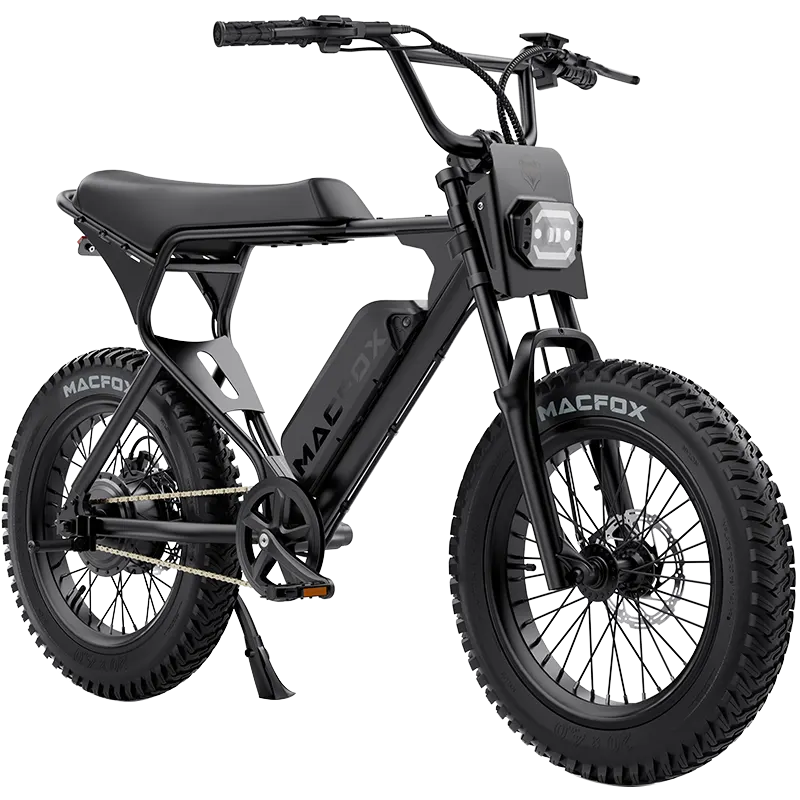

You've checked the wheel's fastening, but a gentle sideways push still produces a knock. Don't keep tightening the axle to chase it away. First, find which parts move against each other. Holding the wheel securely in the frame and keeping the hub bearings correctly adjusted are different jobs.
Observe Where the Movement Starts

On an electric bike, switch the power off. Leave the wheel installed and support the bike securely with that wheel off the ground. If you cannot safely manage the bike's weight, have a shop perform the check.
With the wheel stopped and the brake released, gently push and pull sideways at the rim. Keep your hands away from the rotor. Watch both axle mounting points, then the hub shell around the axle. The e-bike wheel guide identifies the rim, spokes, and hub if those names are unfamiliar.
If the axle shifts where it meets the frame or fork, stop. The installation is not secure, even if a nut felt tight. Correct seating, the prescribed hardware, and the actual fastening instructions need checking before you consider the bearings.
If the axle stays fixed but the hub shell knocks or shifts relative to it, the hub and axle assembly needs inspection. That observation does not prove a particular bearing needs replacement. Tire squish or slight elastic rim movement alone is not enough to locate the fault; don't increase the force to make movement more obvious.
Separate Looseness From a Wobbling Rim
Side play is something you check with the wheel stopped. Lateral runout is different: as you rotate the wheel slowly by hand, a section of the rim moves sideways. A rim that stays consistently off to one side is another distinct observation, involving wheel position rather than free movement.
A wheel can have more than one problem, but spoke adjustment is not a fix for looseness inside the hub. Note whether the knock appears during the stationary check, whether the rim wanders during rotation, or both. Don't use motor power or a test ride to make the symptom easier to feel.
Identify the Hub Before Trying an Adjustment
Cup-and-cone hubs have adjustable bearing surfaces. Cartridge-bearing hubs use a different service procedure; some need replacement bearings or inspection of other hub parts. Identify the hub before turning anything. A hub-motor wheel is not an invitation to copy a conventional cone-adjustment tutorial or open the motor cover.
On traditional quick-release cup-and-cone hubs, closing the skewer can change bearing play by compressing the hollow axle slightly. Judge the wheel in its correctly secured riding configuration. An off-bike check is not equivalent, and loosening the skewer to make a tight bearing feel smoother is not a safe solution.
Persistent knocking, visible movement at a joint, or rough rotation needs professional assessment before riding. Tell the technician which wheel is affected, whether the axle itself stays still, and what changed recently. Those details help distinguish a mounting problem from hub service without guessing which part to replace.