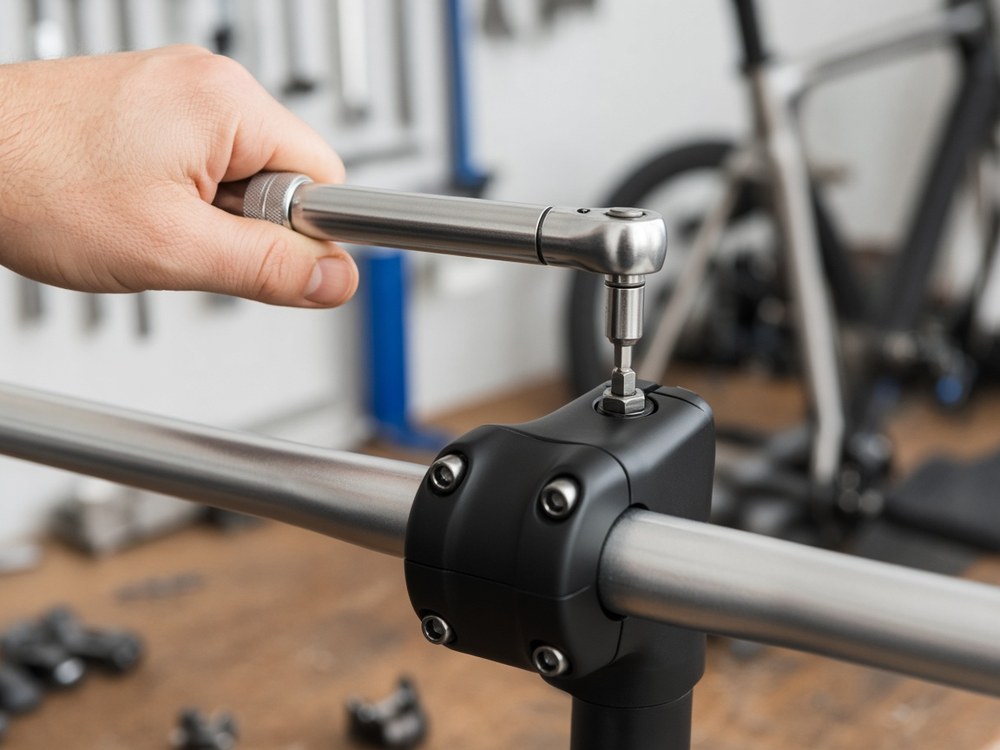

Stop pulling harder just to make a torque wrench click. On some click-type tools, a low setting produces a small head movement with little sound. First confirm that the required setting is within the wrench's rated range, the units are correct, and the tool measures in the tightening direction you need. If its feedback remains uncertain, use a verified tool or have the joint checked.
Check whether the wrench can measure this job
Start with the correct torque specification for the actual connection. This is a tool check, not a reason to change that specification until the wrench makes a noise.
Read the minimum and maximum settings on the tool or its instructions. A large wrench intended for higher loads may be unsuitable for a small bicycle fastener. Being able to turn the adjuster below the marked range does not establish accuracy there.
Next, compare the full unit labels. Newton-meters, inch-pounds, and foot-pounds are not interchangeable. Confirm that the setting is locked as instructed and that the bit fully engages the fastener.
Also check the supported measuring direction. A reversible ratchet does not necessarily mean the tool measures torque in both directions. This matters when the connection tightens counterclockwise.
Look for the specified signal, not a louder sound
Identify how this particular tool tells you to stop. A pivoting click wrench, a slipping torque driver, a beam wrench, and a digital wrench do not give identical feedback. A beam wrench is not waiting to click.
With the correct tool and setup, apply force smoothly at the specified grip position. Watch and feel for the release or indication described in its instructions. Stop immediately when that indication occurs. A quiet signal is not permission to continue until it becomes unmistakably loud.
Do not confuse the ratchet's return-stroke sound with the torque signal. Do not keep producing repeated clicks, jerk the handle, or add a pipe for leverage. If you missed the indication and continued pulling, the fastener may already have exceeded its intended tightening load.
Separate a tool problem from a damaged joint
A bolt that binds early, turns without securing the part, or feels as though it is yielding needs inspection. A different wrench setting will not repair crossed or stripped threads. Leave an uncertain safety-critical connection out of service.
Write down the tool identifier, setting, units, tightening direction, and what you felt. Tell the mechanic if the wrench was dropped or used to loosen a stubborn fastener. Those details are more useful than trying again on another bicycle bolt.
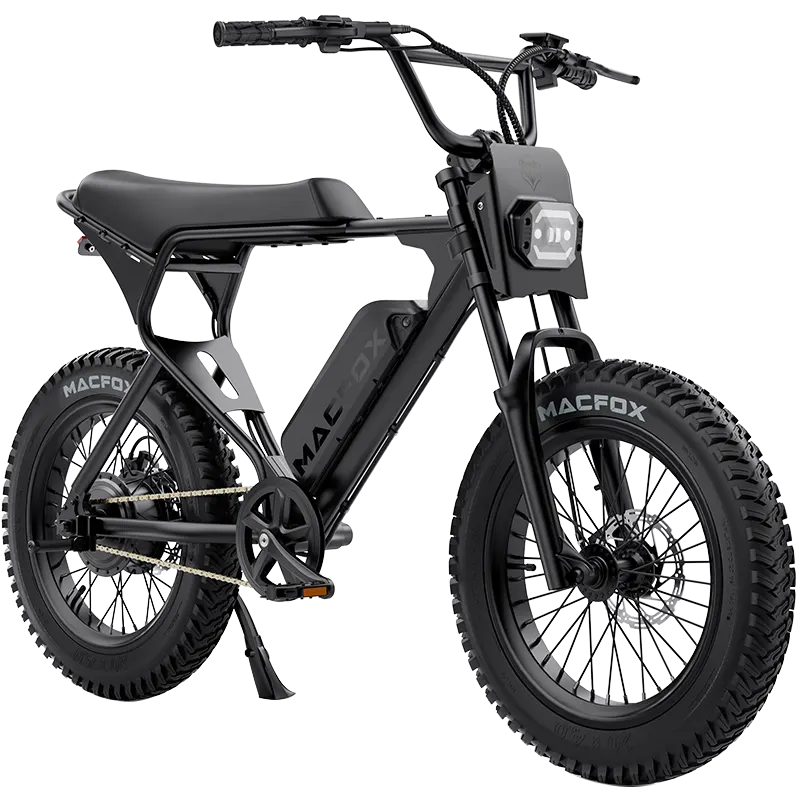
For a suitable home setup, the e-bike tool kit checklist separates basic tools from more involved service equipment. When comparing electric bikes, check access to service instructions and local maintenance support rather than assuming one torque wrench covers every connection.