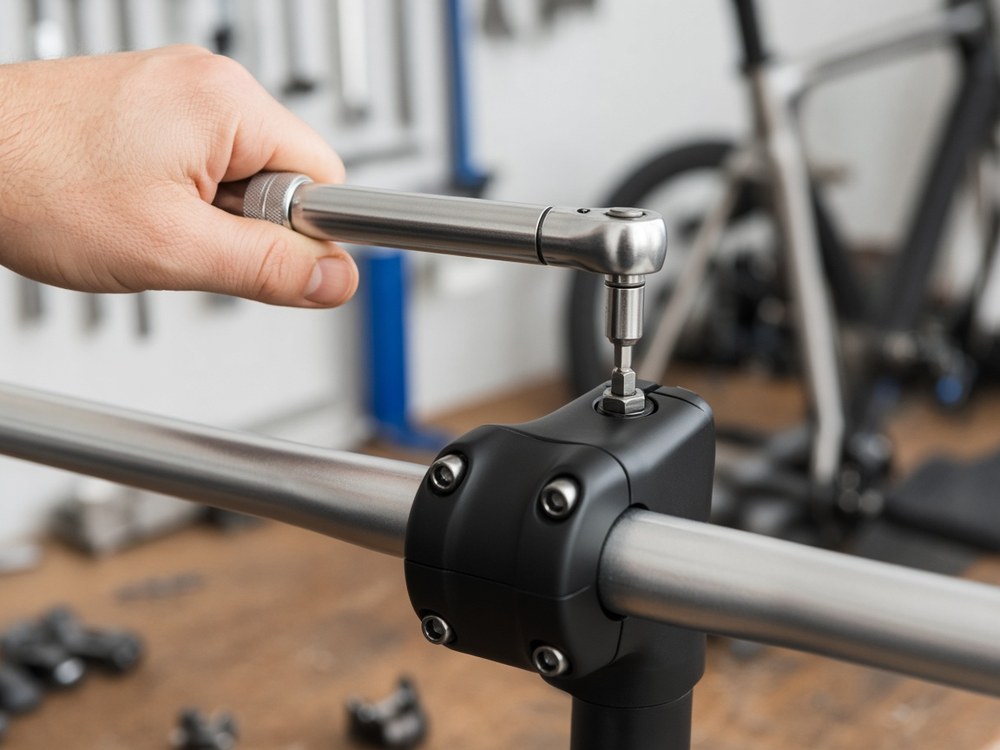

Yes, a crowfoot attachment can change the torque wrench setting you need. In the common straight-wrench setup, placing the crowfoot at 90 degrees to the handle can preserve the effective lever length. An attachment extending straight ahead lengthens that lever and needs a corrected setting. Use the tool maker's stated geometry and correction method, not the assumption that any sideways attachment needs no adjustment.
Look at the fastener center, not just the attachment
A normal socket places the fastener's turning axis at the wrench's square-drive axis. A crowfoot can move the fastener away from that point. Whether it changes the effective length depends on where the fastener sits relative to the handle.
That distinction matters when an ordinary socket cannot reach a bicycle fitting. Getting a crowfoot onto the flats solves access, but does not by itself establish the torque delivered.
The fastener's required torque stays the same. It is the wrench setting that may need correction. Keep those two numbers labeled separately so you do not later mistake the corrected tool setting for a new specification for the component.
Keep the approved geometry throughout the pull
The familiar right-angle arrangement depends on the tool and attachment remaining in the geometry described by the manufacturer. Check the specified grip location and whether the instructions require a straight head. A folded flex head or another joint can fall outside that guidance.
For example, setting the crowfoot sideways before placing it on the nut is not enough if you then rotate it forward to clear the frame. The final working position is the one that matters.
A socket extension along the square-drive axis is a different arrangement from an attachment that shifts the fastener sideways. Do not apply a crowfoot correction to every accessory called an extension. Likewise, a pipe over the handle is not an approved substitute for either setup.
Verify the setup before final tightening
Before loading the fastener, confirm these items:
- Target: the correct component torque, units, and thread preparation.
- Geometry: the wrench and attachment positions covered by the tool maker's instructions.
- Measurements: any lengths taken from the maker's specified reference points, not the tool's overall end-to-end length.
- Setting: the verified correction, if required, within the wrench's rated measuring range.
If clearance prevents you from holding the approved arrangement, stop and use a more suitable tool or a qualified shop. Do not estimate a smaller setting by feel. Save the instruction page and your setup notes so the result can be checked before the job is completed.
The e-bike tool kit checklist helps plan your home equipment. When choosing between electric bikes, ask which maintenance tasks require specialist access tools. A fitting being visible does not necessarily make it a straightforward home-service job.