
You can keep the existing derailleur for a larger cassette only if the new setup stays within both its largest-sprocket limit and its total capacity, with the rest of the drivetrain compatible too. Clearing the biggest cog is not enough: the derailleur must also manage the changing amount of loose chain across the gear range. Check both limits before ordering the cassette.
Maximum sprocket size is the clearance question

Find the specification for the exact derailleur version and intended front gearing. The largest-sprocket limit concerns the biggest rear cog it is designed to work with. Do not assume a specification for another cage length or a similar-looking part also applies.
If the proposed cassette exceeds that limit, turning the B-screw farther or adding a hanger extension is not confirmation that the combination is supported. Clearance is part of the design, not the only requirement.
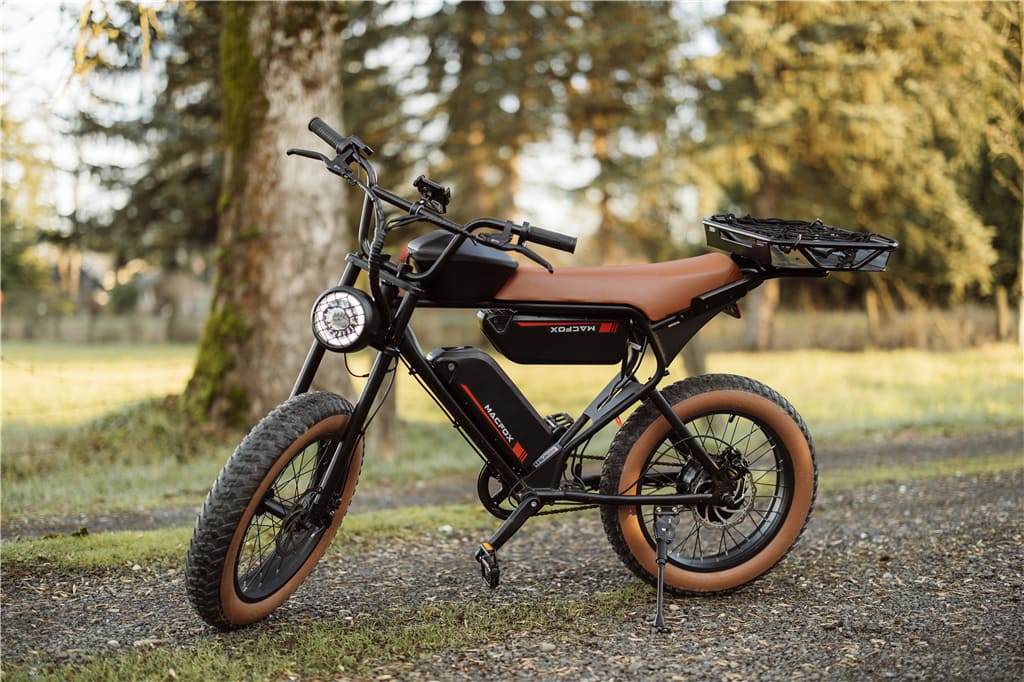
When comparing factory gearing on electric bikes, keep the complete component combination in view. A cassette that works on another bike may be paired with a different derailleur, shifter, or front chainring arrangement.
Total capacity is the chain-management question
As you move between gear combinations, the length of chain wrapped around the gears changes. The derailleur cage takes up the difference. Total capacity describes how much of that difference the derailleur can accommodate, usually expressed in teeth.
For a conventional derailleur setup, the required capacity is the rear tooth spread plus the front tooth spread:
(Largest rear cog minus smallest rear cog) + (largest front chainring minus smallest front chainring).
For an illustrative single-front-ring setup with an 11-42 cassette, the rear spread is 42 minus 11, or 31 teeth. The single front ring adds no front spread, so the required take-up is 31 teeth. That example is arithmetic, not a recommended cassette for a particular bike.
The derailleur must still support the 42-tooth largest cog separately. A capacity figure of 31 teeth or more would not, on its own, prove that it can clear that cog. With multiple front chainrings, include their tooth difference and respect any separate front-difference restriction.
Make the purchase decision before sizing the chain
Compare both requirements with the correct specification. If either is exceeded, choose a supported combination instead of planning to avoid certain gears. If both pass, confirm the cassette's compatibility with the shifter, chain, and wheel's cassette interface before buying.
Then check chain length using the procedure for that drivetrain. A larger cassette can require a different chain length, but adding links cannot increase the derailleur's take-up capacity. Where rear suspension changes the chain path, the sizing procedure must account for that movement.
If the installed combination is confirmed compatible but shifts poorly, the shifting troubleshooting guide is the next step. Keep the buying decision separate from tuning: adjustment cannot supply clearance or chain-management capacity the selected parts do not have.