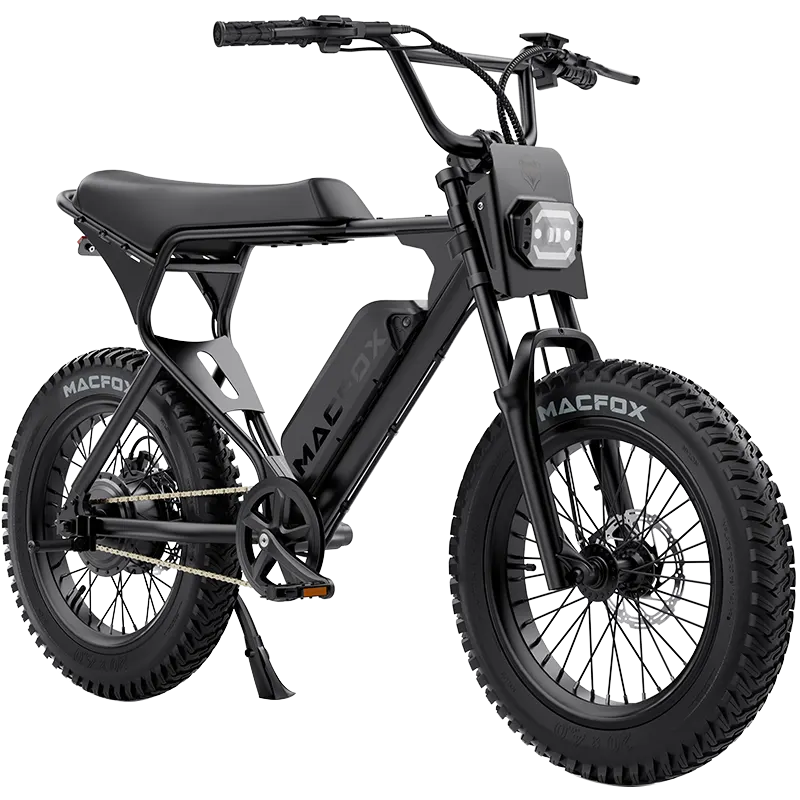

You turn the handlebars slowly, and they catch just as the front wheel points straight ahead. It feels like a little notch you have to push past. Don't assume that is a helpful self-centering feature. A cable or accessory may be interfering with steering, but a persistent center notch can also point to a headset problem.
The useful first check is watching what happens at that exact position, with the bike stationary. Don't ride it to see whether the catch disappears at speed.
Watch What Moves When the Bars Catch

On an electric bike, switch the power off first. Use a suitable repair stand or capable helper to support the bike securely with the front tire clear of the floor. Don't balance a heavy bike on its kickstand. If you cannot support it safely, leave this check to a shop.
Gently turn the bars toward the catch. Watch the brake hoses, cable housing, electrical wires, and anything attached around the bars. Does a loop straighten and pull tight? Does a bag strap catch on a bracket? Does a hose snag just as the resistance starts?
Stop at resistance rather than forcing through it. You can remove an easily detachable bag or loose strap that is visibly interfering, provided you don't disturb the controls. Don't disconnect brake lines, unplug wiring, or pull a tight cable to make it reach. If anything is kinked, abraded, or damaged, moving it aside does not make it safe.
A Repeated Notch Needs a Different Check
A visible snag that happens at the same moment as the catch points toward external interference. If removing a bag clears the snag, gently check the steering again. Continuing resistance means there is still a problem.
If the bars repeatedly catch near center without anything visibly pulling or touching, the headset needs closer inspection. The headset is the bearing assembly around the fork's steering tube that lets the front end turn. Worn bearing surfaces can produce a notch; adjustment or assembly problems can also restrict movement. You cannot identify the damaged part by feel alone, and an outside look cannot rule out concealed cable interference.
Also note whether it catches at one spot or feels stiff throughout the turn. Those are different observations worth reporting, not instructions to tighten or loosen a bolt.
Before You Change Any Bolts
Don't experiment with the top-cap bolt or loosen the stem to chase the catch. Extra tightening is not a cure for rough steering, even if you also notice looseness. Spraying lubricant into the headset is not a substitute for inspection.
Did this start after changing the bars or their height? The handlebar replacement guide's compatibility section explains why bar dimensions affect cable reach. That is useful background, not a reason to swap bars again to fix binding.
Tell the mechanic where it catches, whether it happens approaching from both directions, and whether any hose or wire tightens there. Mention recent bar work or an impact. Unexplained catching, damage, or continued stiffness needs inspection and correction before the next ride.