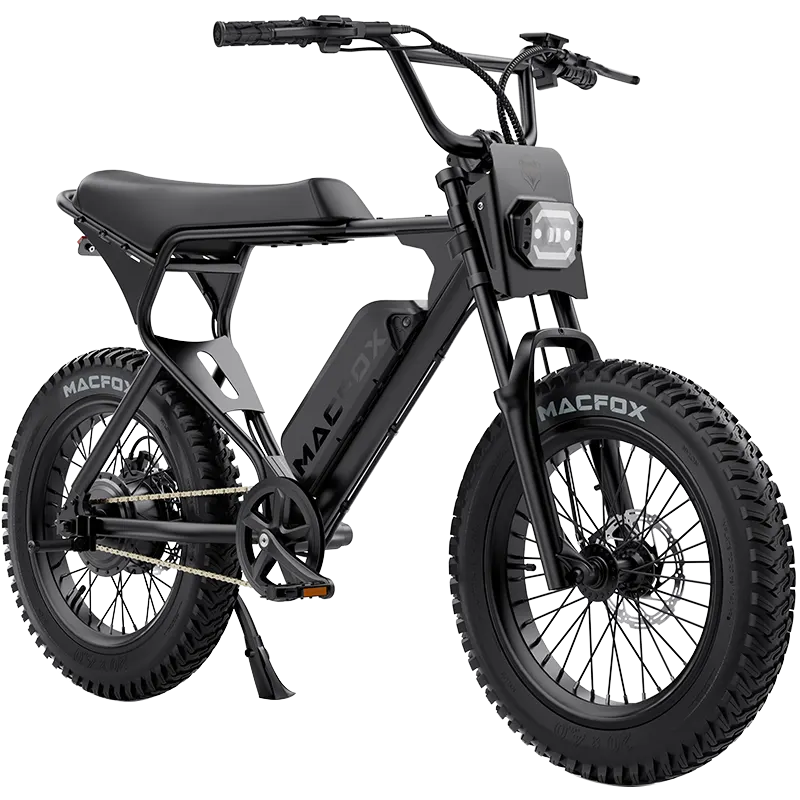

The chain looks fine with the bike parked, but when the rear suspension moves, it pulls tight and the derailleur stretches forward. That is not a reason to keep bouncing on the saddle to see what happens.
Some derailleur movement through suspension travel is expected on certain frames. A chain that binds, a cage that reaches its limit, or a sudden restriction in travel needs a different response: stop loading the bike and check the setup before riding.
Start with what changed

Switch your electric bike off and keep it securely supported. Do not use the throttle or pedal assist to reproduce the problem. If the battery is user-removable, follow the manual's instructions for disconnecting it before inspection.
Think back to the first time you noticed the tightening. Was the chain recently replaced or shortened? Were larger rear sprockets, a different derailleur, or a chain guide installed? Note the gear you were in, without forcing another shift against a tight chain.
Also check the basic distinction: does the rear wheel actually move on suspension? A suspension fork or sprung saddle alone does not create this rear-suspension chain-length problem.
Look at the chain's path, not just its length
With everything stationary, trace the chain around the derailleur pulleys. Compare its path with the instructions for that derailleur, especially where it passes the small tab or plate between the pulleys. A chain routed on the wrong side can rub or bind. Look for fresh contact marks on a guide or guard, too.
If a tensioner was added, identify its type. A fixed tensioner cannot take up changes in the chain path as suspension moves. That does not automatically mean you should buy a spring tensioner; the entire arrangement must suit the frame and drivetrain.
Do not pull the cage forward, force the suspension farther, or put your fingers near a pinch point to test your theory. These observations identify something to inspect, not permission to ride.
Ask for a check that accounts for suspension travel
On some frames, suspension movement changes the distance the chain must span. A chain can therefore appear long enough at rest yet run out of length elsewhere in the travel.
A mechanic should follow the frame and drivetrain makers' sizing method and check the position requiring the most chain. Do not assume that position is always fully compressed. Leave shock disconnection, air release, and linkage movement to someone trained for that frame.
Simply adding links is not a complete answer: the chain must also remain properly managed in the other gears and suspension positions. Cable tension and limit screws cannot supply missing chain length. Our derailleur tuning guide covers the broader shifting task; tuning comes after the physical restriction is resolved.
For service, bring the frame model, recent parts changes, and the gear in which tightening occurred. If the chain binds or the cage runs out of movement, arrange transport rather than another test ride.