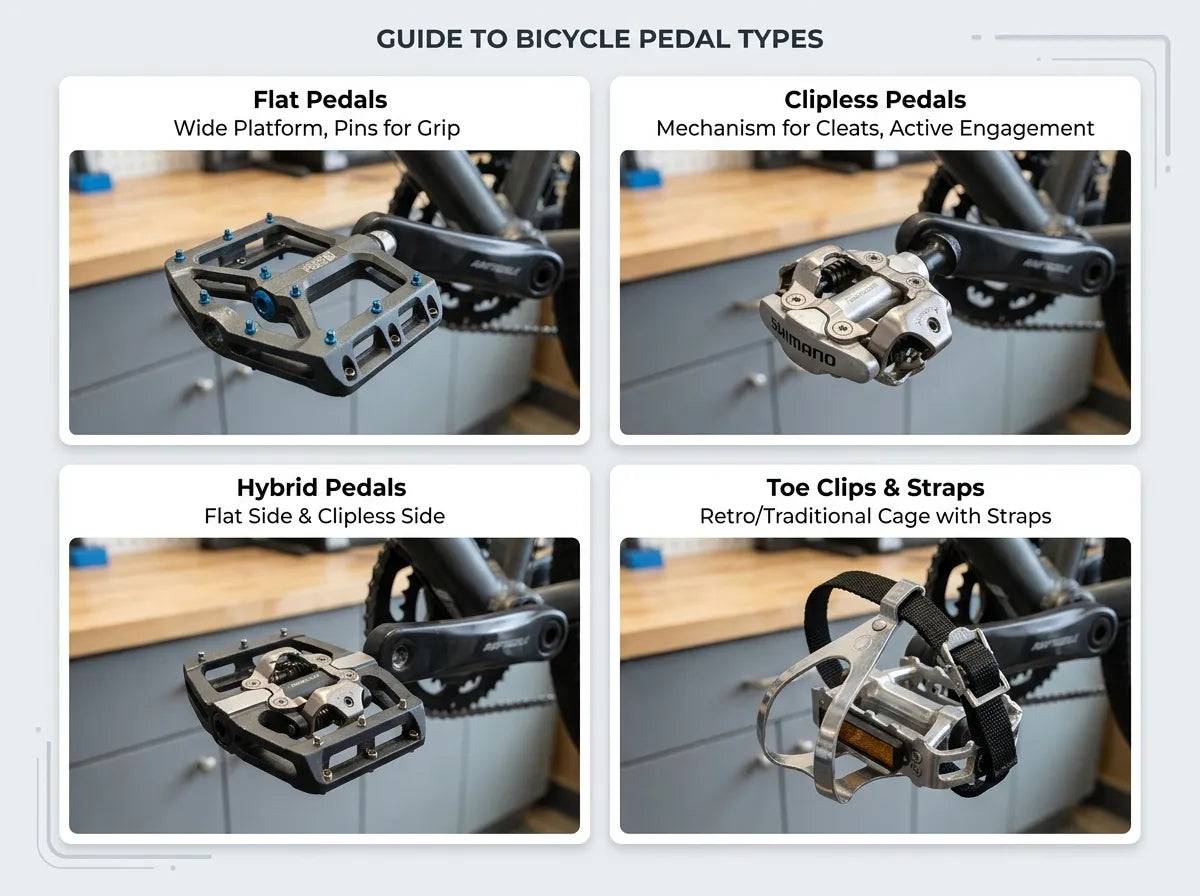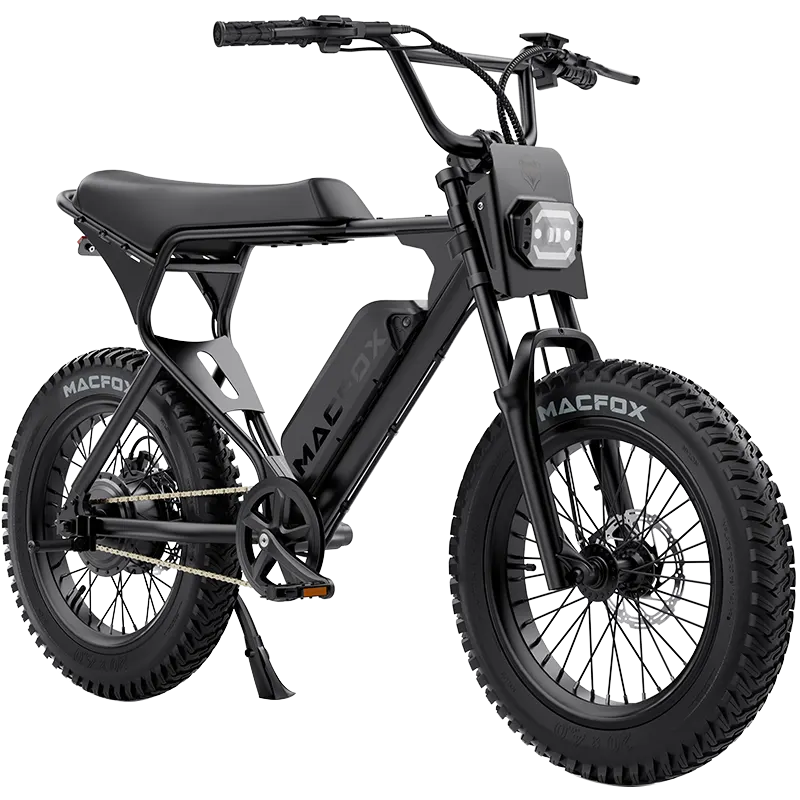

You can feel a crank arm click sideways while the bike is standing still. Do not keep pedaling to see whether it settles. Side play can come from the pedal, one crank-to-axle interface, or movement farther inside the crankset, and each points to a different repair scope.
Locate the Play With the Bike Stopped

Switch the electric bike off and keep both wheels on the floor. Hold one crank near its end and apply only light sideways pressure. Watch three places separately: the pedal body around its spindle, the pedal spindle in the crank, and the crank arm where it meets the axle.
If only the pedal body rocks, the pedal needs inspection. If the pedal spindle moves in the crank hole, stop and check the threaded interface. Neither is proof that the bottom bracket is loose.
Repeat the same light check on the other side while another person watches the axle area from a safe position. A phone video from the front can preserve the relative movement, but keep hands, clothing, and the camera clear of the chainring. The goal is to locate play, not to stress the interface.
Compare One Arm With the Whole Axle
Place the cranks roughly horizontal and lightly push one arm toward the frame while pulling the other outward. Watch whether one arm shifts independently or both arms and the axle move together.
A single arm moving relative to the axle directs attention to that crank connection. Both arms moving together can point farther into the axle or bearing assembly. Noise is not enough to choose between them: a click can travel through a metal frame, and a chainring or guard can also touch once per rotation.
Record where the visible gap opens and whether the crank still turns smoothly by hand. Stop if it binds, scrapes the frame, or produces a large repeatable shift.
Identify the Crank System Before Touching Bolts
Square-taper, splined, and two-piece clamping systems do not share one adjustment method. A cap that looks like a tightening point may set bearing preload on one system and serve another purpose on a different one. Do not copy a torque value or bolt sequence from a visually similar crank.
Also avoid threadlocker or repeated tightening as a diagnostic test. If a crank has been moving on its interface, the contact surfaces may already be damaged even if a bolt can be made to feel tight.
Keep It Parked Until the Interface Is Secure
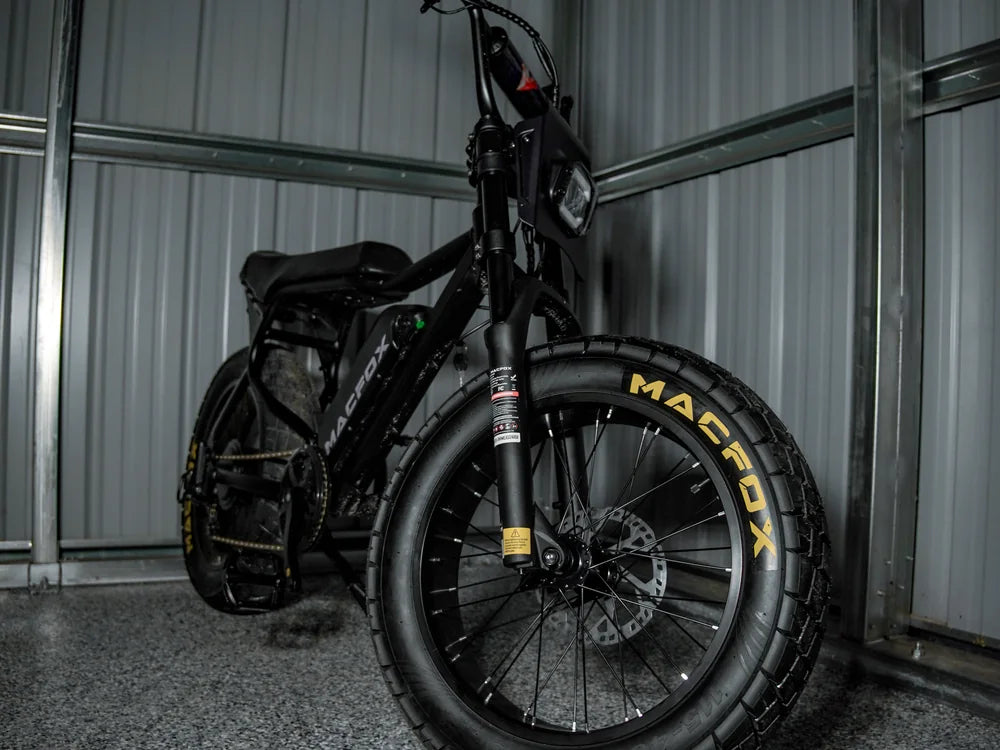
Bring the bike's model information, photos of the connection, and notes about recent pedal, crank, chainring, or cadence-sensor work to service. Ask for the crank interface and bearing play to be checked as separate items.
The broader fat-tire e-bike maintenance guide covers routine upkeep. Visible side play is different: the bike should not return to riding until the correct structure is identified, secured, and checked for damage.