
Use the current instructions for the actual parts and connection, not a generic online torque table. For example, a tutorial for a different stem does not override the requirements of the stem and handlebar you have. If the correct instructions genuinely conflict with a mating part's marking, stop and ask the manufacturer to resolve it. Do not average the numbers or assume the lower one will hold the joint safely.
Match the Part and the Connection

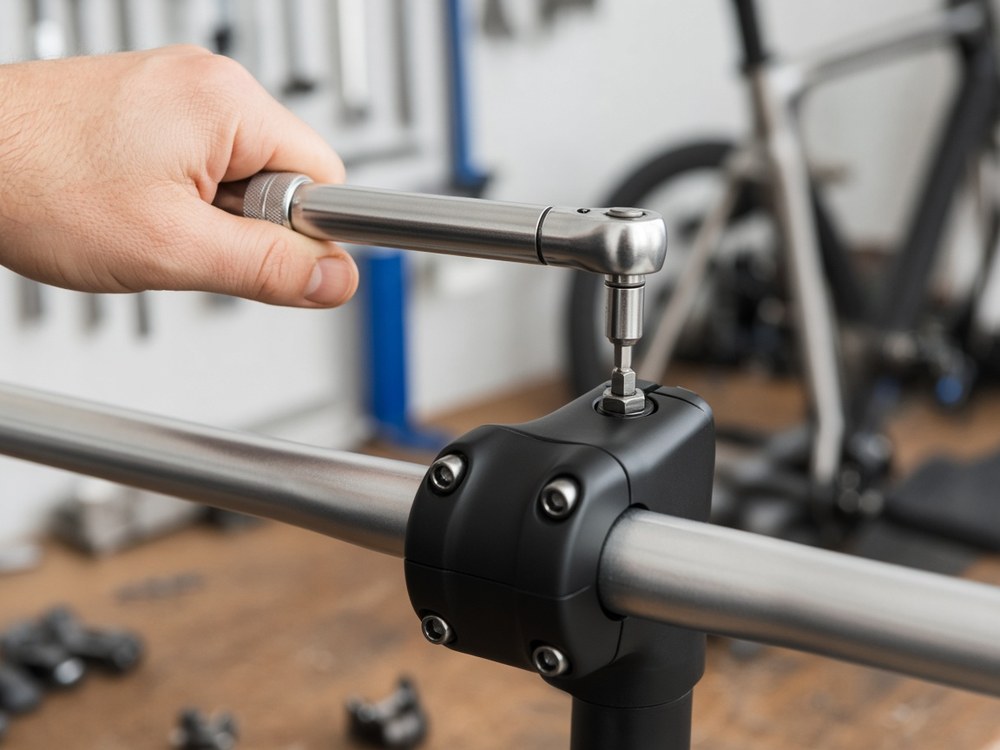
First confirm that both numbers refer to the same fastener and purpose. A stem's handlebar faceplate and its steering-tube clamp are separate connections. Similar-looking bolts or the same hex-key size do not establish the same tightening requirement.
Also read the whole marking. A stated maximum is a limit, not necessarily an instruction to tighten every compatible assembly to that value. A specification for a component alone may not resolve a restriction imposed by the part it clamps.
When working on your electric bike, identify the installed parts rather than assuming an online example matches. Replacement components may differ from the bicycle's original equipment.
Compare Units, Not Just Digits
Newton-meters, inch-pounds, and foot-pounds are different units. Two different-looking numbers can describe the same torque, while two identical digits beside different units do not.
Use the full unit labels on the instructions and wrench. If a screenshot omits the unit or a tool has multiple scales, settle that uncertainty before turning the fastener. Do not guess from the size of the bolt.
Keep the source values alongside any verified conversion so you can check the result. If the tool cannot reliably apply the specified value, using it anyway does not resolve the discrepancy.
Match the Thread Preparation
Torque measures resistance to turning, not clamping force directly. Thread condition and friction affect how that turning effort loads the connection.
Check whether the instructions call for dry threads, lubrication, or a specific locking treatment. A value given for one preparation should not silently be applied after changing it. Factory-applied treatment also deserves attention; adding another compound is not automatically an improvement.
A gritty, damaged, or cross-threaded fastener can resist turning without holding the parts correctly. Stop if the fastener binds unexpectedly. A wrench clicking at its setting does not prove the joint is sound.
Resolve the Remaining Conflict Before Riding
Send the manufacturer clear photos of the installed parts, the complete marking, and the exact connection. Include the instruction page and revision, mating materials, and any replaced hardware or added lubricant. Those details distinguish a documentation mismatch from a genuinely incompatible combination.
The basic maintenance guide covers routine checks, not an override for conflicting component requirements. Leave the affected connection out of service until its correct assembly conditions are established. Too little clamping can be hazardous just as overtightening can.