
Quick answer: most e-bike chains last about 1,000 to 3,000 miles, but the real replacement point depends on torque, rider weight, hills, wet roads, dirt, lubrication, and how often the chain is measured. A quiet chain that measures within tolerance can keep running. A stretched, rusty, stiff, or slipping chain should be replaced before it damages the sprocket teeth.
Reviewed May 9, 2026. This refresh is written for electric bike owners who want a practical chain maintenance schedule, not a generic bicycle parts article. The core question is simple: how long an e-bike chain lasts, how to spot wear, and when replacement is smarter than another cleaning.
Because an e-bike adds motor assistance to normal pedaling force, the chain can see harder starts and more load than a regular city bicycle. That does not mean the chain is fragile. It means the maintenance routine needs to be more consistent, especially on commuter and fat tire setups. For broader bike selection, compare current electric bikes and match the drivetrain care routine to your real route.
E-Bike Chain Lifespan Quick Reference
| Riding Pattern | Typical Chain Life | Why It Changes | Best Check |
|---|---|---|---|
| Light neighborhood riding | 2,000 to 3,000 miles | Lower load, cleaner pavement, fewer hard starts. | Measure monthly and lubricate after cleaning. |
| Daily commuting | 1,200 to 2,500 miles | Frequent stops, rain, road grit, and repeated acceleration. | Wipe weekly; measure every 300 to 500 miles. |
| Wet, sandy, or dusty routes | 700 to 1,500 miles | Grit works like grinding paste between links and teeth. | Clean and relubricate after dirty rides. |
| Heavy loads or rough pavement | 800 to 1,800 miles | More torque reaches the chain during starts and climbs. | Check tension, noise, and wear marks more often. |

Why E-Bike Chains Wear Faster
An electric bike chain does the same basic job as a bicycle chain, but the load profile is different. Motor assistance can make starts easier for the rider while still putting more force through the chain. The highest wear usually comes from repeated hard launches, climbing under high assist, riding with a dry chain, or letting wet road grit sit on the links.
Stop-and-go riding matters because the chain is loaded from a standstill again and again. Cargo, backpacks, child seats, hills, and low tire pressure add more resistance. On fat tire e-bikes, the wider tires can be useful for comfort and rough surfaces, but rougher riding also makes chain checks more important.
Noise is often the first warning. A healthy chain should sound smooth, not sharp, gritty, or uneven. If the chain starts popping, skipping, or jumping under pressure, use Macfox's bike chain slipping guide to separate simple lubrication problems from real wear.
Chain Wear Signs You Should Not Ignore
- Skipping under load: the chain jumps when you accelerate, climb, or restart from a stop.
- Stiff links: a few links do not bend smoothly after cleaning and lubrication.
- Rust or orange staining: surface rust can sometimes be cleaned, but deep corrosion weakens the chain.
- Sharp sprocket teeth: hooked or pointed teeth mean the worn chain may already be wearing the sprocket.
- Uneven noise: a repeating tick, grind, or pop often means one part of the chain is damaged.
- Visible elongation: the chain measures beyond the replacement mark on a chain checker.
If the chain has come off the sprocket, do not just put it back and keep riding. Check tension, alignment, and wear first. For the specific recovery process, read the e-bike chain drop guide before assuming the problem is solved.
How to Measure E-Bike Chain Wear
The simplest method is a chain wear checker. Place the tool on a clean section of chain and follow the mark on the tool. Many riders replace around the 0.5 to 0.75 percent wear range, depending on the chain and sprocket setup. If you are unsure, replace earlier rather than later because a worn chain can damage other drivetrain parts.
You can also use a ruler as a backup check. Twelve full links on a new chain should measure 12 inches from pin to pin. If the chain is clearly longer than that over the same link count, it is stretching from internal wear. This is why visual inspection alone is not enough. A chain can look acceptable while the pins and rollers are already worn.
| Check | Good Result | Warning Result | Action |
|---|---|---|---|
| Wear checker | Tool does not drop into the replacement mark. | Tool drops into the replacement mark. | Replace chain soon and inspect sprocket teeth. |
| Ruler test | 12 links line up close to 12 inches. | Pin position is visibly past the mark. | Confirm with a chain checker before a long ride. |
| Hand feel | Links flex evenly and return smoothly. | Links bind, click, or stay angled. | Clean, lubricate, then replace if stiffness remains. |
| Ride test | Smooth pull with no jump under load. | Pop, skip, or clunk during acceleration. | Stop hard riding and diagnose before damage spreads. |
Cleaning and Lubrication Schedule
Chain life improves when cleaning is boring and regular. The goal is not to make the drivetrain look perfect after every ride. The goal is to remove abrasive grit before it stays inside the rollers, then add only enough lubricant for smooth motion.
| Task | Normal Use | Wet or Dirty Use | Notes |
|---|---|---|---|
| Dry wipe | Every 1 to 2 weeks | After each dirty ride | Use a clean rag and rotate the wheel by hand. |
| Lubricate | Every 100 to 150 miles | After rain, washing, or gritty rides | Apply to rollers, wait, then wipe the outside clean. |
| Deeper clean | Every 300 to 500 miles | More often if grit is visible | Avoid pressure washing near electrical parts. |
| Measure wear | Monthly | Twice monthly | Measure before long trips or heavy-use periods. |
For a full bike checklist beyond the chain, use Macfox's electric bike maintenance guide. Also check tire pressure. A soft tire makes the motor and rider work harder, which can add load to the chain; Macfox's electric bike tire pressure guide explains the pressure side.

Replacement Timing: Chain Only or More Parts?
If you replace the chain early, the sprocket can often stay. If you ride a stretched chain for too long, the sprocket teeth wear to match the old chain, and a new chain may skip. That is why the cheapest repair is usually the timely repair. A chain is easier to replace than a chain plus worn teeth.
Replace the chain immediately if it is cracked, badly rusted, twisted, or repeatedly slipping under load after cleaning and tension checks. If the chain is simply dirty, clean and lubricate first, then test again. A dry chain and a worn chain can feel similar during a short ride, so measurement is the deciding step.
Chain tension also matters. Too loose can create noise, slap, and drop risk. Too tight can add friction and bearing stress. If your setup uses a separate tensioning part, Macfox's e-bike chain tensioner guide explains when a tensioner helps and when the real issue is alignment or worn components.
Macfox Fit Notes for X1S and X7 Riders
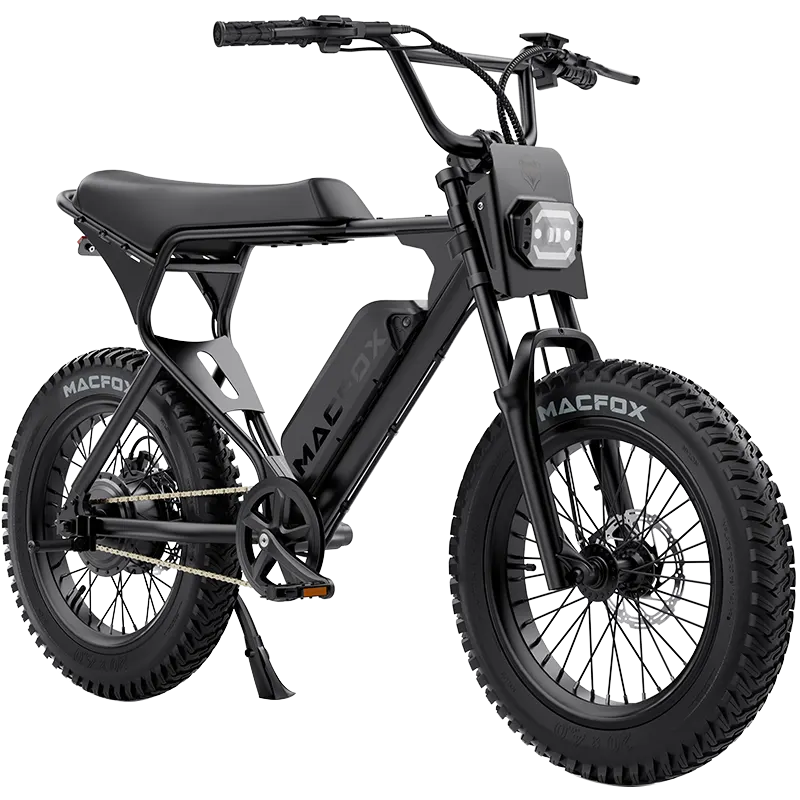
For a city commuter like the Macfox X1S e-bike, chain care is mostly about clean starts, weekly wiping, and measuring before the chain gets noisy. City dust, rain, and stop signs are the common wear drivers, not extreme terrain.
For riders considering the Macfox X7 e-bike, the larger fat tire setup makes it more important to inspect after rough pavement, sandy shoulders, and heavier recreational use. The maintenance idea is the same, but the inspection interval should be shorter when the riding surface is rougher.
Maintenance Mistakes That Shorten Chain Life
- Adding lubricant over dirt: this traps grit and turns the chain into a grinding surface.
- Leaving the chain wet: moisture starts rust quickly, especially after rain or washing.
- Using too much lubricant: excess lube attracts dust and black paste on the outside of the chain.
- Ignoring tire pressure: low pressure adds rolling resistance and makes the drivetrain work harder.
- Riding through noise: a small tick can become chain slip, chain drop, or sprocket wear.
- Waiting for failure: replacement should happen when measurement says so, not when the chain breaks.
Bottom Line
An e-bike chain does not need complicated care, but it does need regular care. Use 1,000 to 3,000 miles as the broad lifespan range, then adjust based on your route. Clean pavement and light riding can push chain life longer. Wet, sandy, high-load, or rough-surface riding can shorten it quickly.
The safest routine is simple: wipe often, lubricate lightly, measure regularly, and replace before a worn chain damages the sprocket. That gives you a smoother ride, fewer roadside failures, and lower long-term maintenance cost.
FAQs
How long does an e-bike chain last?
Most e-bike chains last about 1,000 to 3,000 miles. Clean city riding can last longer, while wet, sandy, hilly, or high-load riding can shorten chain life.
Do e-bike chains wear faster than regular bike chains?
Often, yes. Motor assistance can add more load during starts and climbs. Good lubrication, correct tension, and regular wear checks reduce that extra wear.
How often should I lubricate an e-bike chain?
For normal use, lubricate about every 100 to 150 miles. Reapply sooner after rain, washing, dusty roads, or any ride that leaves the chain gritty.
Can I ride with a stretched e-bike chain?
You should not keep riding hard on a stretched chain. It can skip under load and wear the sprocket teeth, turning a simple chain replacement into a larger repair.
Is chain noise always a sign of replacement?
No. Chain noise can come from dryness, dirt, tension, alignment, or wear. Clean and lubricate first, then measure the chain. If it still skips or measures worn, replace it.
Should I replace the sprocket when I replace the chain?
Not always. If the chain was replaced early, the sprocket may still be fine. If the old chain was badly stretched or the new chain skips, inspect and replace worn teeth.