
A replacement chainring can have the same tooth count and bolt-circle diameter, or BCD, and still be incompatible with your crank. Those numbers do not confirm the bolt layout, crank version, offset, or mounting hardware. If the ring will not sit naturally against its mounting surface, stop. Tightening the bolts harder will not turn a near match into the correct part.
Check the crank identifier and bolt pattern

BCD describes the circle passing through the mounting-bolt centers. It does not describe every feature of the ring. Two chainrings can share that circle size while arranging their holes differently or having different clearance around the crank arms.
Find the identifier on the crank and the markings on the original chainring. Use the replacement maker's compatibility information for that exact crank version. A listing that mentions only a general crank family, tooth count, or number of bolts may leave out the distinction you need.
For example, if three holes align and the fourth does not, do not treat the last hole as a manufacturing inconvenience. Recheck the specified pattern and orientation. Likewise, a direct-mount ring attaches through its own interface; a matching tooth count does not make it a bolt-on-spider replacement.
A ring that bolts on can still sit in the wrong place
Look at the ring from the side, not just face-on. Its shape and intended mounting side determine where the teeth sit relative to the rest of the drivetrain. That position matters to chain alignment.
A replacement can clear every bolt yet place the teeth farther inward or outward than intended. It may also create interference that was absent with the original ring. Do not reverse the ring or add an improvised spacer stack simply because that makes it clear one nearby part.
Check the approved mounting position, offset, and chain compatibility together. The chain and gearing guide provides the broader drivetrain context, but a general gearing recommendation does not establish that this particular replacement fits your crank.
Separate a wrong ring from wrong hardware
If the exact chainring is approved and seats correctly, check whether it requires different bolts or nuts. Hardware from the old arrangement is not automatically reusable. A bolt reaching its stop is not proof that it has clamped the ring securely.
Use the specified hardware and installation instructions. If the ring itself has the wrong interface or offset, buying different bolts will not solve that mismatch. Keep those two purchase decisions separate.
Before ordering again, put the crank identifier, old ring markings, intended mounting side, and candidate part number in one note. Ask the supplier to confirm the complete combination, including the hardware, rather than asking only whether the BCD matches.
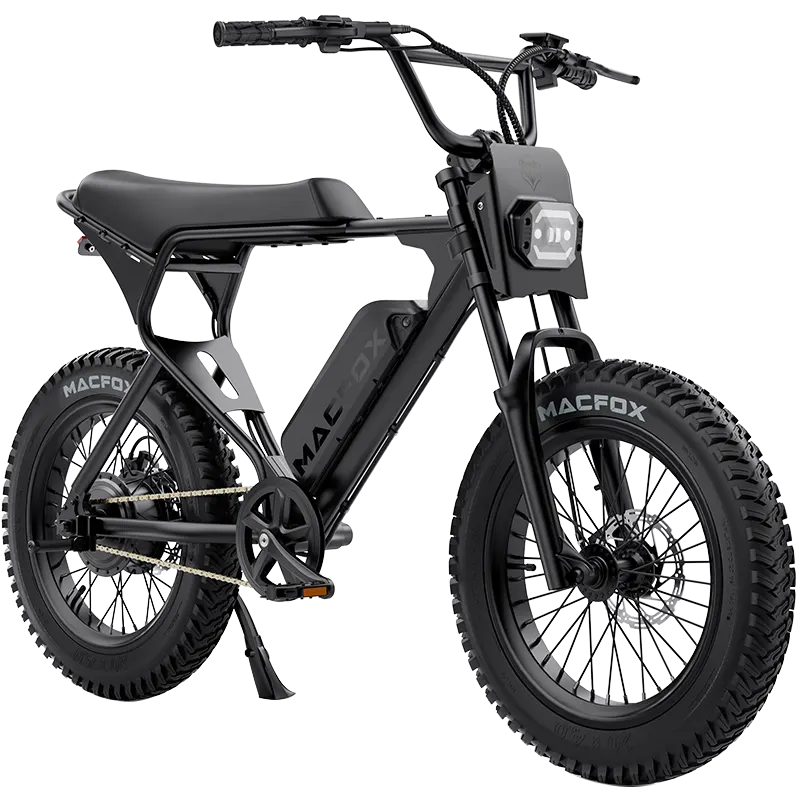
The same check is useful when comparing electric bikes: identify the original drivetrain and its replacement-parts support before assuming a common-looking chainring will be easy to substitute later.