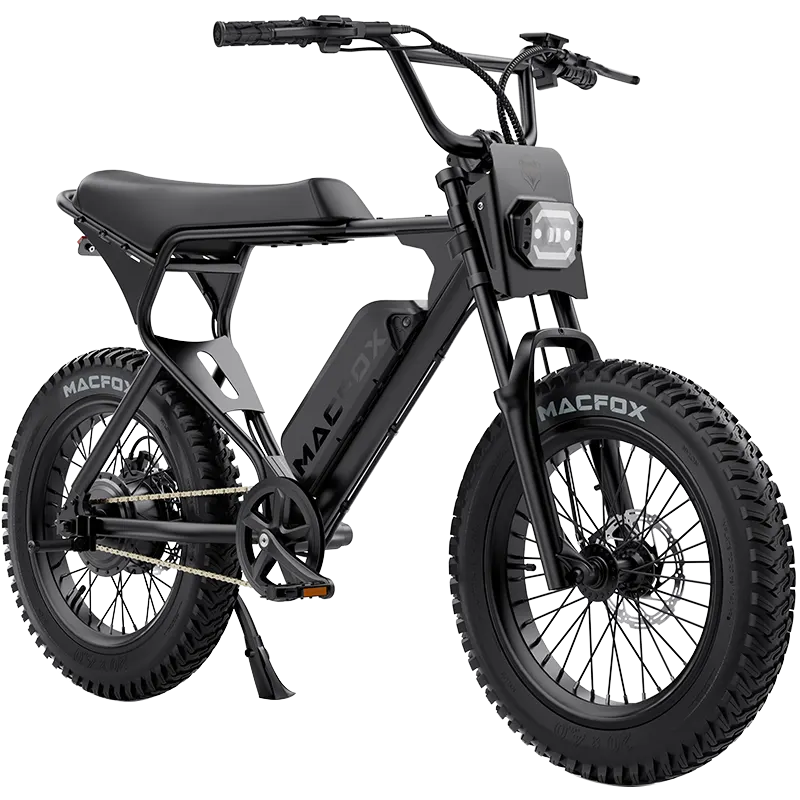


Shifting on ebikes keeps evolving. Today, most affordable models still use derailleurs, while city commuters are flocking to internal gear hubs, CVT and belt drives, and performance riders are embracing electronic and automatic shifting.
Below I map the landscape, why each system is popular, and which features riders actually value.
Featured Summary
- Derailleurs dominate entry–mid price e-bikes for low cost and wide range. Most use familiar 7- or 8-speed setups that are easy to service.
- IGH / CVT + belt drives are surging in city bikes for quiet, clean, shift-at-standstill, and low maintenance; often paired with automatic shifting through automatic or semi-automatic shift systems.
- Performance riders are moving toward electronic shifting because it can time gear changes with motor output and reduce missed shifts under load. The useful fit check is smooth climbing behavior, durability, and parts support.
- Touring and cargo riders often value sealed hub or gearbox-style drivetrains because durability, wide range, and low maintenance matter more than the lightest possible setup.
-
Emerging: integrated motor-gearbox (Pinion MGU) and broader eShift partners point to more automation and sealed drivetrains.
What’s actually popular in 2025 (by category)
Entry to mid-price e-bikes: derailleur still rules
Most best-selling hub- and mid-drive commuters and fat-tire bikes still ship with 7- or 8-speed derailleur drivetrains. They are inexpensive, familiar, and easy to service, which is why they remain common on everyday e-bike builds.
Why riders like it
-
Wide ranges at low cost.
-
Simple parts availability at any shop.
Trade-offs
-
Can’t shift at a stop; more maintenance than sealed hubs.
-
Exposed parts wear faster under high e-bike torque.
City & commuter premium: IGH / CVT with belts and auto shifting
Automatic and cadence-based shifting is most useful when it lets the rider hold a comfortable cadence without thinking about every gear. It is worth testing at starts, on hills, and under light cargo before assuming it will feel natural.
Premium city bikes increasingly support manual, semi-automatic, and automatic shifting integrations. The buying question is whether the system handles stop-and-go riding smoothly and can still be serviced when parts wear.
Why riders like it
-
Shift at standstill for stop-and-go traffic (Enviolo, Nexus 5E).
-
Cleaner, quieter belt drive; Gates lists 1,000+ models using Carbon Drive.
Trade-offs
-
Higher upfront price and slightly heavier systems.
eMTB & sporty bikes: electronic, load-tolerant shifting
On trails, riders favor load-tolerant electronic shifting that works with mid-drive torque. Check frame and drivetrain compatibility, replacement part availability, and whether the system shifts smoothly while climbing.
Why riders like it
-
Maintains cadence on climbs; stronger components (LinkGlide) handle e-bike torque and last longer.
Trade-offs
-
Pricey, needs system compatibility (UDH frames for SRAM, specific motors for some auto modes).
Touring & cargo: the “forever drivetrain”
Touring and cargo riders often value sealed hub or gearbox-style drivetrains because durability, wide range, and low maintenance matter more than the lightest possible setup.
Emerging tech: motor-gearboxes & 2-speed rear hubs
The Pinion MGU fuses motor and gearbox, reducing external wear parts and aiming for low maintenance; more brands are adopting it each season. Classified Powershift brings front-derailleur range to the rear hub and is expanding e-bike compatibility and Di2 integration.
The features riders actually care about (and where to get them)
Shift at a standstill
- CVT and internal-gear hub systems can let you drop to an easy gear at red lights, which is a big quality-of-life win in cities.
Shift under load
- For hill starts and loaded riding, the better systems coordinate drivetrain timing and motor output so the shift feels controlled instead of harsh. Check compatibility and replacement-part cost before paying extra for this feature.
Automatic and cadence-based shifting
- Automatic and cadence-based shifting is most useful when it lets the rider hold a comfortable cadence without thinking about every gear. It is worth testing at starts, on hills, and under light cargo before assuming it will feel natural.
Low maintenance & cleanliness
-
Belts (often with IGH/CVT) are quiet, grease-free, and long-lasting—ideal for commuters and all-weather bikes. Gates cites 1,000+ belt-drive models available.

Quick buyer’s table: popularity & fit in 2025
| Shifting type | 2025 popularity* | Typical bikes | Best for | Notable features | Watch-outs |
| Derailleur (mechanical) | High at entry–mid price | RadRover, Lectric XP, Aventon Level | Budget, wide gear range | Cheap, light, easy to service | Exposed parts, can’t shift at stop. |
| Derailleur (electronic) | Rising in eMTB | Compatible eMTB frames and electronic drivetrain layouts | Performance, shift-under-load | Auto/Free-Shift options; robust cassettes | Cost, compatibility needs. |
| IGH (Nexus 5E, Rohloff) | Growing in commuting, cargo | Trek District+, Riese & Müller, Gazelle | Low-mess daily use | Shift at stop; sealed reliability | Heavier; pricier. |
| CVT and internal-gear hub systems can let you drop to an easy gear at red lights, which is a big quality-of-life win in cities. | Growing fast in urban | Gazelle C380/Avignon, Specialized Como IGH | Smooth, step-less feel | AUTOMATiQ cadence-based shifting | Efficiency trade-off vs derailleurs. |
| Gearbox/MGU (Pinion) | Emerging | Premium trekking/MTB/compact | Minimal upkeep | Motor + gearbox in one | Early-adopter pricing, model availability. |
*Popularity = qualitative snapshot based on model lineups and platform integrations across major brands and system suppliers.
Recommendations by rider type
- Automatic and cadence-based shifting is most useful when it lets the rider hold a comfortable cadence without thinking about every gear. It is worth testing at starts, on hills, and under light cargo before assuming it will feel natural.
-
Budget riders: Stick with a 7–8-speed derailleur from mainstream D2C brands; upgrade tires and chain care and you’re set.
-
eMTB/fitness: Electronic derailleur with Auto/Free Shift or eShift for smooth power on climbs and better drivetrain life under torque.
- Touring and cargo riders often value sealed hub or gearbox-style drivetrains because durability, wide range, and low maintenance matter more than the lightest possible setup.