
Before you buy a used e-bike, the battery story matters as much as the frame, motor, or tire condition. Ask about battery age, charger history, storage habits, range behavior, and service records. Weak answers do not always mean the bike is bad, but they do mean you should slow down.
This page is a buyer checklist. It does not explain how to open, repair, rebuild, modify, or bypass an e-bike battery. The goal is to decide whether the seller can explain the battery clearly enough for the bike to stay on your list.
Start With the Battery Age
Ask when the bike was bought, whether the battery is original, and whether it has ever been replaced. A seller may not know exact cycle count, but they should know the rough age and whether the battery has changed over time.
Do not judge only by mileage. A low-mileage bike that sat for a long time in heat, cold, or a discharged state can still have battery problems. A higher-mileage bike with steady use and good storage may have a more predictable story.

Ask About the Charger
The original or correct charger is part of the ownership trail. Ask whether it came with the bike, still works normally, or was ever replaced.
A missing charger is not automatic proof that the bike has a serious problem, but it raises the risk. If the seller cannot explain the missing charger, cannot show another ownership record, or wants you to buy before verifying charging, pause the deal.
Check Storage and Charging Habits
Ask where the bike and battery were usually stored: garage, apartment, shed, dorm room, car trunk, or outdoor area. Then ask whether the battery was left drained, charged overnight all the time, or stored through winter without checks.
You are not looking for perfect battery care. You are looking for habits that make sense. A seller who can explain how the bike was stored, charged, and used is easier to trust than someone who only says, "It works fine."
Review Service Records That Change the Risk
Battery questions should sit next to the rest of the service history. Ask about brake work, tire replacement, controller or display issues, crash repairs, water exposure, and battery replacement. Use Macfox's used e-bike checklist to keep the battery, charger, frame, and serial number questions together.
A replaced battery can be good if the seller has a clear receipt. It becomes a warning sign if they cannot explain why it was replaced, what battery was used, or whether the charger still matches.
Connect the Answers to a Test Ride
During a test ride, watch how the display reacts under load. Pay attention to sudden battery drops, error warnings, power cutting out, unusual heat, odd smells, or a battery that moves in its mount. Stop the ride if anything feels unsafe.
Range claims need context. "It still gets great range" means very little unless you know the rider weight, route, tire pressure, speed, temperature, and assist level. Ask the seller what a normal ride looked like, not just the biggest number they remember.
When a New Bike May Be the Safer Baseline
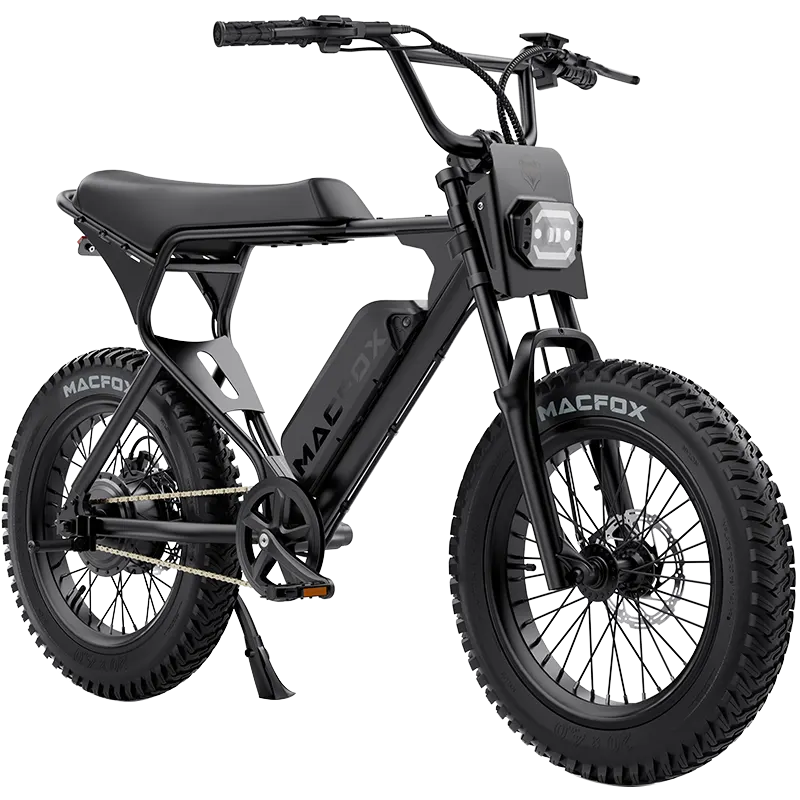
A used bike can be a smart buy when the records, charger, battery, serial number, and test ride all line up. But if the battery story stays unclear, compare the used price with a new electric bike that comes with a clear receipt, matching charger, warranty path, and support record.
The question is whether this specific bike gives you enough proof. If the savings disappear after a replacement battery or charger, the cheaper option may not really be cheaper.
FAQ
Is low mileage enough to trust a used e-bike battery?
No. Low mileage helps, but storage, charging habits, age, temperature exposure, and long idle periods also matter.
Is a replaced battery good or bad?
It depends on the proof. A documented replacement can be good. An unexplained replacement, mismatched charger, or vague story is a reason to be careful.
Should I buy without service records?
Only if the bike still has enough other proof: a clear serial number, correct charger, normal test ride, ownership record, and a seller story that stays consistent.