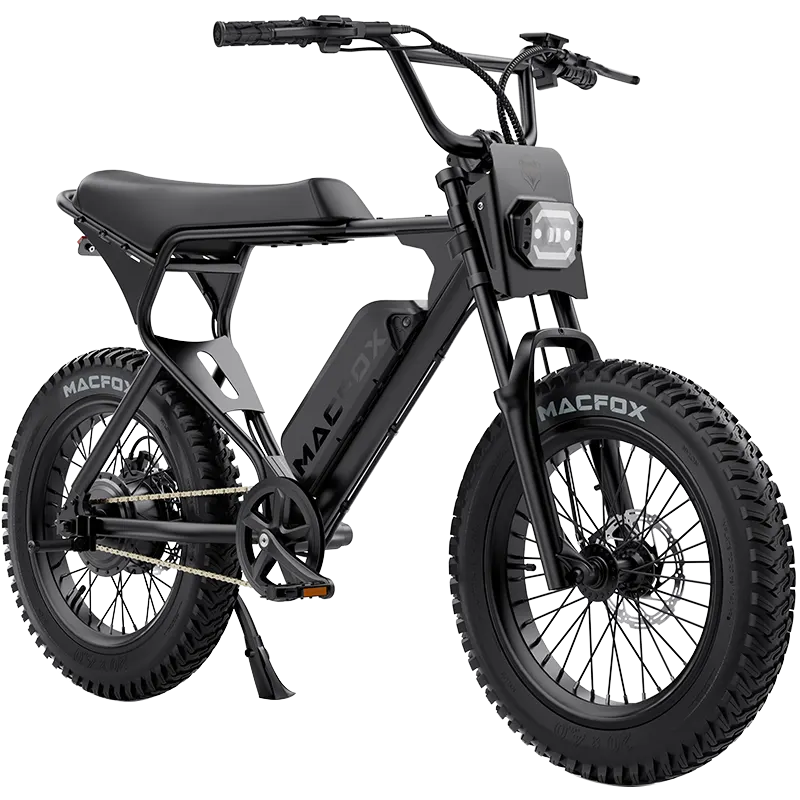

A swiveling wall rack can move a bike closer to the wall and still leave the room harder to use. Product photos usually show the tidy parked position. Your real fit test also needs the swing path, the space required to load the bike, and the route people take past it.
Do that test on the floor before drilling the first hole.
Confirm the Rack Can Hold the Actual Bike

Start with the exact rack model, not the general idea of a swiveling rack. Compare its stated bike-weight, wheel-diameter, tire-width, and fender conditions with the bike in the configuration you will store. A fat-tire label does not automatically include every tire and fender combination.
If any fit condition is unknown or exceeded, a floor outline cannot make the rack suitable. Return to the broader small-apartment e-bike storage guide and choose another storage approach before planning the wall location.
Mark the Parked Footprint
Place the bike beside the proposed wall and mark its outermost points with removable painter's tape: both handlebar ends, the widest pedal position, the tire edge, and any basket or rack. These points matter more than the frame centerline.
Now recreate the rack's parked angle using the maker's installation drawing. Mark how far the handlebar and pedal project into the room and how much wall width the bike occupies. Turning the bar or rotating a pedal is acceptable only if you are willing and able to repeat that step every time.
Add the Full Swing Path
A rack that pivots needs a clear arc between its parked and access positions. Sweep a tape line from the bike's widest points through that arc. Check the path against doors, shelves, parked cars, radiators, outlets, and another bicycle. Do not count on flexible cables or controls being pressed aside on every use.
The tradeoff is easy to miss: pivoting may reduce floor depth in the parked position while using more wall width during the turn. Compare both states rather than calling either one the rack's footprint.
Reserve Space to Load and Walk Past
Mark where you must stand to place the wheel in the rack, guide the bike upright, engage its restraint, and bring it back down. The mechanism may assist the pivot without eliminating the need to control the bike's weight.
Then trace the normal walking line with the rack parked, swung out, and being loaded. If a door cannot open, an exit narrows, or a person must step under the bike in any required state, move the proposed location and repeat the test.
Only after all three outlines work should you consider the wall structure and installation instructions. The same test applies whether you are storing one electric bike model or arranging several: every necessary position has to fit, not just the most photogenic one.