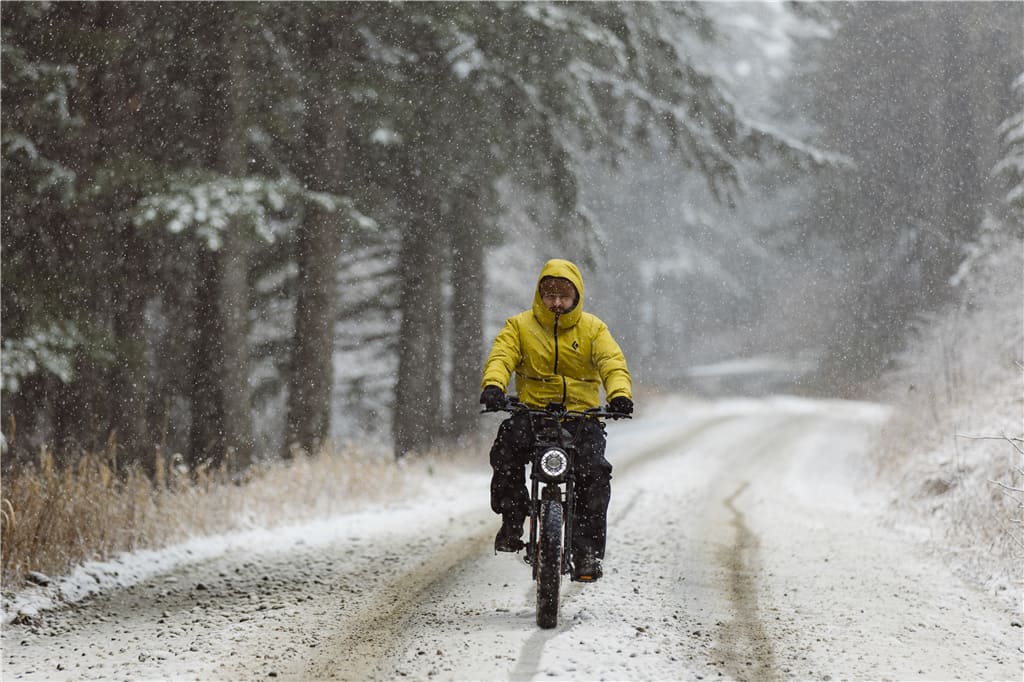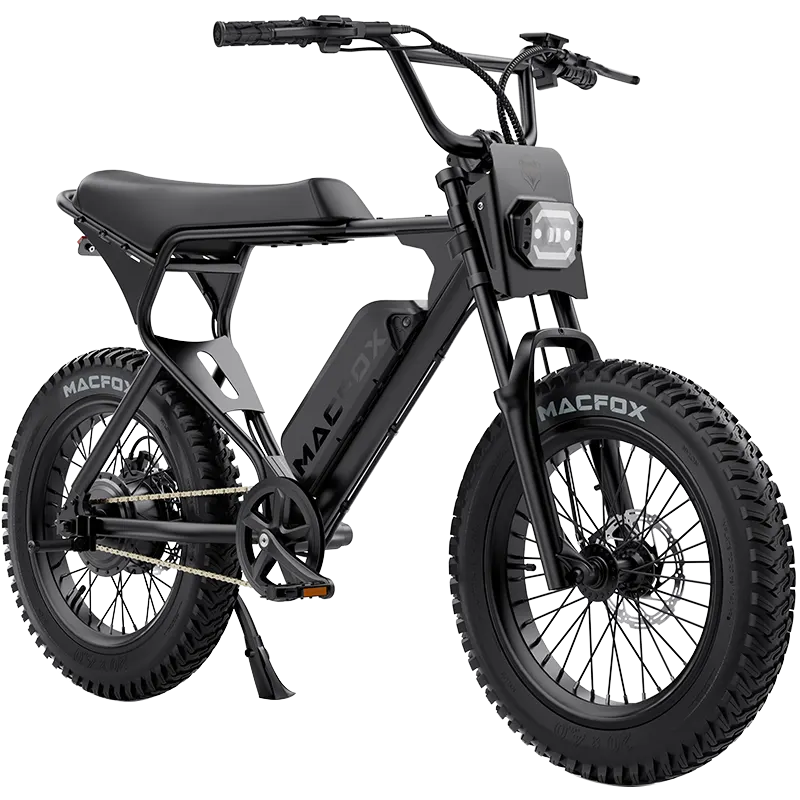

Quick answer: Macfox electric bikes aren't "slow"-they're built to ride at legal, controllable speeds in real life. Most complaints come from riders comparing a street-legal e-bike to a scooter, motorcycle, or an "unlocked" bike. In normal U.S. riding-school routes, bike paths, neighborhoods, beach trails-Macfox speed feels fast enough to be fun, and limited enough to stay safe and compliant.
If you've seen comments like "Macfox is slow," this guide breaks down what's really happening, what speeds are normal for an e-bike, and how riders (and parents) can set the right expectations.
What People Mean When They Say an E-Bike Is "Slow"

"Slow" usually doesn't mean the bike can't move. It usually means one of these:
They expected motorcycle behavior
An electric bike is designed to feel like a bicycle-with assist-not a dirt bike. If someone expects instant acceleration like a motor vehicle, a legal e-bike can feel "tame."
They're riding in a place where you shouldn't go fast anyway
A crowded boardwalk, a mixed-use path, or a neighborhood street has constant speed changes: pedestrians, stop signs, cars backing out, dogs, scooters. In these places, "fast" is actually unsafe and draws attention fast.
Their settings, battery, or riding method are limiting speed
E-bikes can feel slower when:
-
the battery is low,
-
tires are underinflated,
-
the rider is in a low assist level,
-
they're heavy on throttle but not pedaling (depending on the bike's behavior),
-
they're climbing hills or riding into strong wind.
Bottom line: most "slow" complaints are expectation + environment + setup, not a broken bike.
The Legal Reality: In the U.S., "Fast" Comes With Rules
Here's the part many people skip: U.S. e-bike rules are strict compared with what you see online. If a bike is riding where bicycles ride-paths, parks, campus areas-speed limits and class rules matter.
E-Bike Class Basics (Why Macfox Isn't Trying to Be "Too Fast")
| E-Bike Class | How the Motor Helps | Typical Top Assist | Where It's Usually Welcome |
| Class 1 | Pedal assist only | 20 mph | Most bike paths & multi-use trails |
| Class 2 | Throttle + pedal assist | 20 mph | Many paved paths (rules vary) |
| Class 3 | Pedal assist only | 28 mph | More road-oriented, often restricted on trails |
If an e-bike is tuned to "feel fast everywhere," it's often not the bike that suffers first-it's the rider. Tickets, trail bans and accidents all follow.
Macfox's approach is simple: speed that matches where young riders actually ride-school routes, neighborhoods, city paths-so the bike stays fun without turning into a liability.
How "Fast Enough" Compares to Real Traffic
Here's a reality check most riders never do: they compare an e-bike's top speed to a car's speed limit - not a car's real driving speed.
On most U.S. city and suburban roads, cars rarely average anywhere near their posted limits once traffic lights, congestion, turns, and stops are factored in. In real conditions, average car speeds often fall into the 25-30 mph range.
That means a legal 20 mph e-bike is already moving at roughly 60-80% of nearby car traffic on the same roads - especially on short trips with frequent stops. That's why e-bikes often feel "slow" on paper, but surprisingly competitive once you're actually riding.
"It Feels Slow" in Real Life: The 6 Most Common Reasons

Low assist level (or riders staying in eco mode)
Many riders leave the bike in a conservative assist setting, then judge it like it's underpowered. Higher assist levels exist for a reason-use them when the environment allows.
Battery level changes the feel
When battery is lower, many e-bikes protect the system by reducing peak output. This doesn't mean "slow," it means consistent and safe.
Tire pressure and rolling resistance (big one for fat tires)
A fat tire electric bike has more surface contact. That gives you stability and comfort, but it also means:
-
low tire pressure can make the bike feel "draggy,"
-
soft terrain (sand, grass) will demand more power,
-
acceleration feels smoother, not twitchy.
Hills and headwind: the "invisible wall"
A mild headwind can make a 20 mph ride feel like 12 mph. Hills add the same effect. Riders often blame the bike when the environment is doing the work.
Throttle-only expectations
Throttle is great for starts and short bursts, but for many riders the "fastest feeling" ride is pedal assist + steady cadence.
Comparing to "unlocked" bikes online
Social content often shows bikes that are modified, not class-compliant, or filmed in empty areas. That's not real commuting.
The Truth in Scenes Teens Actually Ride
Speed is emotional. So let's talk reality.
School mornings (the "car line" scenario)
If you can ride smoothly and predictably, you're already winning. You don't need 30 mph to beat traffic that's barely moving. What feels fast is:
-
not stopping every 10 seconds,
-
not hunting for parking,
-
not waiting for a parent pickup.
After-school hangouts
The "fastest bike" isn't the one that tops out higher-it's the one that makes it easy to:
-
hop between friends' houses,
-
hit the park and court,
-
ride comfortably without arriving sweaty.
Weekends: beach paths, boardwalks, city trails
These are where "too fast" turns into the fastest way to get yelled at-or worse, crash. A controlled e-bike speed keeps the ride fun and keeps adults off your back.
So when someone says "Macfox is slow," what they may really mean is: "Macfox doesn't encourage riding like a motorcycle in places built for bicycles."
That's not a weakness. That's the point.
What Speed Should Feel Like on an Electric Bike?
Here's a more honest comparison: not specs, but how it feels to ride.
| Riding Context | What "Fast Enough" Feels Like | What "Too Fast" Looks Like |
| Neighborhood streets | Smooth, confident, controlled | Panic braking, close calls |
| Bike paths / shared trails | Predictable passing, stable handling | Scaring pedestrians, complaints |
| School commute | On-time, consistent, low stress | Risky intersections, attention from police |
| Beach / park riding | Relaxed, fun, social | Losing control on sand/gravel |
If your daily ride is mostly shared paths and city streets, "fast enough" is the sweet spot-and it's where legal e-bikes are designed to live.
A Quick "Slow" Checklist (Before You Blame the Bike)

Run this before you decide anything:
| Check | What to Do | Why It Changes the Feel |
| Assist level | Increase step-by-step in safe areas | Biggest "speed feel" difference |
| Battery | Ride with a healthy charge | Maintains consistent output |
| Tire pressure | Inflate to recommended range | Reduces drag, boosts responsiveness |
| Terrain | Test on flat pavement first | Sand/grass always feels slower |
| Riding style | Pedal assist + cadence | Helps the motor help you |
This usually fixes 80% of "it's slow" comments.
Safety & Responsibility: What Teens Should Know (And What Parents Care About)
For teens: the real danger isn't "slow," it's "stupid fast"
Most serious accidents come from:
-
speeding on shared paths,
-
riding like a motorcycle,
-
braking late,
-
showing off near cars or crowds.
If you're riding an ebike, your goal is to look smooth-not reckless.
For parents: what you actually want is predictable behavior
Parents don't want "more speed." They want:
-
reliable braking,
-
stable handling,
-
lights for visibility,
-
a ride style that won't get their kid into trouble.
A bike that stays legal and controllable protects everyone: rider and family.
Why Macfox Speed Feels Right When You Ride It the Way It's Built To
Macfox bikes are designed for real routes young riders actually use:
-
streets with stop signs,
-
school commutes,
-
city paths,
-
mixed pavement and rough surfaces.
If you judge the bike by those routes, "slow" stops being the word. The word becomes usable.
You don't need a speed machine to own your day. You need a bike that makes the day easier.
Macfox X7 vs X1S: Which One Feels Faster in Real Life?
Macfox X1S (City-life speed feel)
The Macfox X1S comuter ebike is built for the kind of riding where speed is constantly changing: lights, turns, stop signs, quick detours. What makes it feel "not slow" is how responsive and predictable it is in everyday movement-rolling out from a stop, merging into a bike lane, cruising across town without drama.
Best for: school commutes, city parks, errands, meet-ups, campus-style riding.
Macfox X7 (Fat tire confidence that changes how fast you feel)
The Macfox X7 fat tire ebike is where "slow" comments often come from-because fat tires ride differently. A fat tire electric bike trades twitchy speed for stable confidence. On uneven pavement, gravel shortcuts, beachside paths, and rough city streets, fat tires make the ride feel smoother and more controlled-so you keep moving while others slow down.
And there's a specific advantage riders notice: the X7's wider rear tire gives a planted feel during quick acceleration and balance-heavy moves (like controlled lift practice). For wheelie-style riders, that "planted" rear end can make the bike feel more controllable, which is what matters when you're practicing responsibly.
Best for: mixed surfaces, rough streets, coastal paths, riders who care about stability + style.
Conclusion: The Truth About "Slow"
Macfox electric bikes aren't slow-they're street-legal, trail-friendly, and built for real life. If someone expects motorcycle behavior, any legal e-bike will feel "slow." But for young riders actually commuting, hanging out, and exploring, the real win is:
-
getting there without stress,
-
riding without constant conflict,
-
staying safe and compliant,
-
having a bike that feels fun everywhere you're actually allowed to ride.
That's the truth behind the comments-and why "slow" is often just another word for responsible speed.