
To ride an electric bike as a beginner: start in a safe, flat area, wear a helmet, set assistance to the lowest level, and practice smooth starts and stops before riding in traffic. If your e-bike has a throttle, learn “gentle throttle” first—because the biggest beginner mistake is accelerating too hard from a stop.
This guide is written for young riders (new adults, first-time ebike owners, or people upgrading from a regular bicycle). It covers two paths—with bicycle experience and without bicycle experience—then walks you through a simple training plan that makes your first week feel confident instead of chaotic.
Before You Ride: 2-Minute Safety Setup That Changes Everything

Most beginner crashes aren’t about speed. They’re about surprise: unexpected acceleration, over-braking, or wobbling when looking around. Do this first.
Gear you actually need
-
Helmet (non-negotiable)
-
Closed-toe shoes (no slides)
-
Gloves (optional but helpful)
-
Bright top / reflective detail if you’ll ride near sunset
-
If you’re totally new: elbow/knee pads are not “extra”—they’re smart
Quick bike check (30 seconds)
| Check | What you’re looking for | Why it matters |
|---|---|---|
| Brakes | Firm lever feel, not spongy | Stops = confidence |
| Tires | Proper pressure, no visible damage | Prevents slipping and wobbles |
| Battery | Enough charge for practice | Low battery = weird power cutoffs |
| Lights | Front + rear working | Being seen is safety |
| Throttle (if equipped) | Smooth response, no sticking | Prevents surprise launches |
Step 1: Do You Have Bicycle Experience?
This determines how you should learn.
If you’ve never really ridden a bicycle
Treat this like learning to ride a bike plus learning motor assistance.
Best move: have someone with you for the first session.
Pick a wide, flat, empty area (parking lot, quiet cul-de-sac, empty basketball court).
What to focus on first:
-
Balancing straight
-
Turning without wobbling
-
Braking smoothly
-
Looking over your shoulder without drifting
If you’re brand-new, don’t start on roads. Not yet.
If you already ride a regular bike comfortably
You still need a “recalibration” because an electric bicycle accelerates differently.
Your main focus:
-
Smooth throttle control (if you have it)
-
Brake timing (you’ll arrive faster than you expect)
-
Turning at low speed without jerky assist
Even if you’re experienced, start on low assist. Don’t ego-ride your first hour.
Step 2: Your First Ride Plan (Flat Ground Only)
This is the fastest way to go from “nervous” to “I got this.”
Phase A: Learn the controls (10 minutes)
-
Turn the bike on
-
Find the assist level buttons
-
Find the throttle (if you have one)
-
Practice squeezing brakes while standing still
-
Practice mounting/dismounting smoothly
Phase B: Starts and stops (15 minutes)
Beginner rule: your first skill is stopping, not speed.
Do 10 reps:
-
Start rolling slowly (pedal one or two strokes)
-
Lightly use assist
-
Brake smoothly to a stop
-
Put one foot down, stay balanced
If your ebike has throttle: do 10 reps of “tiny throttle”
-
Apply just enough throttle to move
-
Release
-
Brake
This trains your hand to avoid accidental rocket launches.
Phase C: Turning and scanning (15 minutes)
Practice:
-
Wide turns → tighter turns
-
Figure-8s at low speed
-
Shoulder checks (look back without swerving)
If you can do figure-8s calmly, you’re ready for the next step.
Step 3: How to Use Pedal Assist vs Throttle (Beginner-Friendly)

This is where most new riders get confused.
Pedal assist (PAS)
PAS gives you power when you pedal. It feels natural once you match your cadence.
Beginner tip:
-
Start in the lowest PAS
-
Increase only when you’re already stable and comfortable
Electric bike with throttle
A throttle can move the bike even without pedaling (depending on model and settings). It’s amazing for:
-
Stop-and-go intersections
-
Starting on slight hills
-
Quick repositioning in a bike lane
But throttle is also where beginners mess up.
Throttle rule: “press it like you’re dimming a light, not flipping a switch.”
PAS vs Throttle: when to use which
| Situation | Better choice | Why |
|---|---|---|
| Starting from a stop | Throttle (gentle) or low PAS | Smoother launch |
| Cruising on flat roads | Low–mid PAS | Stable speed without hand fatigue |
| Crowded areas / paths | Lowest PAS, no throttle | Predictability |
| Small hills | Mid PAS | Keeps you from grinding |
| Learning / practice | Lowest PAS + tiny throttle drills | Control first |
Step 4: Your “Week 1” Skill Progression (So You Don’t Rush It)
A lot of young riders jump from “first ride” to “traffic” too fast. Here’s a simple plan.
| Day | Where you ride | What you practice | Goal |
|---|---|---|---|
| Day 1 | Empty flat area | Starts/stops + turns | No panic braking |
| Day 2 | Quiet neighborhood | Shoulder checks + signaling | Ride straight while scanning |
| Day 3 | Slight hills | Assist control + braking downhill | No surprise speed |
| Day 4 | Light errands | Stops + parking + locking | Real-world confidence |
| Day 5–7 | Normal routes | Smooth riding + rules | Consistent safe habits |
If you ever feel shaky, go back one step. That’s not weakness—that’s skill building.
Step 5: Riding Smarter in Traffic (Beginner Rules That Keep You Safe)

You don’t need to ride like a car. You need to ride predictably.
The “predictable rider” checklist
-
Ride in a straight line (no weaving)
-
Signal before turns
-
Don’t hug parked cars (doors open fast)
-
Assume drivers don’t see you
-
Slow down at intersections even if you have right-of-way
Braking tip beginners love
Use both brakes smoothly.
If you grab the front brake too hard at low speed, you can tip forward. Practice controlled braking early.
What Beginners Should Look for in Their First E-Bike
For new riders, the best electric bike isn’t the fastest—it’s the easiest to control.
1) Fat tire e-bikes feel more stable
A fat-tire electric bicycle can feel more confident on:
-
rough pavement
-
gravel patches
-
sandy shoulders
-
imperfect roads
That “planted” feeling helps beginners stay calm.
2) A throttle helps with start/stop life
An electric bike with throttle is beginner-friendly because it reduces awkward starts at:
-
lights
-
stop signs
-
slight hills
-
crowded paths where you want controlled movement
3) Keep controls simple
Beginner advantage = fewer decisions.
Single-speed or simpler setups can reduce “what do I do right now?” moments.
If You Want to Learn Wheelies Later (Do This First)
If you’re one of the “I wanna wheelie” riders—cool, but earn it.
Before you try:
-
You should be able to stop smoothly from speed
-
You should have throttle control (no jerky inputs)
-
You should practice in a safe empty space
-
Helmet always
Wheelies are a skill progression—not a day-one move. Learn the bike first, then level up.
Macfox Picks for Beginners (X1S, X7, M16)
(Second-to-last section, tied tightly to beginner riding skills)
If you’re learning how to ride an e-bike for the first time, you want a setup that makes the learning curve smoother—stable handling, simple controls, and confidence at low speed.
-
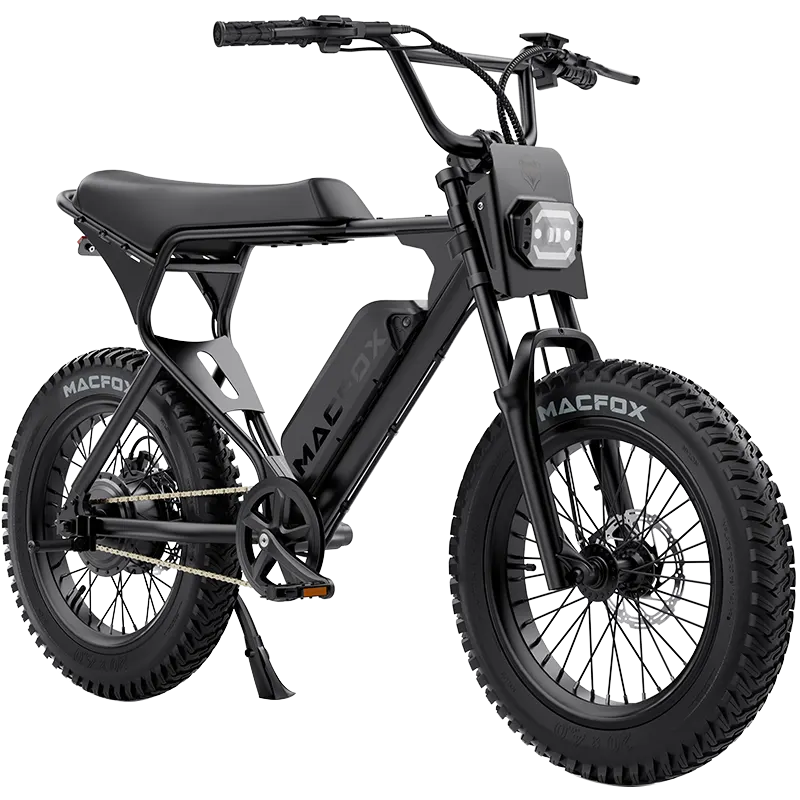
Macfox M16 electric bike: A beginner-friendly option for smaller or younger riders who want a more manageable feel in parking-lot practice and neighborhood cruising. It’s the kind of ebike that helps you build control before you build speed.
-
Macfox X1S electric bicycle: A practical “daily rider” choice for beginners who want a straightforward commuter-style experience. For new adults learning real routes—school, work, errands—the X1S supports steady confidence instead of overcomplication.
-
Macfox X7 e-bike: If you want extra stability for rougher streets and mixed surfaces, the X7’s more planted feel can be reassuring while you’re still developing smooth throttle and braking habits.
If you’re choosing your first commuter electric bike, prioritize the one that makes you feel calm and in control—because that’s the bike you’ll ride consistently.
Final Thoughts: The Beginner Formula That Actually Works
Learning to ride an electric bike is simple when you do it in the right order:
-
Helmet + quick safety check
-
Flat practice area
-
Lowest assist level first
-
Smooth starts/stops before speed
-
Throttle control (if you have it)
-
Progress to real roads only when you feel stable
Whether you call it an e-bike, electric bicycle, or electric bike with throttle, the goal is the same: confidence without chaos. Ride steady, build skills fast, and then enjoy the freedom that makes e-bikes so addicting (in the best way).