
Short Answer For Obsidian 2.0 Shoppers
Consider Mokwheel Obsidian 2.0 if you want a large 26 x 4.0 fat-tire full-suspension eBike with a 940Wh-class battery, 105Nm+ torque, high peak motor output, torque and cadence sensing, a big payload rating, and Mokwheel's power-station accessory idea. Consider Macfox X2 if you want a more compact 20 x 4.0 full-suspension fat-tire eBike with a simpler control story, a lower listed rider-height entry point, and a more direct Macfox model path.
This is a rare case where X2 is the correct Macfox comparison. Obsidian is not a light city bike. It is a big full-suspension fat-tire platform built for rough ground, steep climbs, heavier loads, and riders who want a powerful outdoor-oriented system. X2 belongs in the conversation because it also uses fat tires, front and rear suspension, and a stronger utility-minded setup than a basic daily model.
The decision is still not a brand win. It is a size, power, terrain, battery, fit, and ownership decision. Obsidian gives the buyer more motor and battery scale. X2 gives the buyer a smaller wheel format and a simpler Macfox choice.

Obsidian 2.0 is the rare case where X2 can belong, because the comparison is about full suspension and large-system scale. The Macfox side still has to stay smaller and control-focused rather than claiming to replace Mokwheel's power-station story.
Obsidian 2.0 Is A Big-System Bike First
The Obsidian page presents the bike as a full-suspension eBike with 26 x 4.0 puncture-resistant fat tires, a 48V 19.6Ah battery, torque and cadence sensing, hydraulic disc brakes, Shimano 8-speed gearing, and a 130mm adjustable suspension fork. Mokwheel also highlights a 50mm mid-mounted rear air shock and a power-station accessory ecosystem built around inverter and solar-panel use.
That combination tells buyers what Obsidian is really about. It is not just a fat-tire eBike with a larger motor. It is a heavier, bigger, more equipment-rich system for riders who want comfort and control over loose ground, uneven paths, gravel, grass, and steep climbs.
The scale matters. Mokwheel lists 77 lb weight, 560 lb payload capacity, 60-80 mile range framing, and rider-height guidance from 5'6" to 6'8". Those numbers make the bike compelling for larger riders and loaded use, but they also make storage, lifting, transport, and local access rules more important.
The Specs That Change The Obsidian Decision
Obsidian's motor and battery are the center of the buying decision. Mokwheel lists 750W rated power, 1000W continuous power, 1300W peak power, and 105Nm+ torque. The official page also lists 20 mph throttle speed and 28 mph pedal-assist speed, so buyers should check where the exact configuration is allowed before choosing how to ride it.
The battery story is also larger than normal. Mokwheel lists a 48V 19.6Ah battery and frames range around 60-80 miles. The battery is also part of the brand's power-station message, because Obsidian can connect with optional power accessories. That is useful if the buyer actually wants outdoor device power, but it is extra value only for riders who will use that ecosystem.
The suspension setup is the other major decision point. A 130mm fork and rear air shock make Obsidian more comfortable on uneven ground than a rigid or front-only platform. The question is whether the buyer needs that comfort often enough to justify the bike's size and weight.
What Independent Testing Adds
Electric Bike Report's Obsidian review points in the same direction: this is a powerful, comfortable, full-suspension fat-tire eBike with a torque sensor and a strong outdoor-use identity. The review highlighted the high-output rear hub motor, front and rear suspension, optional inverter system, hydraulic brakes, and customizable settings.
The range testing is especially useful. Mokwheel advertises 60-80 miles, while Electric Bike Report measured 33.5 miles in high assist and 60.4 miles in low assist. That is not a reason to dismiss the bike. It is a reminder that heavy bikes with powerful motors can use energy quickly when ridden hard.
The hill and braking tests also matter. Electric Bike Report recorded strong climbing performance and a 22 ft 7 in average stopping distance in its brake test. For a big fat-tire full-suspension eBike, those data points are more useful than a generic spec list because they explain how the bike behaves under load.
Where Macfox X2 Enters The Comparison
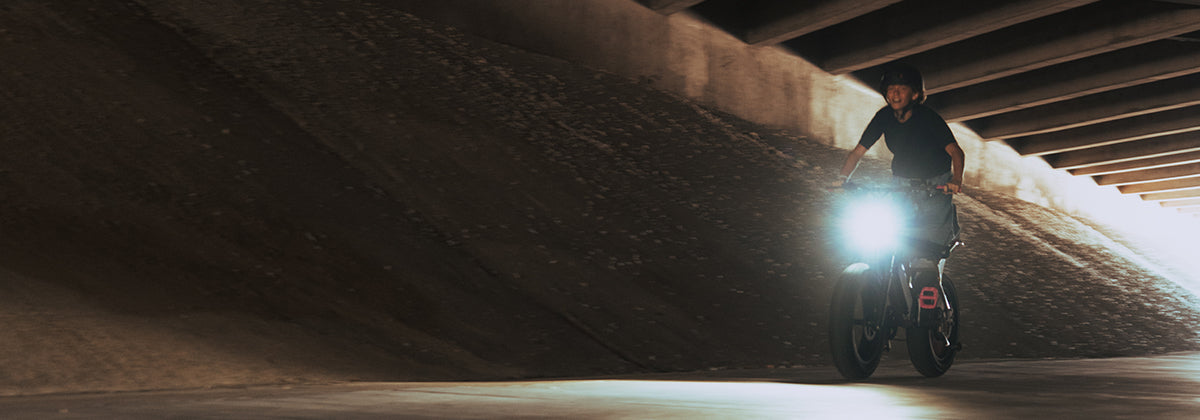
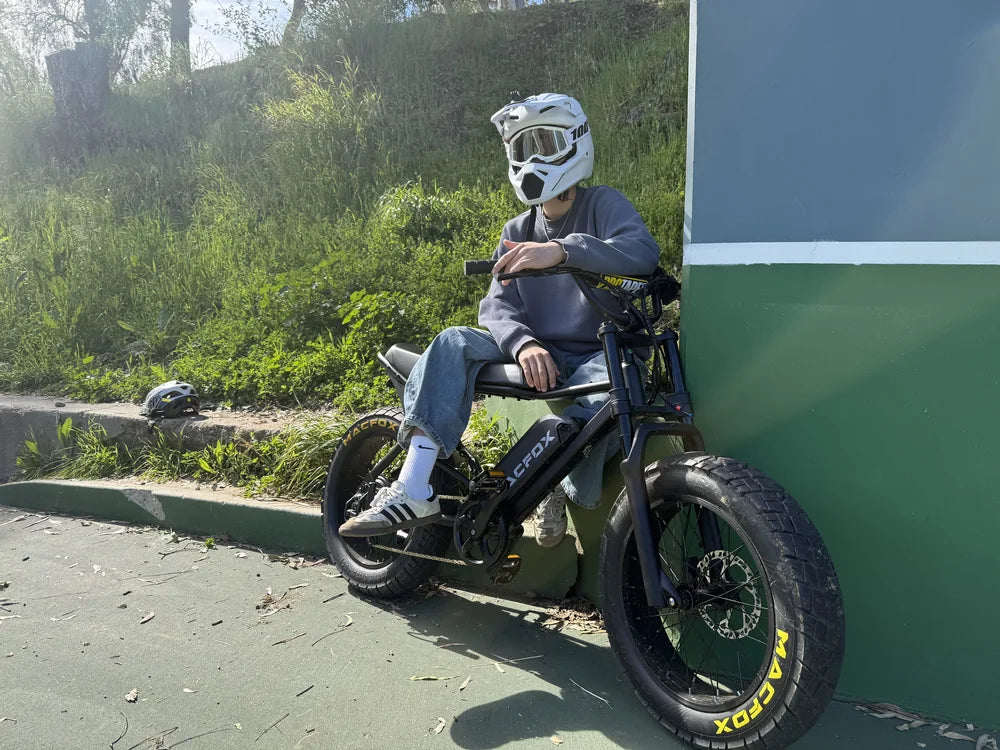
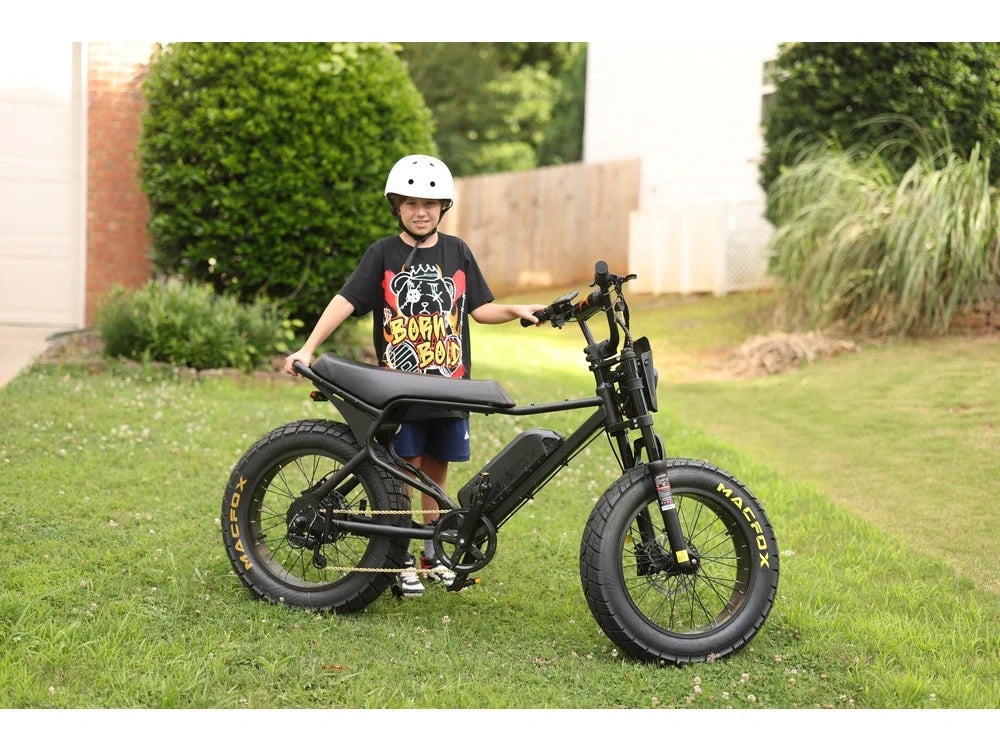
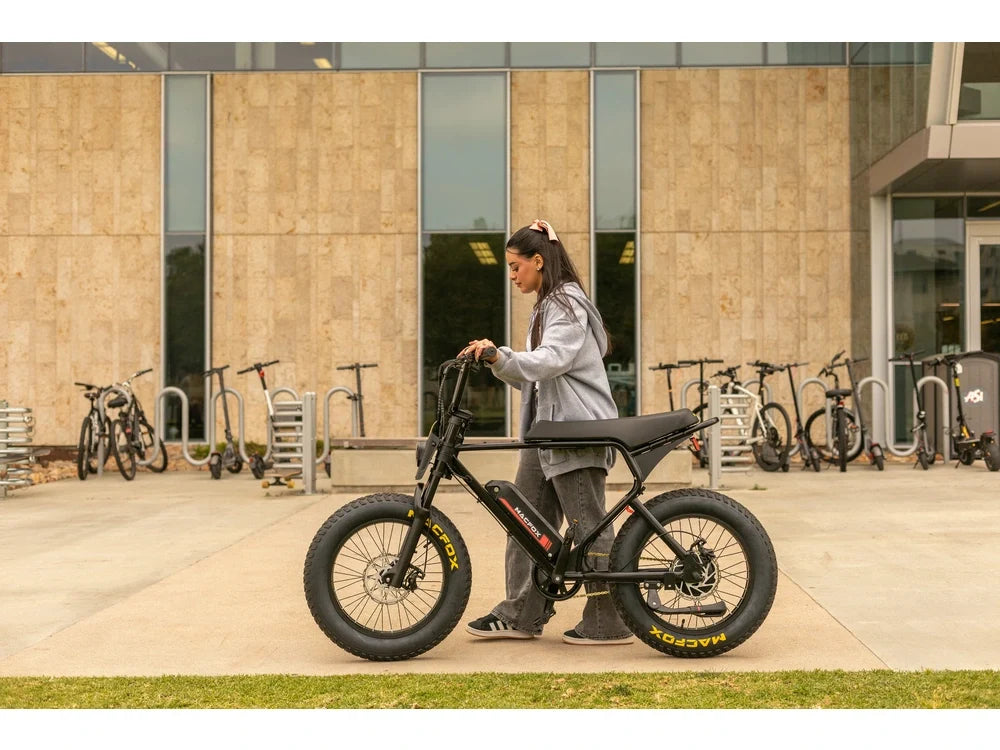
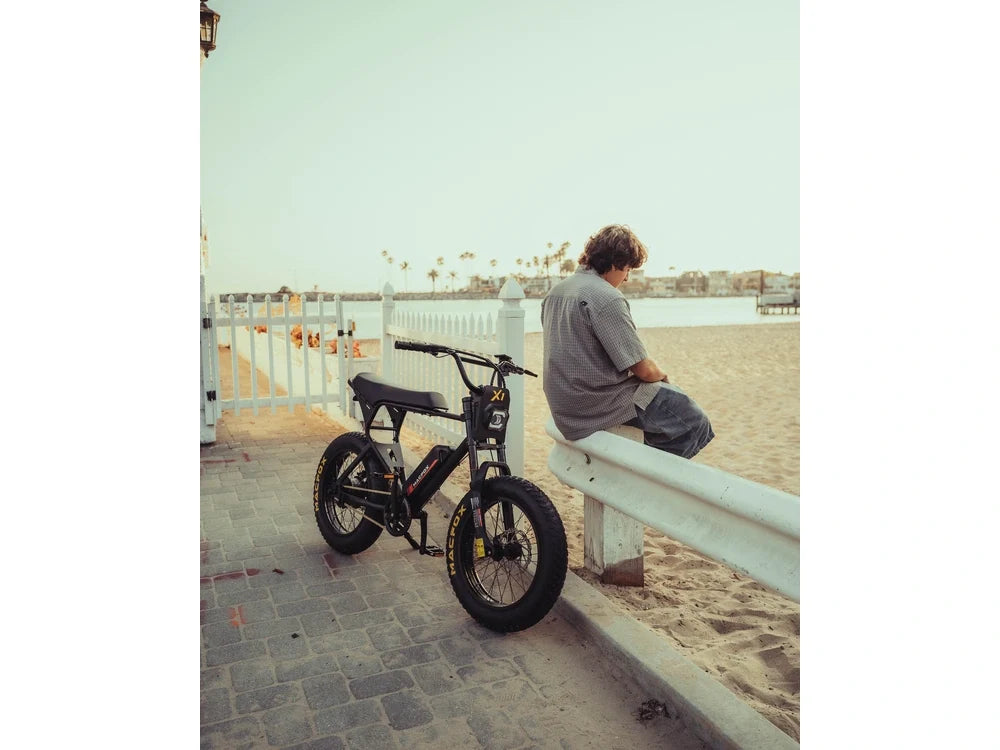
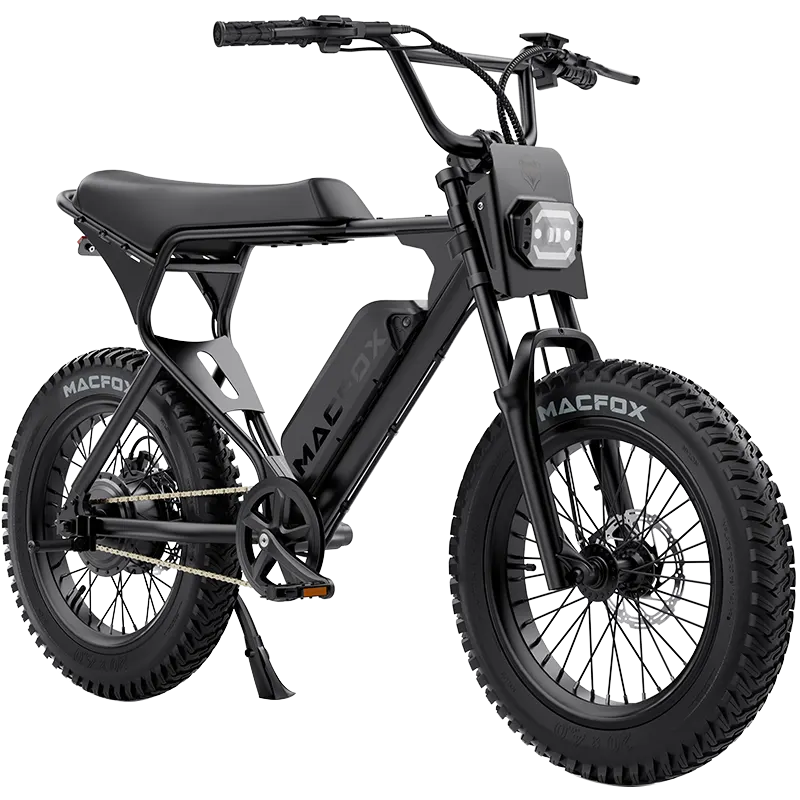
The Macfox X2 eBike enters when the buyer likes the full-suspension fat-tire idea but does not want the largest possible platform. X2 uses a 20 x 4.0 fat-tire format, front and rear suspension, hydraulic disc brakes, a 750W motor with 1000W peak output, and a single/dual battery range path. It is a rough-route electric bike for riders who want more control than a basic daily model without moving into a 26-inch heavy system.
X2 is not being positioned as a cheaper Obsidian mirror. It is a different format. Obsidian is taller, heavier, and more power-station oriented. X2 is more compact, easier to frame as one Macfox model choice, and better suited to riders who want full-suspension comfort in a smaller fat-tire package.
That makes the comparison useful for real buyers. If the rider wants maximum listed payload, 26-inch wheels, high torque, and Mokwheel's inverter ecosystem, Obsidian deserves the first look. If the rider wants a smaller Macfox platform with suspension and fat-tire grip, X2 belongs on the shortlist.
Large-System Full Suspension Versus Smaller Full-Suspension Control
| Buyer Question | Mokwheel Obsidian 2.0 | Macfox X2 |
|---|---|---|
| What is the main appeal? | Large 26 x 4.0 full-suspension fat-tire system with high torque and power-station accessory potential. | More compact 20 x 4.0 full-suspension fat-tire Macfox model. |
| Who should start here? | Riders who want more motor scale, more battery scale, higher payload rating, and a bigger riding platform. | Riders who want suspension and fat tires without choosing the largest system. |
| Battery and range | 940Wh-class battery with 60-80 mile brand framing and review-tested range that varies heavily by assist level. | Macfox single/dual battery path for buyers who want to plan range by battery setup. |
| Power character | 105Nm+ torque, high peak output, and torque/cadence sensing. | 750W motor, 1000W peak output, and a simpler Macfox control story. |
| Fit and handling | 26-inch wheel platform, 77 lb listed weight, and 5'6" to 6'8" rider guidance. | 20-inch wheel platform and lower listed rider-height entry point. |
| Main caution | Confirm storage, transport, allowed-use rules, and whether the power accessories are genuinely useful. | Confirm fit, battery setup, and whether the smaller wheel format fits the route. |
Consider Obsidian If You Want Maximum System Scale
Obsidian may deserve a closer look for riders who want a big, powerful, equipment-rich eBike. The 26 x 4.0 tires, high torque, 940Wh-class battery, full suspension, hydraulic brakes, and large payload rating all support that identity.
It also makes sense if the power-station feature is part of the purchase. If you care about inverter compatibility, outdoor device power, solar accessory pairing, and a larger battery platform, Obsidian offers a more complete ecosystem around that idea.
The buyer should still be practical. A 77 lb listed bike with a large frame and high-output settings needs storage space, transport planning, and rule checks. A powerful eBike is only a good fit when the owner has a realistic place and use case for it.
Consider X2 If You Want A Smaller Full-Suspension Fat-Tire Option
X2 can feel cleaner when the buyer wants suspension and fat-tire grip but does not want the size of a 26-inch power-station platform. The 20 x 4.0 format makes the bike feel visually more compact while still giving it a stronger stance than a narrow-tire daily model.
It also suits riders who prefer a simpler decision. Obsidian asks the buyer to think about power accessories, a larger frame, a higher payload story, and more high-output behavior. X2 asks a simpler question: does this Macfox full-suspension fat-tire model fit your height, storage space, route, and battery plan?
That does not make X2 a better bike for every rider. It makes it the more direct Macfox answer for riders who want a smaller rough-route platform without the largest possible system.
Checks That Matter Before Choosing Obsidian 2.0
- Verify the exact Obsidian listing. Mokwheel's page uses Obsidian naming; if you see Obsidian 2.0 in a listing, confirm specs, year, warranty, and current inventory.
- Measure storage and transport first. A 26-inch, 77 lb fat-tire full-suspension bike is not a casual storage item.
- Check allowed-use rules. High output and 28 mph assist settings may not fit every public path or local rule set.
- Plan range by assist level. Review testing showed very different results between high and low assist. Use the range claim as a planning range, not a guarantee.
- Decide if power-station accessories matter. If inverter and solar pairing are not part of your plan, do not overvalue that feature.
- Compare rider fit honestly. Obsidian's larger frame suits taller riders better. X2 may be easier to consider for riders who want a lower starting point.
Final Fit Recommendation
Mokwheel Obsidian 2.0 may fit better for riders who want a large, high-torque, full-suspension 26 x 4.0 fat-tire eBike with a big battery, high payload rating, and power-station accessory potential. Macfox X2 may fit better for riders who want a more compact 20 x 4.0 full-suspension fat-tire eBike with a simpler model story and a direct Macfox path.
Pick Obsidian when maximum system scale is the point. Pick X2 when the goal is full-suspension fat-tire control in a smaller, simpler package.
FAQ
Is Mokwheel Obsidian 2.0 a good eBike?
Yes, for riders who specifically want a large full-suspension fat-tire eBike with high torque, a large battery, and power-station accessory potential. It is less ideal for riders who want a smaller, simpler daily model.
Is Obsidian the same type of bike as Macfox X2?
They overlap in full suspension and fat tires, but they are not the same format. Obsidian is a larger 26-inch system. X2 is a more compact 20-inch Macfox option.
Which bike is easier to store?
X2 is generally the easier starting point because of its 20-inch wheel format, but both bikes require real measurement for tire width, handlebar width, length, and charging space.
Which has the stronger battery story?
Obsidian has the stronger single-battery capacity story with its 940Wh-class battery. X2 is better judged by whether the rider wants the Macfox single/dual battery path.
When Do Obsidian Power-Station Features Matter?
Only if you will actually use the inverter or solar accessory idea. If those accessories are not part of your routine, judge Obsidian more by fit, range, suspension, storage, and allowed-use rules.