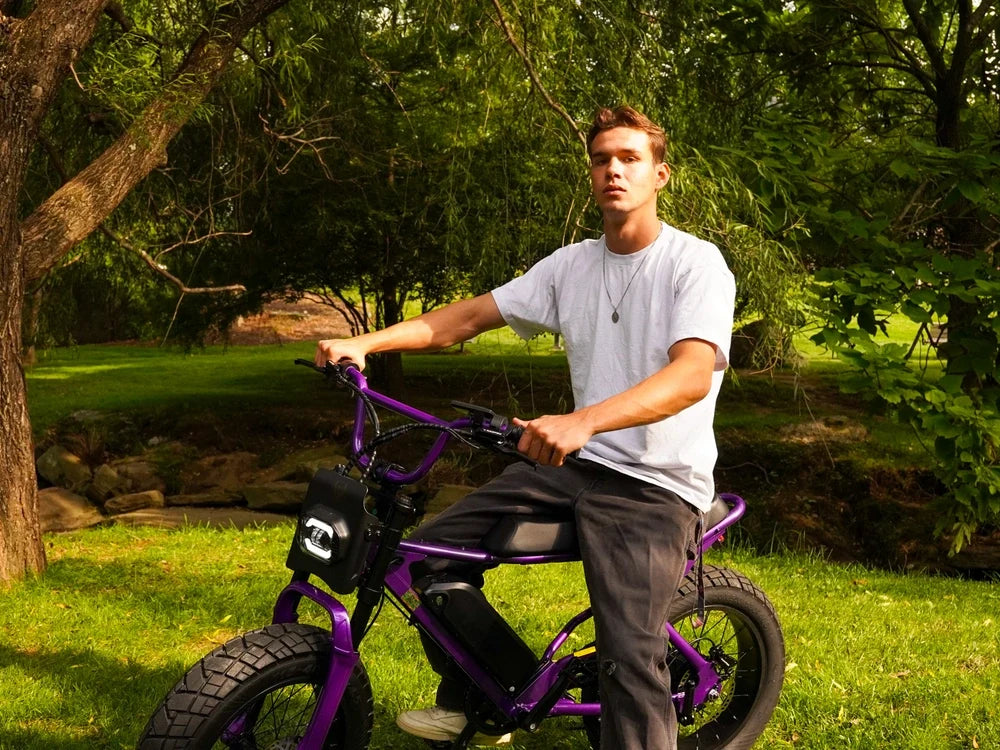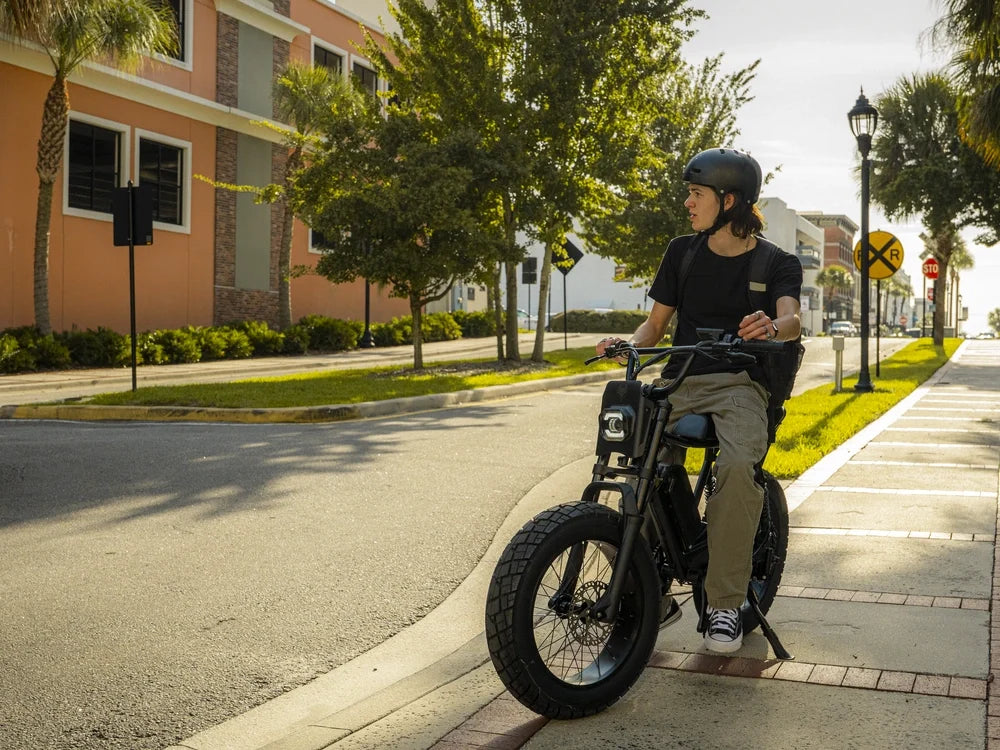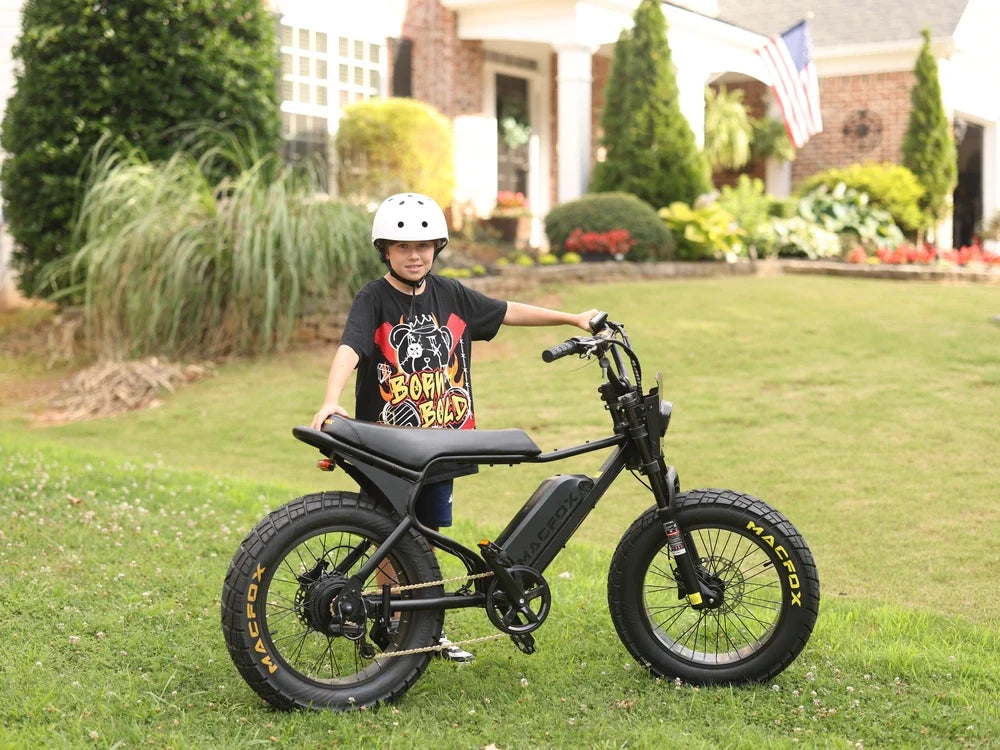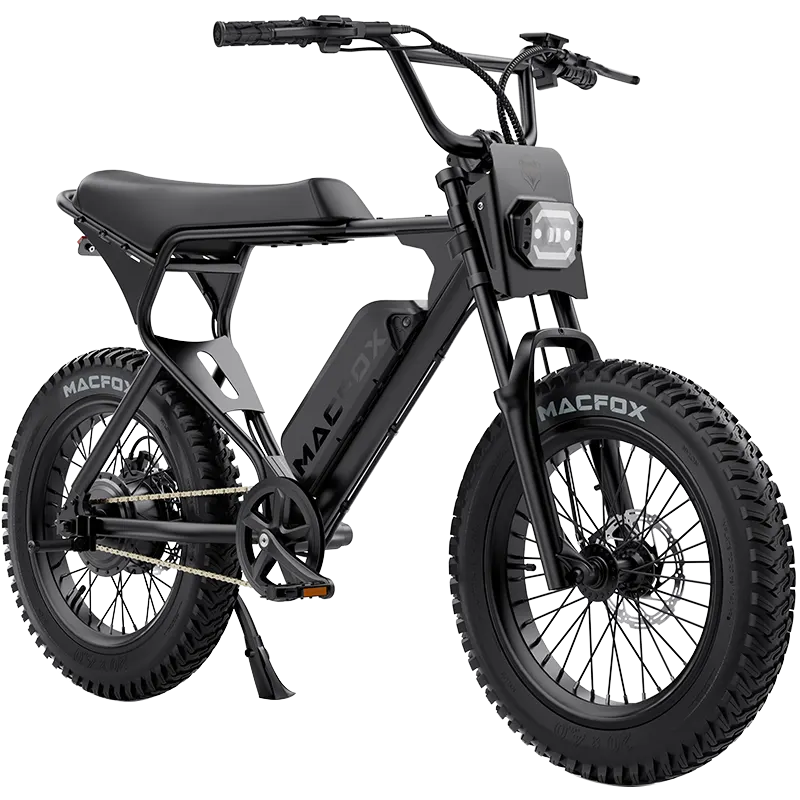

The short answer: a regular bike is usually the better first choice for a teen who rides short, simple routes and still needs to build balance, road awareness, and maintenance habits. A teen e-bike makes more sense when distance, hills, schedule pressure, or carrying a backpack turns a normal bike ride into a trip the teen will avoid.
Start with the route, not the motor. If the ride is three flat blocks to a friend's house, a regular bike may be enough. If the ride includes a longer ride to school, a steep neighborhood hill, after-school timing, or multiple places the teen needs to reach independently, compare Macfox electric bikes only after the safety and responsibility questions are clear.
Teen E-Bike vs Regular Bike: Quick Comparison
| Decision Factor | Regular Bike Advantage | E-Bike Advantage | Rider Check |
|---|---|---|---|
| Route distance | Best for short neighborhood trips. | Better when distance is long enough that the teen may skip riding. | Can the teen complete the route safely without rushing? |
| Hills and wind | Simple, lighter, and good for fitness. | Motor assistance helps make tough routes more realistic. | Will hills cause risky fatigue or late arrivals? |
| Speed control | Speed depends mostly on rider effort. | Assistance can make the ride easier, but it also requires judgment. | Does the teen already slow down at corners, crossings, and crowded areas? |
| Exercise | More direct physical effort. | Still involves pedaling, but assistance reduces strain. | Is the goal fitness, transportation, or both? |
| Maintenance | Lower cost and fewer systems to learn. | More useful for transportation, but battery care matters. | Who will check tires, brakes, charging, and storage? |
| Rules | Usually simpler. | May involve age, class, helmet, and access rules. | Have you checked the local rules before buying? |

When a Regular Bike Is the Better Choice
A regular bike is the cleaner choice when the route is short, flat, and familiar. It is also better when a teen is still learning basic road habits: looking before turning, scanning driveways, braking smoothly, riding predictably, and locking the bike correctly.
It is easy to focus on the bike, but the rider's habits matter more. If a teen regularly cuts corners, rides distracted, or struggles to judge traffic gaps, adding motor assistance does not solve the problem. A regular bike gives the rider more time to build control before speed and range become part of the decision.
Cost is another reason to stay simple. A regular bike is usually cheaper to buy, easier to repair, and less stressful to store. For a teen who only needs a weekend neighborhood ride, the extra battery, charger, display, wiring, and power system of an e-bike may be more complexity than the route requires.
When a Teen E-Bike Makes More Sense
A teen e-bike starts to make sense when the regular bike is technically possible but practically unrealistic. A five- or seven-mile ride may look fine on a map, yet feel too long with a backpack, hills, wind, and a deadline. In that situation, assistance can make independent riding more consistent.
E-bikes can also help when the day has more than one stop. A teen might ride to school, then practice, then a friend's house, then home. The value is not only speed. It is the ability to keep a routine without arriving exhausted or having to skip the ride.
The key is maturity. A teen e-bike is still a vehicle that shares space with cars, pedestrians, parked doors, driveways, and other riders. If the rider understands that assistance is a tool, not a permission slip to ride aggressively, an e-bike can be a practical step up from a regular bike.

Safety and Rules Come Before the Bike
Before choosing either option, check three things: the route, the rules, and the rider. The safest bike is not automatically the lightest or the most powerful one. It is the bike that matches where the teen will actually ride and how responsibly the teen handles traffic, speed, and visibility.
In the United States, organizations such as NHTSA publish bicycle safety guidance, CPSC publishes consumer safety alerts around lithium-ion battery products, and PeopleForBikes tracks state-level e-bike laws. The practical takeaway is simple: helmet use, visibility, proper charging, and local class rules belong in the buying decision before color, style, or top speed.
State and city rules can affect age limits, helmet requirements, trail access, school policies, and where different e-bike classes may be used. Use Macfox's youth e-bike laws guide as a starting point, then check your local rule before letting a teen ride to school or on public paths.
Cost and Maintenance: What Changes?
A regular bike needs basic care: tire pressure, brakes, chain cleaning, occasional adjustments, and replacement parts as it wears. A teen can learn those habits quickly, and the consequences of neglect are usually easier to spot.
An e-bike has the same bicycle maintenance plus electrical habits. The battery should be charged with the correct charger, stored sensibly, kept away from careless heat or moisture, and checked if it shows damage. Brakes and tires also matter more because the bike may be used more often and across longer routes.
That does not make an e-bike the wrong choice. It means the rider should know who is responsible for charging, where the bike is stored, when tire pressure gets checked, and what happens if the bike feels different from normal. If nobody wants that responsibility, a regular bike is the better first step.

Which Macfox Model Fits After You Choose an E-Bike?
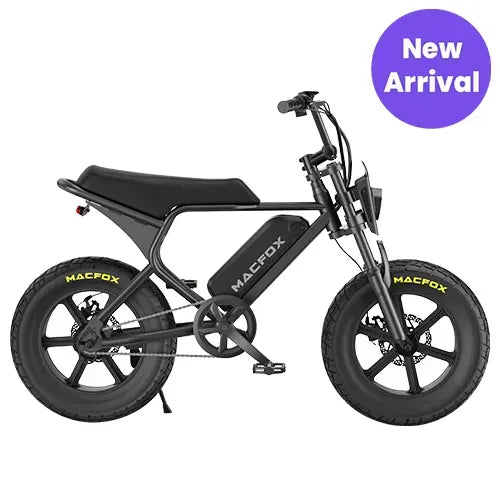
If the e-bike side of the decision wins, keep the model choice restrained. For a younger or smaller rider who needs an easier-control street ride, the Macfox M16 e-bike is the most natural starting point. It should be considered for manageable local riding, not described as a stunt-only bike or a shortcut around safe riding habits.
For an older teen who needs a more complete daily riding setup, the Macfox X1S commuter e-bike may be the better direction. Its role is different: more stable for repeated everyday routes and better suited when the rider is ready for a full-size e-bike feel.
Do not buy the largest or boldest model just because it looks exciting. A teen e-bike should match height, route, storage, local rules, and the rider's judgment. If you need a more detailed youth-focused buying checklist after this comparison, read Macfox's teenager's first e-bike guide next.
Final Decision Framework
| Situation | Better Starting Point | Why |
|---|---|---|
| Short, flat, neighborhood rides | Regular bike | Simple, lower cost, and better for building basic riding habits. |
| Longer school or activity route | E-bike | Assistance can make the ride realistic and consistent. |
| Teen still learning traffic judgment | Regular bike or supervised riding | Responsibility should come before speed and range. |
| Hills, wind, heavy backpack, or tight schedule | E-bike | The motor solves a real transportation problem. |
| Local rules are unclear | Pause before buying | Rules can affect age, helmets, access, and school use. |
The best choice is the one the teen will ride safely and regularly. A regular bike is better when the goal is simplicity and skill-building. A teen e-bike is better when it turns a route that would otherwise be skipped into a ride the teen can actually complete.
FAQ
Is an e-bike safe for a teenager?
It can be, but only when the route, rider maturity, local rules, helmet use, and battery care all make sense. The e-bike should match the teen's judgment, not just their height.
Is a regular bike better exercise than an e-bike?
A regular bike usually requires more effort. An e-bike can still involve pedaling, but assistance makes hills, distance, and heavy loads easier. Choose based on whether the goal is fitness, transportation, or both.
Should a teen ride an e-bike to school?
Only if the route is appropriate, the school allows it, local rules permit it, and the teen has a safe locking and charging plan. A short and flat school route may not need an e-bike.
What should be checked before buying a teen e-bike?
Check rider height, local age and helmet rules, route distance, traffic exposure, storage, charging habits, brake feel, tire condition, and whether the teen consistently follows basic riding rules.
Which Macfox e-bike is better for teens?
For a younger or smaller rider, start with M16. For an older teen who needs a more standard commuter setup, compare X1S. The final choice should follow rider size, route type, and local rules.