
Riding to work is only half of the office commute. The part many riders forget is what happens after they arrive: where the bike goes, whether the building allows it, whether charging is permitted, and how much security is realistic during a full workday.
This guide helps electric bike commuters choose between three common office parking options: keeping the bike near a desk, using a bike room or garage, or locking it to an outdoor rack. It is not a full theft-prevention manual, home storage guide, or employer policy template. It is a practical decision framework for the first few workdays when your routine is still being tested.
Quick Answer: Which Office Parking Option Is Best?
The best office parking spot is the one that is allowed, dry, secure, easy to reach, and does not create a hallway, desk, or charging problem. A desk or office corner works when the bike is compact enough and the workplace allows it. A bike room is usually the best everyday option when access is controlled. An outdoor rack is a fallback, not the default, unless it is visible, sheltered, and paired with a serious locking routine.
| Parking Choice | Best When | Watch For |
|---|---|---|
| Desk or office corner | Your manager or building allows it, the route from door to desk is clear, and the bike does not block people. | Elevators, tight turns, carpet, complaints, fire exits, and battery charging rules. |
| Bike room or garage | There is badge access, a dry area, usable racks, and enough space for e-bike tires and weight. | Shared access, weak racks, long walks from the door, and unclear charging permission. |
| Outdoor rack | Indoor parking is not allowed and the rack is visible, fixed, sheltered, and close to normal foot traffic. | Theft, rain, direct sun, battery exposure, and leaving accessories on the bike. |

Start by Asking the Building Rule, Not the Bike Question
Before you plan the perfect parking routine, ask who controls the space. In many offices, your direct manager may be fine with a bike near your desk, but the building, security desk, or property manager may still restrict bicycles in elevators, lobbies, hallways, or tenant suites. A short written answer saves more trouble than a friendly hallway guess.
Ask three questions in plain language: Can I bring an e-bike inside the building? Is there an approved bike room, cage, or garage area? Is charging a removable e-bike battery or the full bike allowed at my workstation or in a shared room? If the answer is unclear, treat it as not approved until someone with authority confirms it.
This is especially important for first-time commuters who are still testing route length and arrival timing. If the ride itself is still uncertain, compare your commute distance, hills, and time budget with the bike-to-work distance guide before building the parking habit around a route that may change.
Option 1: Parking Beside a Desk or Inside the Office
Desk parking can be the most convenient option, but only when the bike fits the office without becoming everyone else's problem. It works best for a lower, more compact e-bike, a ground-floor office, a private room, or a workplace that already accepts bikes indoors. It works poorly when the only path is a crowded elevator, a narrow hallway, a carpeted lobby, or a team area with little floor space.
Think through the whole path, not just the final spot. Can you roll the bike through the door without lifting? Can you turn into the office without scraping walls? Will the handlebars block a walking path? Will wet tires touch carpet? Can the battery be removed or carried separately if the building does not want full bikes near desks?
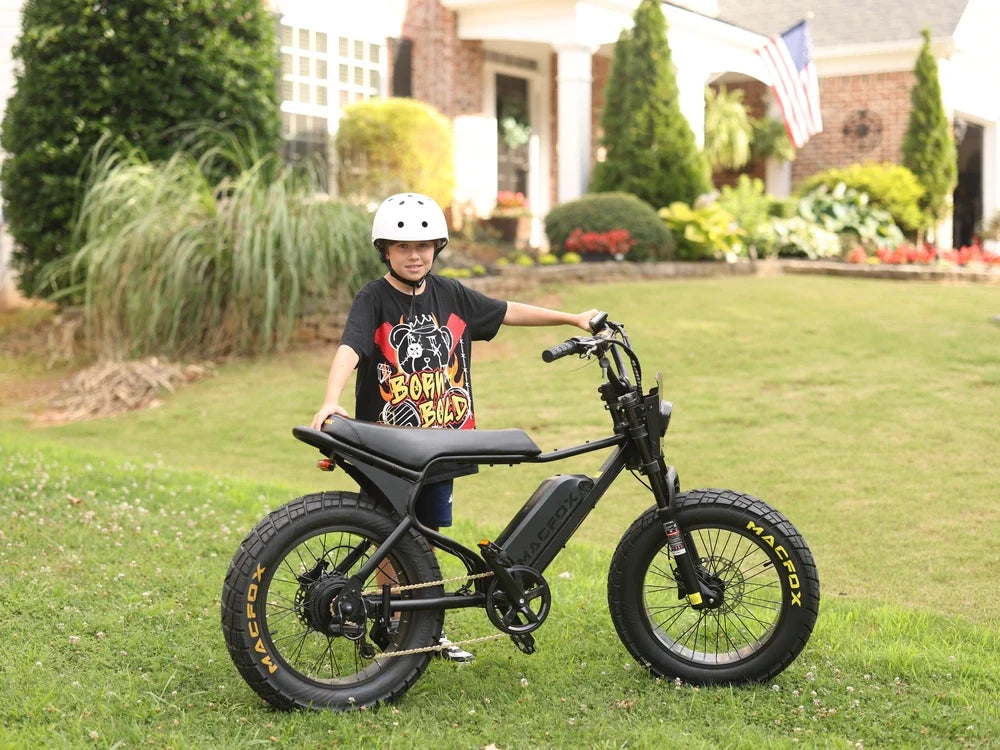
For this kind of routine, the Macfox M16 is the more natural Macfox fit because it is lower, compact, and easier to manage in tight indoor handling. Its listed rider height starts at 3'11" and up, which matches its smaller, lower-control direction. That does not mean every office should allow it beside a desk. It means the bike is easier to manage if indoor parking is actually permitted.
Option 2: Using a Bike Room, Cage, or Parking Garage
A bike room is often the cleanest office parking answer. It keeps bikes out of work areas, reduces desk clutter, and usually gives riders a repeatable place to lock up. The quality of the room matters more than the label on the door. A "bike room" with weak access, poor lighting, loose racks, and no camera coverage can feel less secure than a visible indoor corner.
Before relying on a bike room, inspect it like a rider. Look at the door access, rack spacing, floor condition, lighting, cameras, traffic, and how many other bikes are already there. Check whether your tires fit the rack and whether the bike can be locked through the frame. Some racks are designed around regular bicycles and do not hold wider tires or heavier e-bikes cleanly.
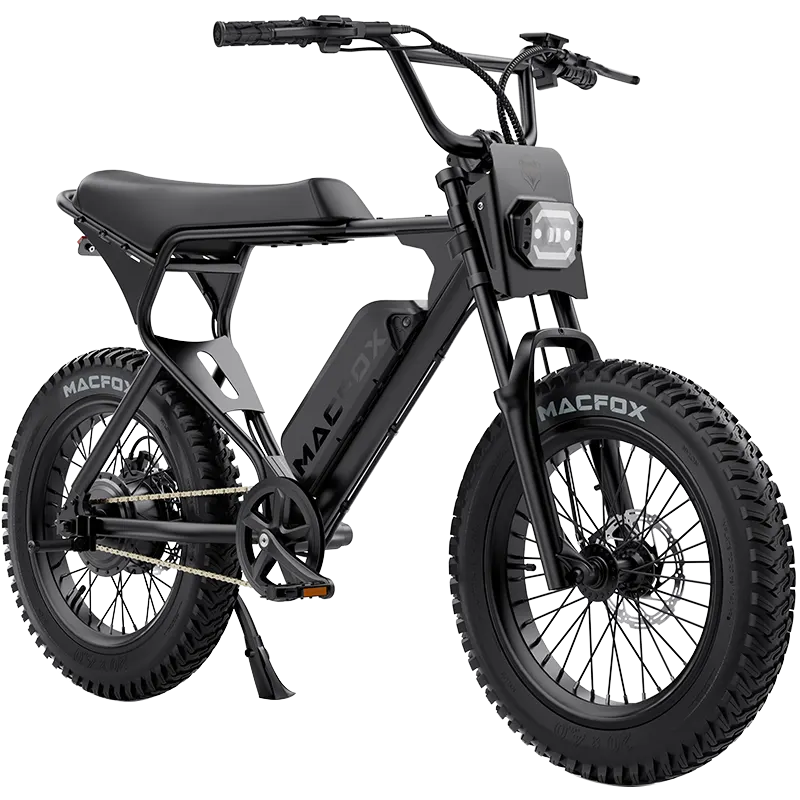
If the bike room is strong, a daily commuter e-bike such as the Macfox X1S makes sense because it does not need to be carried through the office every day. X1S is listed for riders 5'3" and up and fits the rider who has a stable place to park at work and wants a regular commute platform rather than a bike chosen only for indoor maneuvering.

Option 3: Locking to an Outdoor Rack
An outdoor rack should be treated as a fallback unless the setup is genuinely good. A useful outdoor rack is fixed to the ground, easy to see, near normal foot traffic, and shaped so you can lock the frame and wheel rather than only a front wheel. If the rack is hidden behind the building, exposed to long rain, or easy to cut around, it is not a comfortable all-day solution.
For outdoor parking, remove easy accessories before you leave the bike. Take the display if it is removable. Consider carrying the battery inside if your model and workplace rules allow it. Do not leave bags, tools, helmets, or phone mounts sitting on the bike all day. For the locking routine itself, use the bike locking guide as the deeper support article instead of trying to turn this office parking page into a full security manual.
Weather is the second reason outdoor parking is usually the backup. A short stop outside is different from eight hours of rain, sun, and temperature swings. If outdoor parking becomes a normal part of your workday, read the outdoor e-bike storage guide and build a plan for battery handling, drying, and inspection after bad weather.
Charging at Work Needs Permission First
Charging is where many office parking plans become complicated. Even when a building allows bikes, it may not allow charging in hallways, bike rooms, shared closets, or open office spaces. Do not assume an outlet means approval. Ask before you plug in, especially if the charger cord crosses a walkway, sits under a desk, or is near paper, carpet, or heat.
If charging is allowed, keep the setup boring and controlled. Use the charger that came with the bike. Place the battery or bike on a stable surface. Keep cords out of foot traffic. Avoid covering the charger. Do not charge near exits, piles of paper, or places where someone may kick the connection loose. If you need a broader charging routine, use the e-bike charging safety guide after you settle the workplace permission question.
If charging is not allowed, plan the commute around range instead of arguing with the building. Charge at home, start the day with enough battery cushion, and keep a realistic plan for cold weather, hills, detours, and errands after work.
Match the Parking Spot to the Bike
The best office e-bike is not always the smallest bike or the biggest battery. It is the bike that matches your route, your workplace rules, and the number of times you must move the bike by hand. A bike that is great on the road can still be frustrating if you have to push it through two doors and a crowded elevator twice a day.
| Workplace Reality | Better Macfox Direction | Reason |
|---|---|---|
| Allowed near desk or inside a private office | Macfox M16 | Lower, compact, and easier to control in tight indoor handling. |
| Approved bike room, garage, or ground-floor storage | Macfox X1S | More natural daily commuter direction when you do not need to maneuver beside a desk. |
| Outdoor rack only | Choose by security and weather plan first | The parking environment matters more than model preference if the bike sits outside all day. |

A Simple First-Week Office Parking Routine
Use the first week to test the routine, not to prove that the first idea was right. On day one, arrive early so you are not forcing a bike through a lobby during peak traffic. Confirm the approved parking spot. Take a photo of where the bike is locked or stored. Check whether the route from door to desk or bike room feels normal after you have actually ridden in.
By the end of the week, you should know the answer to practical questions: Does the bike fit the rack? Does anyone complain about indoor storage? Is the bike room crowded by the time you arrive? Do you need a better lock? Does your battery range leave enough margin for errands after work? Does charging permission exist in writing?
If the routine creates daily friction, change the parking plan before you change the whole commute. A better lock, a different entrance, battery removal, a written permission note, or a bike room key may solve the problem without abandoning the ride.
Office Parking Checklist
| Before You Rely on a Spot | What to Confirm |
|---|---|
| Permission | Building, employer, and security rules for e-bikes, elevators, indoor rooms, and charging. |
| Access | Door width, elevator use, stairs, key card access, garage hours, and after-hours exit. |
| Security | Rack quality, frame-locking ability, lighting, cameras, traffic, and accessory removal. |
| Charging | Written permission, outlet location, cord safety, charger supervision, and battery handling. |
| Weather | Rain exposure, direct sun, drying routine, cover use, and whether the battery comes inside. |
FAQ
Can I keep an e-bike beside my desk at work?
Only if your employer and building allow it and the bike does not block aisles, exits, desks, or shared equipment. A compact e-bike is easier to manage indoors, but permission and clear walking space still decide the answer.
Is a bike room safer than an outdoor rack?
Usually, but not always. A controlled-access bike room with solid racks, lighting, and regular traffic is better than most outdoor racks. A hidden room with weak access and poor racks may still need a strong lock and extra caution.
Can I charge my e-bike battery in the office?
Ask first. Some workplaces allow charging at a desk or in a designated room, while others restrict it. If charging is allowed, use the correct charger, keep cords out of walkways, and avoid unsafe surfaces or crowded storage areas.
What should I do if my office only has outdoor parking?
Use a fixed rack, lock through the frame, remove accessories, consider taking the battery inside if allowed, and avoid hidden or low-traffic corners. If the rack is exposed to weather all day, build a rain and battery routine.
Does tire width matter for office parking?
Yes. Some bike rooms and racks are designed for regular bicycles and may not hold wider tires cleanly. Check tray width, frame-locking points, and whether the bike can stand without leaning into neighboring bikes.
What is the easiest Macfox model to manage indoors?
For tight indoor handling, the Macfox M16 is the easier Macfox direction because it is lower and more compact. For a stable daily commute with approved bike-room or garage parking, the Macfox X1S is the more natural commuter direction.