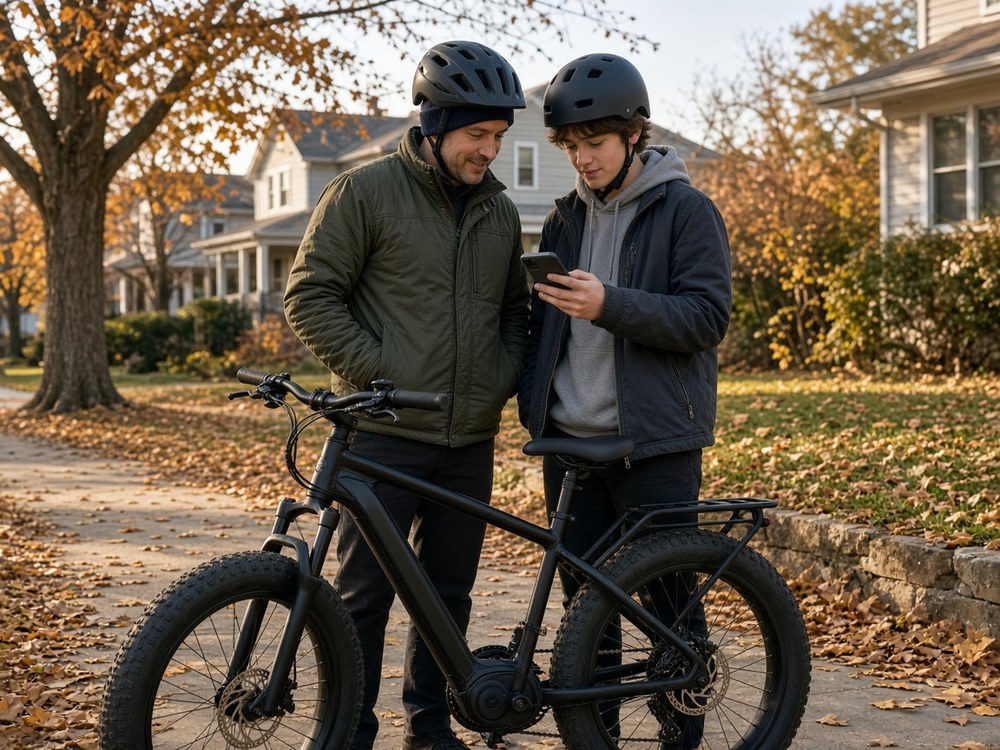

An electric bike range comparison is useful only when both options are measured against the same route. For most riders, a standard-range setup is enough when it can cover the complete round trip with reserve. More range becomes useful when the route leaves too little reserve, charging is uncertain, or hills and detours regularly add demand.

Treat the two setups as route choices, not as fixed product classes. The decision is whether the usual trip actually requires more battery capacity.
Electric Bike Range Comparison: The Short Answer
| Route question | Standard range may be enough | More range may help |
|---|---|---|
| Complete round trip | The normal trip stays comfortably below the published estimate | The normal trip approaches the estimate or changes often |
| Charging | Dependable charging is available between rides | Charging at the destination is unavailable or uncertain |
| Route demand | Trips are predictable and mostly level | Hills, wind, cargo, soft terrain, or detours are common |
| Handling priority | Storage and easier maneuvering matter more than extra reserve | Fewer charging stops and more route flexibility matter more |
Use the Same Reference for Both Options
Do not compare one bike's published maximum with another bike's result from a different route or test. Published range, a controlled test result, and a rider's route plan answer different questions. For a detailed explanation of range claims and the conditions that change them, read the long-range electric bike guide.
For this comparison, use each current product page as a planning reference, then apply the same route and reserve standard to both options. The goal is not to reach the last estimated mile. The goal is to finish the usual ride with capacity left for normal variation.
Build the Comparison Around the Real Route
1. Measure the Complete Trip
Count the outbound and return legs, regular stops, and a realistic detour allowance. A one-way distance does not show what the battery must cover before the rider reaches dependable charging.
2. Mark Dependable Charging
Charging at home is different from assuming an outlet will be available at a destination. Only include a charging stop when access, time, and the correct charger are dependable.
3. Allow for the Route
Repeated climbs, stronger assistance, cargo, wind, soft surfaces, frequent starts, temperature, tire pressure, and battery condition can change practical distance. These factors do not need a universal deduction percentage; they show when a rider should leave more reserve.
4. Set a Reserve
A useful reserve covers ordinary changes without making every ride depend on the published maximum. If the standard-range option still covers the normal route after that reserve is included, more battery capacity may not solve a real problem.
What Changes When You Choose More Range?
More battery capacity can reduce charging stops and create room for longer routes, but it can also change total bike weight, charging time, storage, and handling when the motor is not assisting. Compare the complete configuration rather than treating the largest range number as the automatic winner.
Motor output, tire size, and suspension describe other parts of the ride. They do not guarantee longer distance. Range should be compared separately from terrain capability, braking, comfort, and fit.
Compare Current Macfox Options on the Same Route
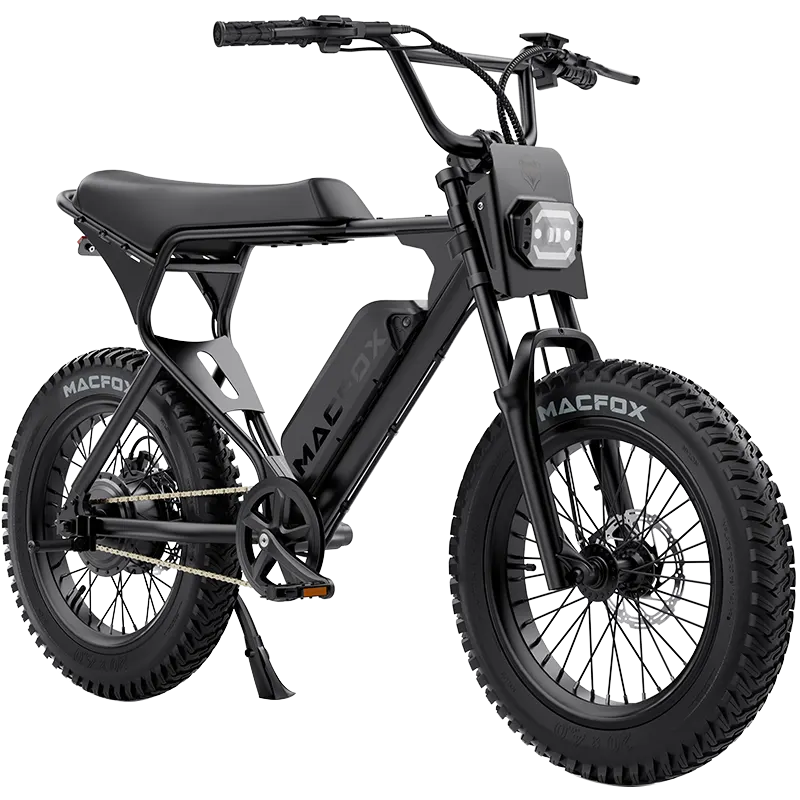
Macfox publishes different range configurations for the X1S and X2 Pro. The figures below are current product-page estimates, not guaranteed trip distances. Apply the same route, conditions, and reserve to each option.
| Current option | Published range | Use it in the comparison when... |
|---|---|---|
| Macfox X1S | Up to 28 miles with one battery; up to 56 miles with a dual-battery configuration | The route is predictable and the rider wants to compare a single-battery plan with added reserve |
| Macfox X2 Pro | Up to 40 miles with one battery; up to 80 miles with a dual-battery configuration | The route needs more published range and its terrain also makes the X2 Pro's front and rear suspension and hydraulic disc brakes relevant |
Range alone should not decide between them. Check current configuration, fit, terrain, storage, and braking needs on the product pages. To view the current choices together, browse electric bikes.
A Five-Step Decision Check
- Write down the longest normal round trip, including regular stops.
- Add a realistic detour allowance.
- Mark only the charging points that are dependable.
- Increase the reserve when the route regularly includes demanding conditions.
- Choose more range only when the standard option no longer covers the plan with reserve.
If the route already fits comfortably, focus the remaining comparison on handling, storage, fit, brakes, tires, and terrain needs. If the route does not fit, compare a larger or dual-battery configuration and account for the added charging and handling tradeoffs.
Frequently Asked Questions
Is a long-range e-bike always the better choice?
No. Extra range is useful when it covers a real distance or charging gap. A predictable route that already fits with reserve may not require more battery capacity.
Can two published range numbers be compared directly?
Only as planning references. Check how each figure is presented, then compare both bikes against the same route and reserve. Do not treat either maximum as a guaranteed trip distance.
Does a stronger motor automatically provide more range?
No. Motor output and range are separate comparison points. Practical distance depends on the complete system, assistance use, route, load, conditions, and battery state.
What if the current setup is close to covering the route?
First check whether route planning, charging access, and normal battery care solve the gap. For practical adjustments that can improve usable distance, see ways to plan and extend electric-bike range. If the trip still lacks reserve, compare a larger-capacity configuration.
Conclusion
A useful electric bike range comparison ends with a route decision, not the largest number. Start with the complete trip, dependable charging, demanding conditions, and a reserve. If a standard-range setup covers that plan, it may be the clearer fit. If it does not, more range solves a specific need that the rider can identify before choosing.