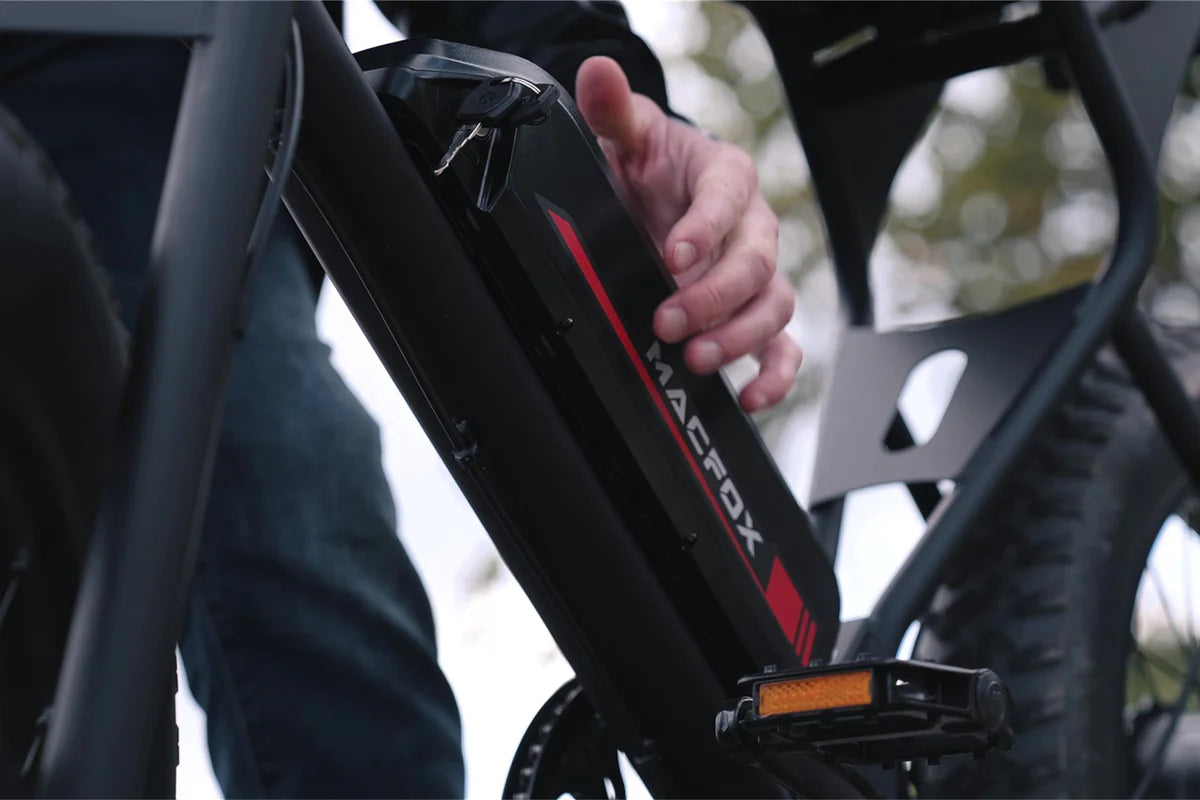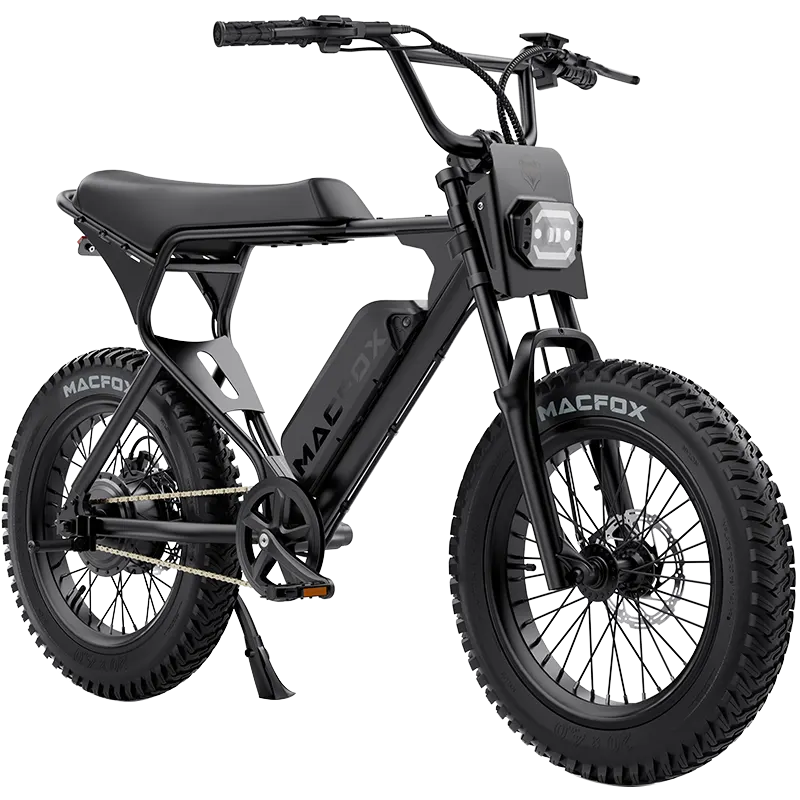

Ah means ampere-hours, a measure of how much charge an e-bike battery can store. For range, Ah is only half the answer: multiply voltage by Ah to estimate watt-hours. On a 48V system, 10.4Ah is about 499Wh, 13Ah is about 624Wh, and 20Ah is about 960Wh.
That means a 10.4Ah battery can be enough for many short commutes and local rides, while 13Ah and 20Ah packs add more margin for longer routes, heavier loads, wider tires, hills, and throttle-heavy riding. If you are comparing electric bikes, look at voltage, Ah, Wh, and real route needs together.
What Does Ah Mean on an E-Bike Battery?
Amp-hours tell you how much current a battery can theoretically deliver over time. A 10.4Ah battery could be described as 10.4 amps for one hour under a simplified test, but real e-bike use is not that smooth. Motors draw more power during starts, hills, headwinds, rough pavement, and throttle-heavy riding.
| Battery Term | What It Means | Why It Matters for Range |
|---|---|---|
| Voltage, or V | The electrical pressure of the battery system. | You need voltage to convert Ah into watt-hours. |
| Amp-hours, or Ah | The battery's charge capacity. | Higher Ah usually means more stored energy when voltage is the same. |
| Watt-hours, or Wh | Voltage multiplied by Ah. | This is the better number for comparing battery size. |
| Range | How far the bike can ride in real use. | Range depends on Wh plus route, rider, tires, speed, and assist mode. |

10.4Ah, 13Ah, and 20Ah Battery Meaning: The Quick Math
The formula is simple: volts x amp-hours = watt-hours. A 48V 10.4Ah battery equals 499.2Wh, a 48V 13Ah battery equals 624Wh, and a 48V 20Ah battery equals 960Wh. That is why two batteries with similar-looking Ah numbers can feel very different on real routes.
| Battery Example | Math | Approximate Energy | Best Reading |
|---|---|---|---|
| 36V 10.4Ah | 36 x 10.4 | 374Wh | Lower stored energy than a 48V 10.4Ah pack. |
| 48V 10.4Ah | 48 x 10.4 | 499Wh | Common commuter capacity for short to medium rides. |
| 48V 13Ah | 48 x 13 | 624Wh | More margin for heavier riders, wider tires, and longer local routes. |
| 48V 20Ah | 48 x 20 | 960Wh | A larger pack for riders who care more about route margin and range. |
If you want the broader battery basics before comparing specs, read Macfox's e-bike battery guide.
How Long Do 10.4Ah, 13Ah, and 20Ah Batteries Last?
A 48V 10.4Ah battery can last a full short commute for many riders, but there is no single time or mileage number that fits every route. A 48V 13Ah pack gives more room before range anxiety starts, while a 48V 20Ah pack is more useful when long rides, hills, heavier riders, cargo, or frequent throttle use are part of the routine.
A practical buyer question is: "How much margin do I need after my normal ride?" For an 8-mile round trip on mostly flat streets, 10.4Ah is often enough. For a 20-mile round trip with hills, cargo, winter riding, or frequent throttle use, 13Ah or 20Ah may feel more comfortable because the battery is not being pushed as close to empty.
| Riding Pattern | Battery Stress | What to Expect |
|---|---|---|
| Flat route, low assist, steady pedaling | Lower | A 10.4Ah pack can feel efficient and predictable. |
| Stop-and-go city ride with throttle starts | Medium | 13Ah gives more buffer if starts and throttle use are frequent. |
| Hills, heavier rider, cargo, high assist | Higher | 20Ah can make more sense when route demand is consistently high. |
| Cold weather or low tire pressure | Higher | Choose extra margin instead of planning every ride down to empty. |
For range-specific reading, use Macfox's electric bike battery life guide and the long-range electric bike guide.
Macfox Battery Examples: X1S, X7, and X2
Macfox models are useful examples because they show why Ah should be compared with voltage, Wh, tires, weight, and riding purpose. A 10.4Ah pack can be a good commuter fit, while 13Ah and 20Ah packs give more range margin for different riding styles.
| Model | Battery | Approximate Wh | Published Range Context | Best Fit |
|---|---|---|---|---|
| Macfox X1S commuter e-bike | 48V 10.4Ah | About 500Wh | 28-56 miles | Daily city riding, school routes, errands, and short to medium commutes. |
| Macfox X7 fat tire e-bike | 48V 13Ah | 624Wh | 35-70 miles | Riders who want more tire stability and more battery margin. |
| Macfox X2 electric mountain bike | 48V 20Ah | 960Wh | 40-80 miles | Trail-capable riding and longer routes where battery margin matters. |
If your main concern is not the formula but simply getting more route margin, compare the long-range electric bike category after reading the math.

Can You Use a Higher Ah Battery?
A higher Ah battery can provide more capacity only when it is compatible with the bike. Do not buy by Ah alone. Voltage, connector type, physical size, mounting system, battery management system, controller compatibility, charger compatibility, and warranty rules all matter.
A common owner question is whether a more powerful battery can be installed after range starts feeling short. The safer first step is to confirm the original battery's voltage and replacement rules, then check whether the issue is actually tire pressure, brake drag, cold weather, battery age, or charging habits. Macfox's e-bike battery care guide is the better next read before treating a larger Ah pack as the only fix.
What Drains an E-Bike Battery Faster?
- High assist or full throttle: convenient, but it draws more current.
- Frequent starts: stop-and-go riding uses more energy than steady cruising.
- Hills and cargo: climbing and added load increase motor demand.
- Low tire pressure: extra rolling resistance can quietly reduce range.
- Cold weather: batteries usually feel weaker in low temperatures.
- Higher speed: air resistance rises quickly as speed increases; compare speed context in Macfox's electric bike speed guide.
How to Choose the Right Ah for Your Ride
- Calculate Wh: voltage x Ah gives a better comparison than Ah alone.
- Map your route: distance, hills, stops, wind, cargo, and weather all matter.
- Leave reserve: avoid planning every ride down to zero battery.
- Check charging time: use the e-bike charge time guide if charging windows matter.
- Protect the pack: better charging habits can preserve useful capacity; see Macfox's e-bike charging habits guide.
FAQ
What does Ah mean on an e-bike battery?
Ah means ampere-hours. It describes battery charge capacity. To compare actual stored energy, multiply voltage by Ah to estimate watt-hours.
What does a 10.4Ah battery mean?
A 10.4Ah battery stores 10.4 amp-hours of charge. On a 48V e-bike system, 10.4Ah is about 499Wh, often rounded to 500Wh.
How long does a 10.4Ah battery last?
It depends on voltage, assist level, rider weight, terrain, tire pressure, weather, speed, and throttle use. On a 48V system, a 10.4Ah pack can suit many short to medium local rides, but it should not be judged by Ah alone.
Is a higher Ah e-bike battery always better?
Not always. Higher Ah can mean more range, but it may also mean more weight, higher cost, and compatibility limits. Voltage, connector, mount, charger, controller, and warranty rules must match.
Is Wh better than Ah for comparing batteries?
Yes. Wh is better because it includes voltage. A 48V 10.4Ah battery stores more energy than a 36V 10.4Ah battery even though the Ah number is the same.
Should I choose 10.4Ah, 13Ah, or 20Ah?
Choose based on route margin. 10.4Ah can work for everyday local riding, 13Ah gives more room for mixed conditions, and 20Ah is more useful when long range is a priority.