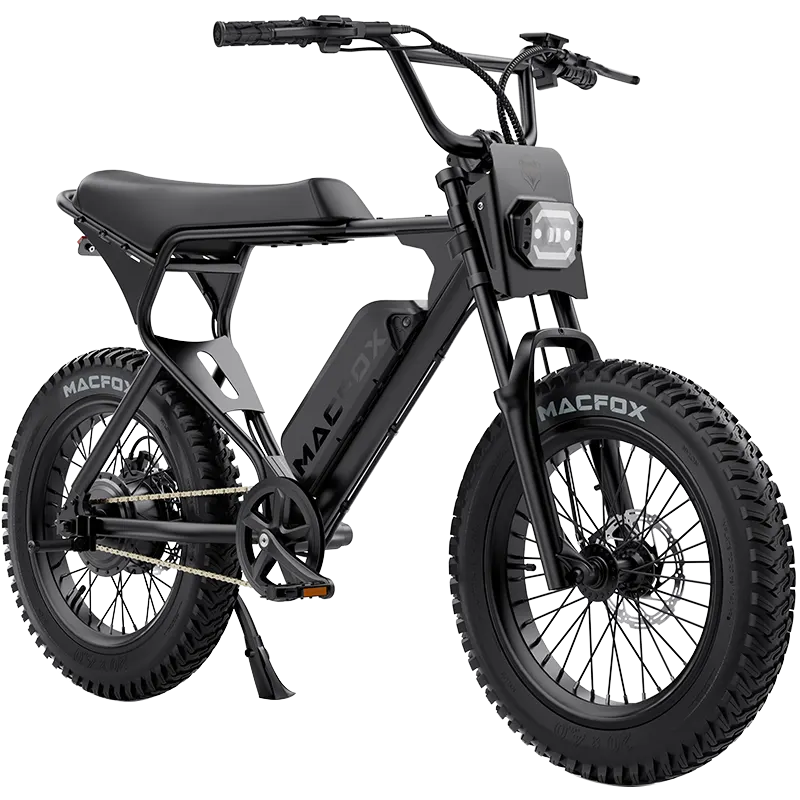

A heavy e-bike usually tips on its kickstand because the parked angle is wrong, the foot is sinking or sliding, the mount has moved, or cargo has shifted the bike's balance. Unload it and test on firm, level ground before replacing the stand.
Turn the bike off, remove loose cargo, and hold it upright while inspecting the support.
Read the Direction of the Lean
The first check I would make is how the bike sits once the stand is fully deployed.
If the bike is almost upright, a bump or slight slope can move its weight past the supported side. Excessive lean can point to a short, misadjusted, bent, or poorly placed stand. Forward or backward rolling usually points to the parking surface.
Test again on a hard, level surface without bags or cargo. If the bike becomes stable, the original surface or load contributed to the problem. Soil, gravel, softened asphalt, and sloped floors can let the foot sink or slide.

Check the Stand and Its Mounting Point
While someone holds the bike upright, confirm that the stand opens fully. Look for a bent leg, worn or missing foot, cracked part, loose fastener, or movement at the frame mount.
Mounts differ across electric bikes. Follow the instructions for the exact bike and stand instead of copying a generic bolt size or tightening value. Adjust the leg only when its manufacturer designed it to be adjustable, then retest with the bike unloaded.
Do not drill the frame, add improvised spacers, reuse damaged hardware, or weld the mount. Repeated loosening can indicate poor fit, damaged threads, or a compromised mounting point.
Recheck Stability With the Real Load
Once the unloaded bike is stable, add normal items back one at a time. A loaded rack, one heavy side bag, or weight placed high can change how the bike rests on the same stand.
Support the bike while loading and unloading it. Do not sit on it or let someone climb on while it rests on the kickstand. A two-leg stand may create a wider base, but it still must match the frame, mount, and intended load.
For help choosing compatible practical equipment without turning the bike into an unsupported custom build, use Macfox's e-bike accessories and upgrades guide.
Stop Adjusting When the Mount Is the Problem
Stop using the stand if the mount is cracked or distorted, fasteners will not stay secure, the leg is bent, or the unloaded bike remains unstable on firm level ground. Seek a compatible replacement or qualified inspection.
Do not ride if the stand will not retract fully or can contact the crank, wheel, or another moving part.
FAQ
Is a two-leg kickstand always more stable?
Not always. A wider base can help, but stability still depends on compatibility, mounting strength, parked surface, bike geometry, and load placement.
Will a kickstand pad solve sinking on soft ground?
A broad, non-slip pad may reduce sinking on a soft surface. It will not correct a loose mount, wrong stand length, damaged hardware, or an unbalanced load.