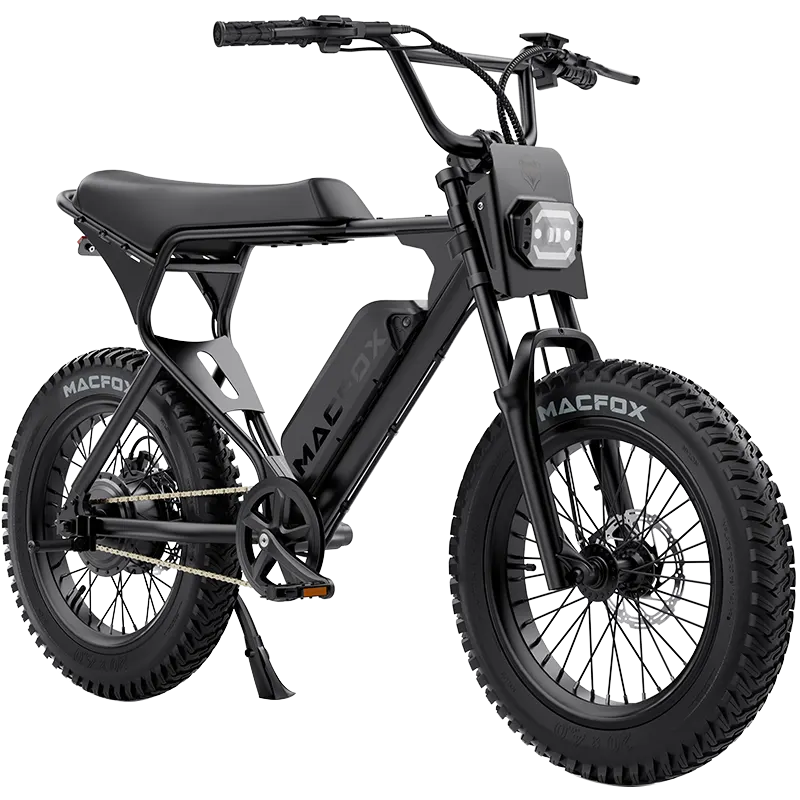

After a hard pothole hit, move out of traffic, stop on stable ground, and turn the e-bike off. A bike that still powers on is not automatically safe to ride. Start with the parts that absorbed the impact: the tire, wheel, steering, fork, brakes, battery mount, and exposed cables.
If you are injured, the wheel will not turn freely, the handlebar no longer points with the front wheel, or anything structural looks cracked or bent, do not perform a ride test. Walk the bike only if it rolls safely, or arrange transport.
Start With the Tire and Wheel
Look for sudden pressure loss, a sidewall cut, bulge, exposed casing, or a tire that has moved away from the rim. Check the rim for a dent, crack, or sharp deformation. Spin the wheel slowly and watch the space between the rim and frame or fork. A strong side-to-side wobble needs attention.
Check for a visibly loose or broken spoke, but do not try to straighten the wheel beside the road. If the tire will not hold pressure, the rim is damaged, or the wheel rubs heavily, stop there.

Check Braking and Steering Before Power
Squeeze each brake lever while the bike is stationary. A lever that suddenly pulls much farther, feels stuck, or cannot hold the wheel is a no-ride condition. Turn the handlebar slowly and confirm that the front wheel follows it normally without binding, a new knock, or obvious misalignment.
Look at the fork legs and the area around the head tube for bending, cracking, unusual gaps, or fluid that was not present before. Do not force the handlebar straight or loosen parts to make the bike appear aligned.
Inspect the Battery Mount and Visible Wiring
Confirm that the battery remains fully seated and locked. Look for movement, a cracked housing, damaged contacts, or a mount that has shifted. Follow visible cables near the wheel, fork, brakes, and frame to check for pinching, cuts, or a connector pulled partly apart.
If the display flickers, the bike shuts off, the battery moves, or any electrical part becomes unusually hot, do not continue. Record what changed using the e-bike problem documentation guide before contacting support or a repair shop.
Choose Between Walking, a Short Test, and Transport
Arrange transport when you find tire, rim, spoke, brake, steering, fork, frame, battery, or wiring damage. If every stationary check is normal, the tire holds pressure, and both brakes work, make only a brief low-speed check in a traffic-free area.
Stop immediately if the bike pulls to one side, wobbles, vibrates, rubs, clicks, loses power, or feels different under braking. A clean-looking bike can still have a problem that becomes clear only when the wheel turns or the load shifts.
Use the Exact Bike as the Repair Reference
Wheel size, tire volume, brake hardware, suspension, and battery mounting differ across electric bikes. Once the first safety screen is complete, use the manual and replacement specifications for the exact model rather than copying a repair from a different bike.