


Moab is famous for red-rock riding, but e-bike access depends heavily on your e-bike’s class and on who manages the land. Many of the area’s best-known singletrack trails and paved pathways are open only to Class 1 e-bikes. This guide explains the current rules and highlights scenic options for Class 2 riders, so you can plan a trip with confidence.
Moab E-Bike Rules at a Glance
Utah uses the three-class system (UCA § 41-6a-1115.5). Riders under 16 may not operate a Class 3 e-bike, and as of May 6, 2026 riders under 21 must wear a helmet on public roads. Around Moab, land managers set the following rules:
- BLM Moab Field Office: since March 1, 2026, a list of trails and trail systems is open to Class 1 e-bikes only. All e-bikes may use open motorized roads and trails.
- Moab Canyon Pathway and city paths: open to Class 1 e-bikes; Class 2 and Class 3 are not permitted.
- Arches and Canyonlands National Parks: e-bikes are allowed where regular bicycles are, which means public paved and unpaved roads. Bicycles are not allowed on park trails.
- Dead Horse Point State Park: Class 1 e-bikes are allowed on trails open to bicycles.
- U.S. Forest Service: e-bikes are treated as motorized and are limited to open motorized roads and trails.
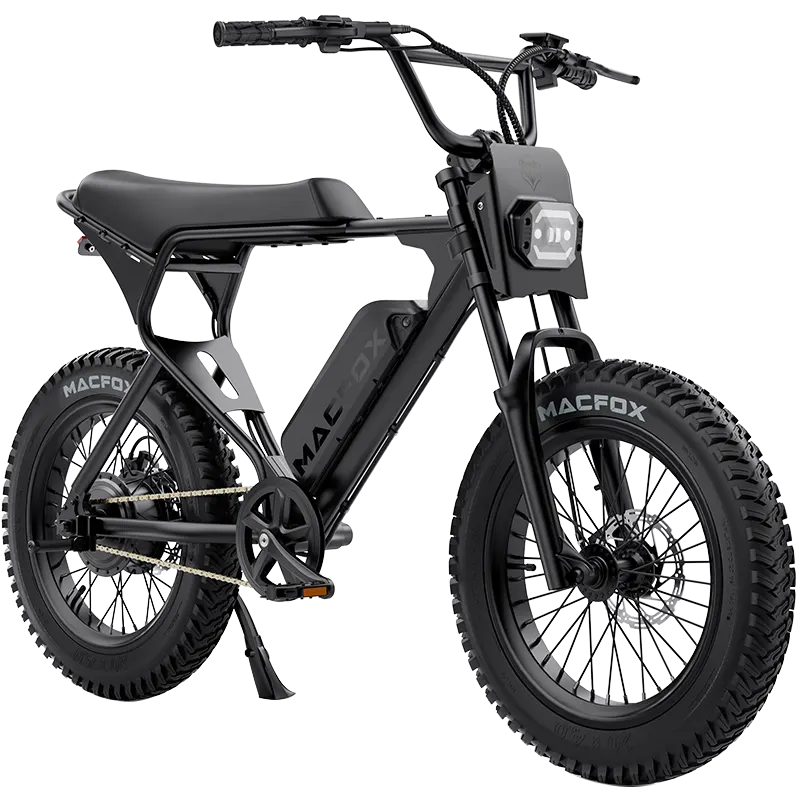
Because every Macfox model is Class 2, plan Moab rides around streets, park roads and open motorized roads, and always check current maps and signage.
Moab E-Bike Routes Worth Planning Around
Arches National Park Scenic Drive
- Distance: roughly 18 miles one way to Devils Garden
- Surface: paved park road
- Good for: iconic arches and viewpoints
The main park road climbs from the visitor center past Park Avenue, Balanced Rock and The Windows turnoff to Devils Garden. Expect traffic, steady climbs and strong sun. Early mornings are best, and timed-entry rules may apply in season, so check before you go. There is no charging in the park.
Island in the Sky, Canyonlands
- Surface: paved park road
- Good for: canyon-rim viewpoints such as Grand View Point
The Island in the Sky road crosses a high mesa with sweeping views into the canyons below. Distances between viewpoints are long and there is little shade or water, so plan range and supplies carefully.
Highway 128 and the Colorado River corridor
- Surface: paved road shoulder; parallel pathway open to Class 1 only
- Good for: experienced riders comfortable with traffic
The river road northeast of Moab is spectacular, with towering red cliffs beside the Colorado River. The separate pathway near town is limited to Class 1 e-bikes, so Class 2 riders should use the road only if comfortable with traffic, ideally early in the day.
Town streets and bike lanes
- Location: Moab
- Good for: getting around, food and gear shops
All e-bike classes are welcome on Moab’s surface streets and on-street bike lanes, which makes an e-bike a practical way to explore town and reach trailheads.
Open motorized dirt roads
- Examples: routes such as Gemini Bridges Road, where open to motorized use
- Surface: unpaved, often rough
- Good for: confident riders on fat-tire e-bikes
Many dirt roads around Moab are open to motorized use and therefore to all e-bike classes. Surfaces can include sand and slickrock, distances are long and services are remote. Check the BLM’s current maps and road conditions, and do not ride on non-motorized singletrack.
Tips for Riding in Moab
- Heat and sun: carry plenty of water, ride early and avoid midday heat in summer.
- No charging in the parks: start every ride with a full battery.
- Range planning: range varies with rider weight, terrain, temperature, wind and assist level, so plan turnaround points conservatively.
- Protect the desert: stay on established roads; biological soil crust takes decades to recover.
Choosing a Macfox for Moab Trails
Every Macfox model is a Class 2 e-bike with a 20 mph assist limit and UL 2849 certification. In Moab, that means planning around streets, park roads and open motorized roads rather than Class 1-only pathways and singletrack. For paved greenways and everyday errands, the Macfox X1S keeps things light and simple. For longer rail-trail days, the Macfox X7 offers a more upright, touring-friendly position. For crushed-stone and mixed surfaces, the Macfox X2 Pro adds fat tires and extra cushioning. Riders who want a compact, easy-to-store option can look at the Macfox M16.
Looking for more places to ride? Our Best E-Bike Trails by State guide brings together route notes from across the country.
FAQs
Can I ride a Class 2 e-bike on Moab trails?
Not on most non-motorized trails or the Moab Canyon Pathway, which are limited to Class 1 e-bikes. Class 2 e-bikes may use town streets, open motorized roads and trails, and public roads in Arches and Canyonlands.
Are e-bikes allowed in Arches National Park?
Yes, on public paved and unpaved roads where regular bicycles are allowed. Bicycles and e-bikes are not allowed on park trails.
Do I need a helmet for an e-bike in Utah?
Since May 6, 2026, riders under 21 must wear a helmet on public roads. A helmet is recommended for every rider.
Last reviewed October 2026. Trail conditions and local rules change; please confirm with trail managers before riding.






1 thought on “Moab E-Bike Guide: Where Class 2 E-Bikes Can Ride”
TJ
Riding the Moab on a battery powered bike?
Hey it’s tough enough for a proper enduro motorcycle, but a battery powered bike?
I think you would have to have a screw loose to take a battery powered bike there.
Imagine wacking your plastic bash plate on the rocks there, or the jarring and the heat your electronics are going to take.
When your battery starts loosing power …. going over those rocks gets slower and slower, until you come to a dead standstill…. no gas stations around then… you gotta push that heap to the trail head.
Don’t believe everything these folks write about “e-bikes” it’s far from all sunshine and roses on the Moab BDR.
I would encourage one to think twice before attempting such a trail with a battery powered bike, it’s not really a “good idea”