
Most e-bike cut-outs come from one of six areas: battery voltage sag, heat protection, a brake cut-off sensor, a loose connection, excessive load from low cadence or full throttle, or an actual battery/controller fault. If the bike restarts after a short rest, protection is likely. If it keeps shutting off on flat ground, smells hot, shows a persistent code, or will not power back on, treat it as a fault.
When an electric bike cuts out, loses pedal assist, or shuts off during a ride, the first job is not to guess at the most expensive part. A one-time cut-out on a steep hill with a low battery is different from a bike that shuts off on flat ground, flashes an error code, or drops power every time you hit a bump. Use the symptom pattern first, then decide what is safe to check at home and when to stop riding.
Quick Answer: Why an E-Bike Cuts Out
| What you notice | Most likely area | First safe check |
|---|---|---|
| Cuts out only on hills or full throttle | Battery sag or overload | Lower assist, pedal steadily, and check battery charge. |
| Cuts out after several minutes of climbing | Controller or motor heat protection | Stop in a safe place and let the bike cool. |
| Cuts out over bumps | Loose battery, plug, or wiring connection | Inspect visible connectors and battery seating. |
| Assist stops when the brake lever is touched | Brake cut-off sensor | Make sure the lever returns fully. |
| Screen goes dark and will not wake up | Battery, fuse, key, or main power path | Use the e-bike not turning on checklist. |
| Persistent error code or odd motor behavior | Controller, sensor, or wiring issue | Use the Macfox e-bike troubleshooting center before replacing parts. |
The same symptom can come from more than one part, so do not replace the battery, controller, or motor based on one ride. Write down the battery level, weather, terrain, assist level, throttle use, and whether the display stayed on. That context usually points to the right next step.

Start With Safety, Not Parts Replacement
Before opening anything, move out of traffic, turn the bike off, and let hot parts cool. Do not keep riding if the battery case is hot, the motor smells burned, the display shows the same error after restart, or a connector looks melted or loose. A cut-out can be a normal protection event, but repeated power loss can also make the bike unpredictable in traffic.
- Check charge level. Cut-outs are more common when the battery is low, cold, old, or under heavy load.
- Check the riding condition. Hills, headwinds, cargo, soft tires, and full-throttle starts all increase current draw.
- Check the brake lever. A lever that does not return cleanly can tell the controller to stop motor output.
- Check visible connections. Look for a battery that is not fully seated or a plug that moved after bumps.
- Check the display. Write down any error code before restarting the bike.
Common Causes and What They Mean
1. Battery Voltage Sag
Voltage sag happens when the motor asks for more current than the battery can comfortably supply at that moment. It often appears during hill starts, full-throttle acceleration, cold weather, or the last part of a ride. If power returns after resting, read the battery under-voltage guide before assuming the battery is completely dead.
2. Controller or Motor Heat Protection
Long climbs and hot weather can push electronics into protection mode. The bike may feel normal again after a cool-down period. If the shutdown happens on flat ground, appears with a code, or becomes frequent, move to the e-bike controller failure guide instead of repeatedly forcing the bike to restart.
3. Brake Cut-Off Sensor
Most e-bikes stop motor output when the brake is applied. If the lever sticks, the magnet is misaligned, or the cable is too tight, the bike may think you are braking even when you are trying to accelerate. This can feel like a battery problem, but the clue is that it happens right after touching or releasing the brake.
4. Loose Battery, Plug, or Wiring Connection
A connection problem may not show up on smooth pavement. It often appears after bumps, curb drops, off-road riding, or repeated battery removal. Do not pull on internal wiring if you are not trained; just confirm visible plugs are seated and there is no obvious corrosion, looseness, or heat damage.
5. Too Much Load at Low Speed
Low cadence, high assist, soft tires, cargo, and abrupt throttle can combine into a high-load event. Riders using electric bikes with throttle should apply power smoothly, especially from a stop or on loose ground. If the bike has gears, shift easier before the climb and keep pedaling rather than making the motor do all the work.
What You Can Try Before Service
| Step | What to do | Why it helps |
|---|---|---|
| 1 | Restart only after stopping safely. | Prevents sudden assist return in traffic. |
| 2 | Lower assist and avoid full throttle for a few minutes. | Reduces current draw and heat. |
| 3 | Pedal in an easier gear at a steady cadence. | Keeps the motor from lugging at low speed. |
| 4 | Reseat the battery and inspect visible plugs. | Catches simple contact problems. |
| 5 | Check brake lever return and display codes. | Separates sensor issues from battery issues. |
If the bike only cut out once under a clear high-load condition, a gentler riding setup may solve it. If it happens repeatedly, do not keep testing until it fails harder. Document when it happens, the battery level, weather, assist level, terrain, and any error code.
When to Stop Riding and Get Help
- The battery or controller area is unusually hot.
- The bike shuts off on flat ground with a charged battery.
- The same error code returns after restart.
- The motor makes grinding, clicking, or jerking noises with power applied.
- A connector, wire, or battery contact looks burned, loose, or wet.
- The bike will not turn back on after a normal restart.
These signs point beyond a normal protection event. At that point, the safer choice is a shop inspection or support ticket with clear notes, photos, and the error code if one appears.
How to Reduce Future Cut-Outs
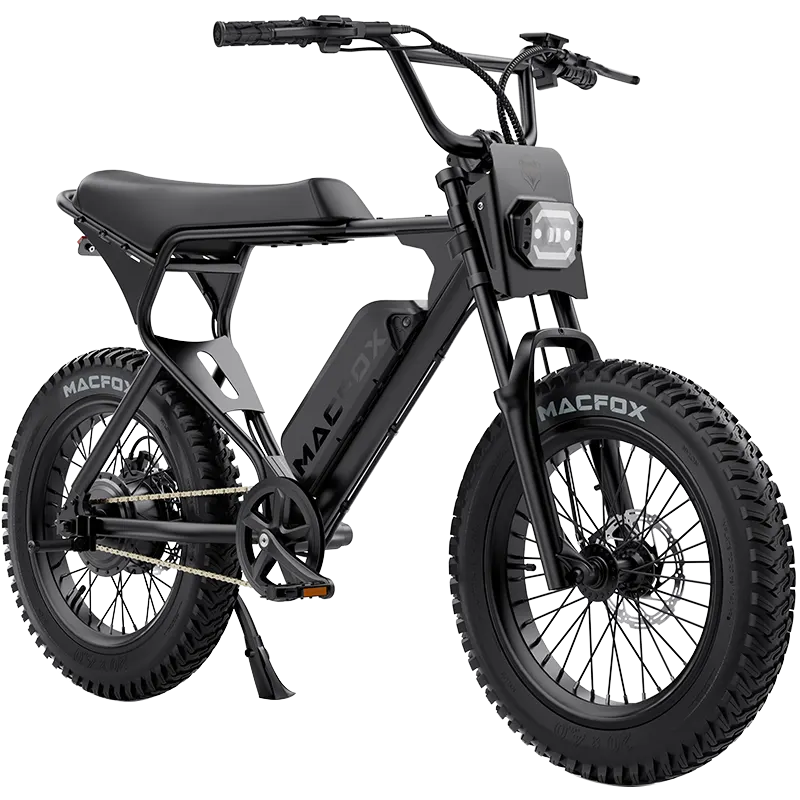
Keep the battery charged before hilly rides, avoid storing it in extreme cold, maintain tire pressure, and use a lower gear before the grade starts. On rough streets or mixed surfaces, a stable tire contact patch can also help. A rider who often deals with broken pavement, dirt shoulders, or wet traction may prefer a fat tire e-bike setup such as the Macfox X7 e-bike, while a mostly paved route with moderate loads may be better served by the Macfox X1S e-bike.
Do not choose a bike only because it sounds powerful. Choose one that matches your route, load, surface, and control needs. A cut-out problem is often a system-load problem, so battery margin, riding technique, brakes, tires, and fit all matter.
FAQ
Why does my e-bike cut out at full throttle?
Full throttle can create a sudden current spike, especially from a stop, uphill, with cargo, or at low battery. Lower assist, pedal steadily, and see if the issue disappears under lighter load.
Why does my e-bike cut out on hills but not on flat roads?
Hills demand more current and create more heat. If the problem only appears on climbs, battery sag, thermal protection, low cadence, and tire pressure are more likely than a random electrical failure.
Can a brake sensor make an e-bike cut out?
Yes. If the brake lever does not return cleanly or the sensor is misaligned, the controller may stop motor output because it thinks you are braking.
Is it safe to keep riding after one cut-out?
It may be safe after a single high-load event if the bike restarts normally and there is no heat, smell, error code, or repeated shutdown. If the problem repeats, stop riding and inspect it.
Does a cut-out always mean the battery is bad?
No. The battery is only one possibility. The controller, brake sensor, connectors, display, motor wiring, riding load, and temperature can all cause similar symptoms.
Bottom Line
An e-bike that cuts out is telling you to reduce load, cool the system, or inspect a fault. Start with the symptom pattern, not guesswork. If the issue is tied to hills, low battery, or full throttle, adjust riding load first. If it happens on flat ground, over bumps, with error codes, or after every restart, move from quick checks to proper service.