
The best electric bike for a college student is the one that fits the rider, the campus rules, and the daily trip. Start with where the bike and battery may be stored, where charging is allowed, how far the round trip is, whether stairs are involved, and what the student needs to carry. A bigger motor or a longer advertised range does not solve a storage, access, or rider-fit problem.
A light city bike can be easier to carry and park. A folding bike can save floor space, but some folding models are still heavy. A cargo bike makes sense when groceries, sports equipment, or work gear are part of the routine. Students who want one bike for campus streets and off-campus riding may prefer a full-size commuter platform. Compare those needs before comparing models.
What College Students Should Check Before Buying an E-Bike
Campus transportation and housing policies can be more restrictive than city rules. Check the school’s current pages for bicycle registration, approved parking areas, residence-hall storage, battery charging, throttle or speed restrictions, and places where riding is prohibited. If the policy is unclear, ask the transportation or housing office before buying.
| Decision | Question to Answer | Why It Changes the Choice |
|---|---|---|
| Campus access | Which paths, roads, and parking areas allow the planned bike and riding mode? | A bike that does not fit the permitted route is a poor campus choice regardless of performance. |
| Storage | Will it stay at a rack, in a bike room, in an apartment, or up a flight of stairs? | Bike weight, frame length, handlebar width, and folding design matter more when space is limited. |
| Charging | May the battery be charged in the residence hall, bike room, classroom building, or workplace? | The real charging location can determine whether a removable battery is essential. |
| Daily route | How long is the round trip, and does it include hills, rough pavement, or frequent stops? | Route conditions affect tire choice, braking needs, comfort, and realistic battery use. |
| Cargo and security | Will the rider carry a backpack only, or also groceries, lab equipment, sports gear, or work supplies? | A rack and secure locking points may improve daily utility more than extra speed. |

Electric Bikes for College Students by Campus Need
The examples below compare current options by the campus problem each one is designed to solve. Product specifications and availability can change, so confirm the current model page before ordering. Rider fit, platform size, storage, route, and cargo needs all belong in the same campus-use comparison.
| Campus Need | Current Example | Useful Detail | Tradeoff to Check |
|---|---|---|---|
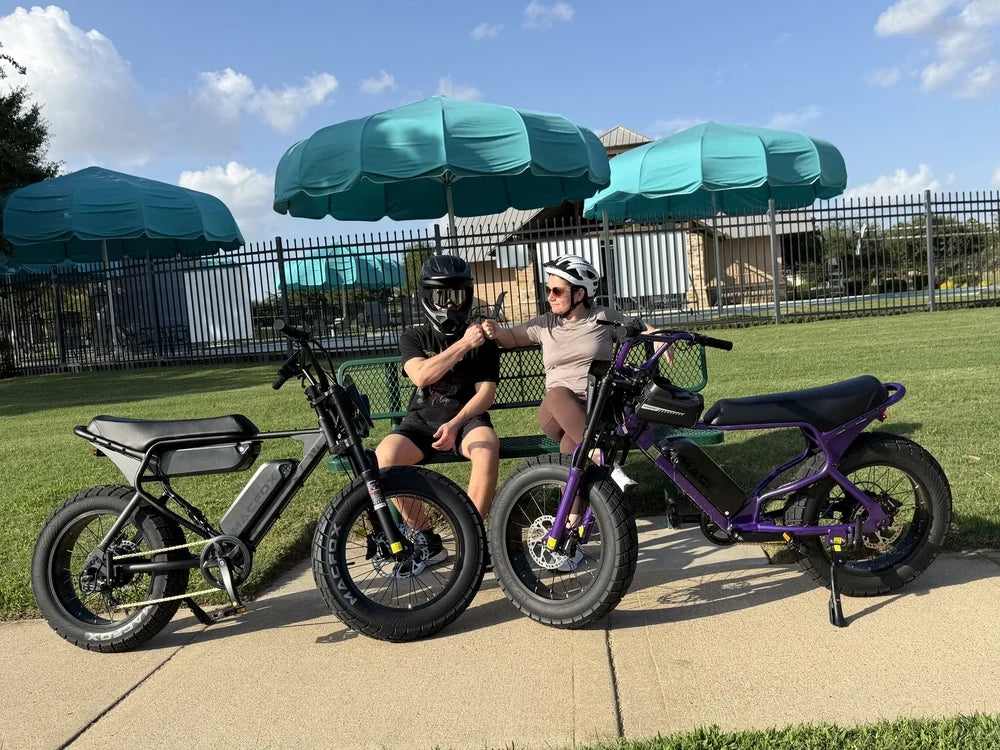
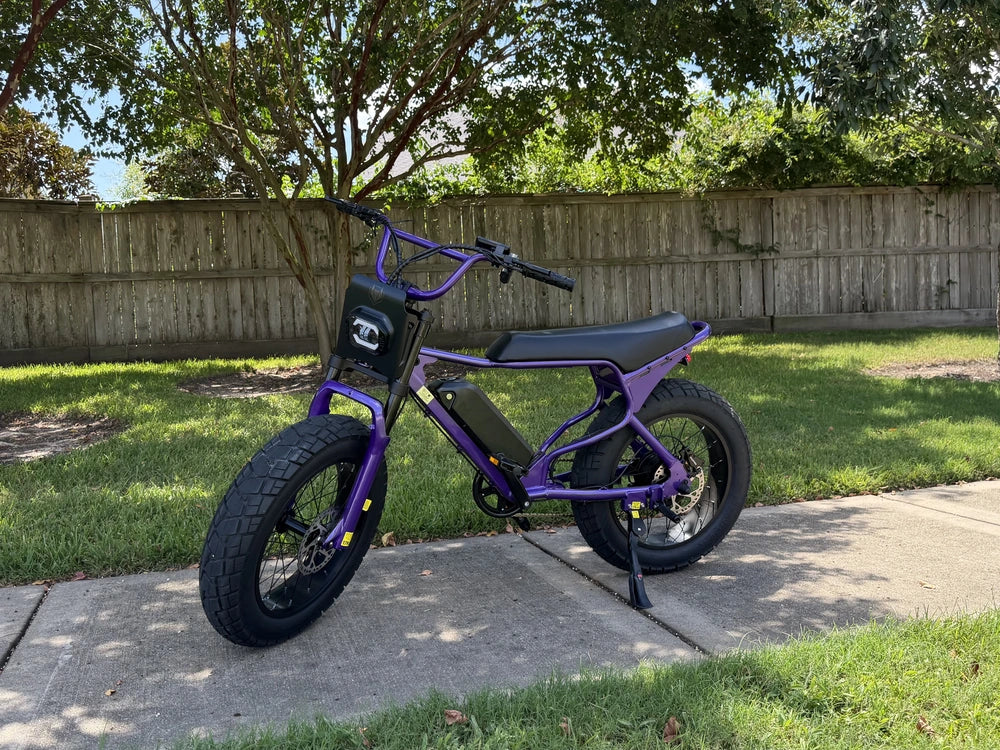
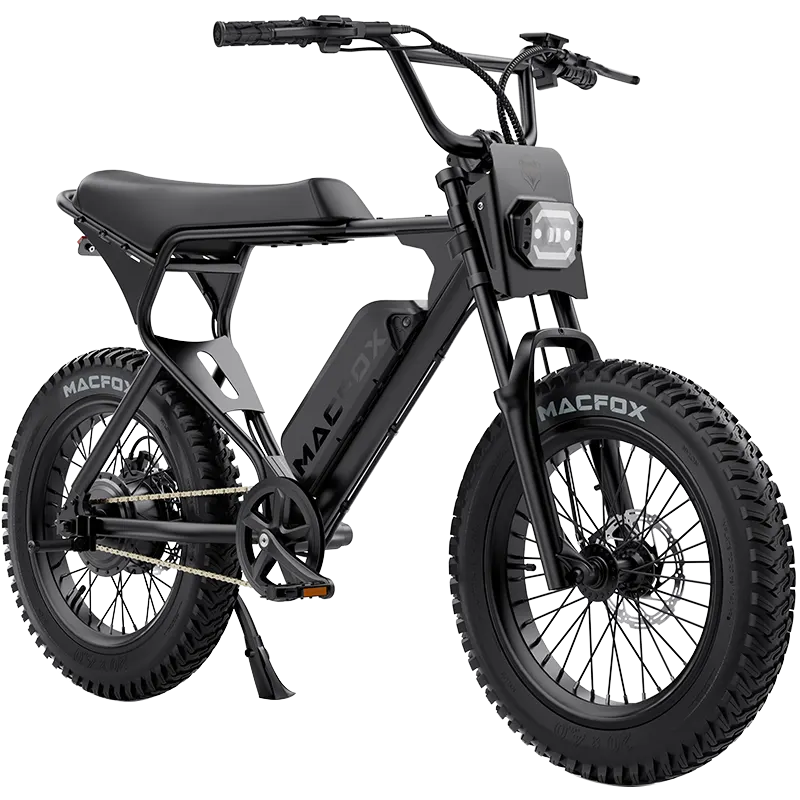
| Compact fit for a smaller rider | Macfox M16 | Recommended for riders 3'11" and up, with a 20 mph top speed and a published range of up to 25 miles. | The compact platform is not a folding design, so confirm rider control, the carrying route, and approved storage space. |
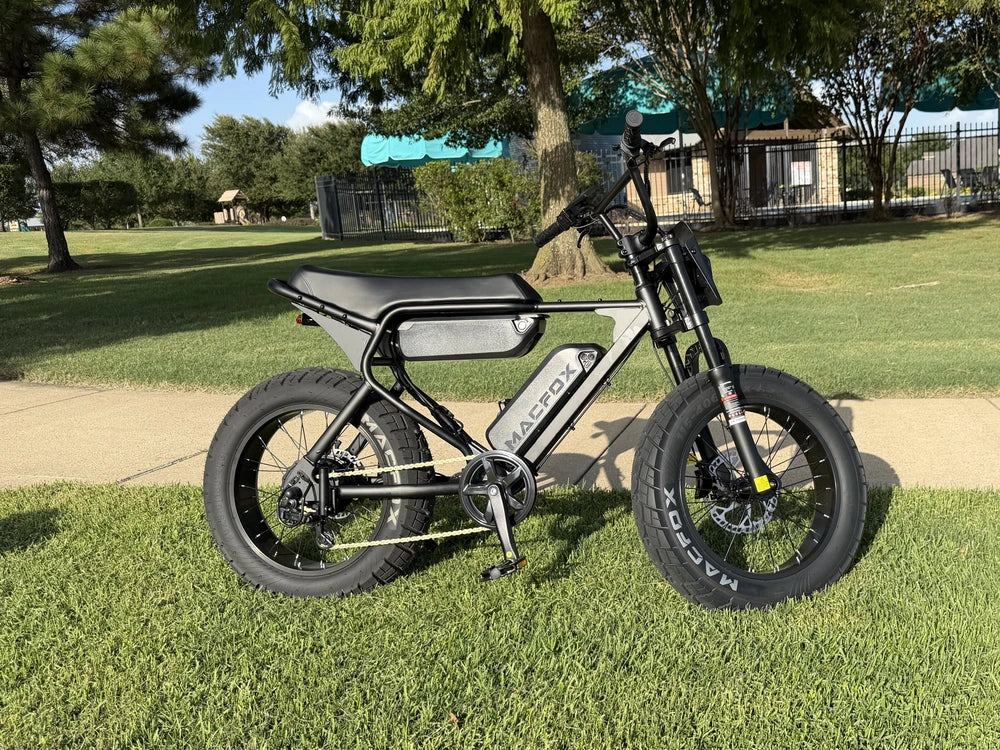
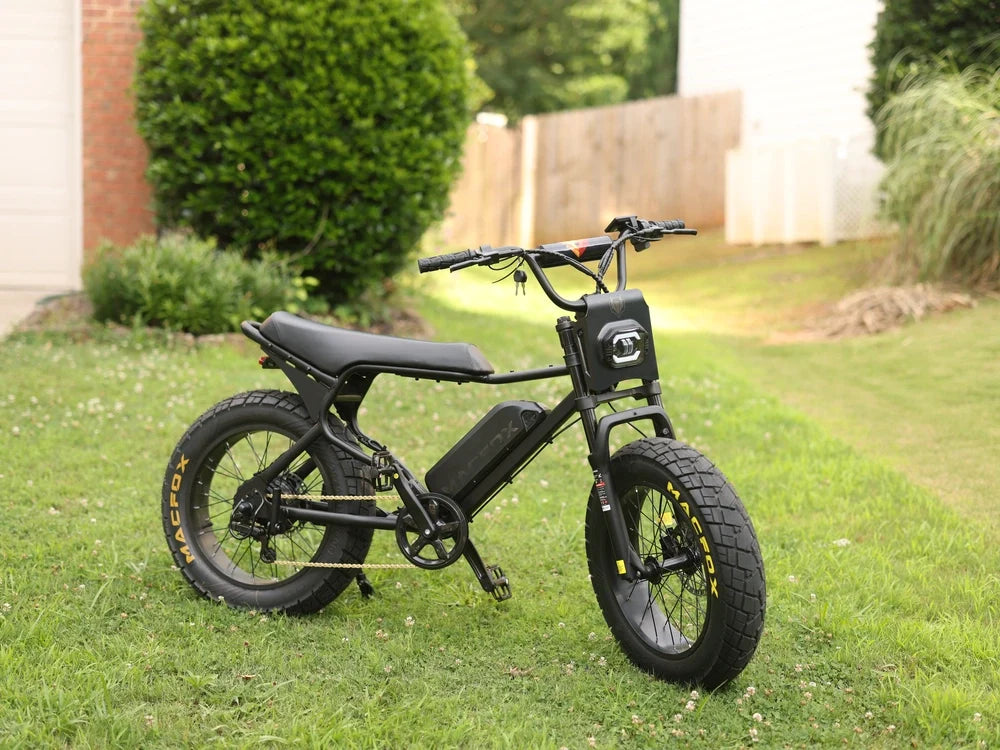
| Campus and off-campus commuting | Macfox X1S commuter e-bike | Recommended for riders 5'3" and up, with hydraulic disc brakes and a published range of up to 28 miles with one battery or up to 56 miles with two. | The larger moped-style platform needs more storage space; confirm campus access rules and the real daily route. |
| Light paved commuting | Velotric Tempo | The listed weight is 39 lb, with a removable battery and hydraulic brakes. | A city-bike setup favors pavement and portability rather than wide-tire comfort on rough surfaces. |
| Folding storage plus utility | Lectric XP4 500W | It folds and includes a rear rack, with a listed weight of 62 lb without its 7 lb battery. | Folding reduces storage dimensions, but it does not make a heavy bike easy to carry upstairs. |
| Folding plus regular cargo | Ride1Up Portola 02 | The folding frame, welded rear rack, hydraulic brakes, and two battery configurations support mixed commuting and errands. | Check the complete folded size, carrying route, and battery choice instead of assuming every folding bike fits a dorm room. |
| Groceries and larger loads | Rad Power Bikes RadRunner | The utility platform has a listed 320 lb payload and a 20 mph top speed. | A cargo-oriented bike needs more parking and storage space, and current availability should be checked before planning around it. |
Model details checked August 28, 2026. Published range, weight, configuration, and availability are manufacturer information rather than one controlled Macfox test.
Lightweight City Bike: Best When Stairs and Parking Matter
Students who live above ground level or use crowded bike rooms should treat weight as an early filter. A lighter city bike is usually easier to guide through doors, lift over a curb, position at a rack, and move into permitted indoor storage. Narrower commuter tires also feel more natural on paved routes and can make the bike less bulky beside classroom racks.
The limitation is route fit. Broken pavement, loose surfaces, deep potholes, and repeated curb transitions may favor a wider tire or more suspension. Measure the actual route instead of selecting the lightest model from a specification list.
Folding E-Bike: Best When the Fold Solves a Real Storage Problem
A folding e-bike can work well for an apartment, a car trunk, or a compact storage area. The key question is what happens after it folds. Measure the storage opening, check whether the bike must be lifted, and confirm that the folded package can stand securely without damaging controls or cables.
Weight deserves special attention. The Lectric XP4 500W is listed at 62 lb without its 7 lb battery. That may be acceptable for rolling into a ground-floor room but awkward for repeated stair carrying. The Ride1Up Portola 02 adds a utility rack and battery choices, which can be useful for errands, but the buyer should still verify folded dimensions and handling.
Cargo E-Bike: Best for Work, Groceries, and Equipment
A cargo or utility platform can replace more short car trips when a student regularly carries groceries, sports equipment, art supplies, tools, or work gear. The RadRunner’s listed 320 lb payload illustrates the difference between a purpose-built utility platform and a standard commuter with a small add-on rack.
The tradeoff is space. Cargo capability adds length, bulk, and parking demands. Check whether the school provides racks that fit the frame, whether the chosen lock reaches a secure fixed object, and whether the residence or workplace has an approved place to store and charge the bike.
How to Choose Between the Macfox M16 and X1S
Macfox M16 and X1S solve different rider-fit and route needs. Compare platform size, route length, storage, and low-speed control before choosing between them.
Choose M16 When the Smaller Platform Fits Better
M16 is recommended for riders 3'11" and up and uses 16 × 4-inch tires. It has a 20 mph top speed and a published range of up to 25 miles. Choose it when the compact platform fits the rider and the planned local route better than a full-size bike.
Choose X1S for a Larger Commuter Platform and Longer Route Option
X1S is recommended for riders 5'3" and up and uses 20 × 4-inch tires with hydraulic disc brakes. It has a 20 mph top speed and a published range of up to 28 miles with one battery or up to 56 miles with two. Choose it when the rider fits the larger platform and wants a moped-style commuter for campus streets, errands, and longer off-campus trips.
Before choosing either model, confirm the rider can control the bike comfortably, store it in an approved location, and use it on the planned campus route.
Plan for Theft Prevention Before the First Ride
A campus bike may spend more time parked in public than moving. Choose a lock setup before the bike arrives. Secure the frame to an approved fixed rack, remove easy-to-carry accessories when practical, record the serial number, and follow any campus registration process. Parking in a visible area does not replace a secure lock.
Use Macfox’s e-bike anti-theft strategies to build a routine for class, work, and overnight parking.
Make Charging and Storage Part of the Purchase Decision
Do not assume a residence hall allows an e-bike or battery indoors. Read the current housing policy and use only approved charging locations. Keep the charger and battery away from blocked exits, damaged outlets, moisture, and combustible clutter. Stop using a battery or charger that is damaged, unusually hot, swollen, or behaving abnormally, and follow the manufacturer’s service guidance.
Macfox’s e-bike battery charging tips cover day-to-day charging habits. Campus policy remains the deciding rule for a dorm, classroom building, or school-operated bike room.
What If Price Is the Main Constraint?
A campus-use guide and a price-led guide answer different questions. If the purchase must stay within a tighter ceiling, use the budget-first college e-bike guide. For a broader market comparison across commuting, folding, cruising, and cargo uses, see the affordable electric bike comparison.
Keeping the questions separate prevents price from hiding a poor fit, an impossible storage plan, or a bike format that does not match the route.
Final Checklist for a College E-Bike
- Confirm campus transportation, parking, housing, and charging rules.
- Measure the route, round-trip distance, hills, surface, and stairs.
- Check rider fit and low-speed control before focusing on motor figures.
- Measure the permitted storage space and any doorway, elevator, or vehicle opening.
- Choose cargo capacity for the items the student actually carries.
- Buy the lock and plan the charging location before the bike arrives.
- Recheck the current product specifications and availability before ordering.
The best electric bike for a college student is not one universal model. It is the bike that the student can legally ride, safely store, securely park, reliably charge, and comfortably control on the real daily route.
FAQ
Are e-bikes allowed on every college campus?
No single rule covers every school. Check the current transportation and housing policies for allowed routes, parking, registration, indoor storage, and battery charging before buying.
Is a folding e-bike always easier for a dorm?
No. Folding can reduce storage dimensions, but a heavy folded bike may still be difficult to carry through stairs, doors, or crowded hallways. Confirm both the folded size and the lifting route.
How much range does a college student need?
Start with the real round trip, then leave room for hills, cold weather, rider weight, cargo, tire pressure, and assist use. A published maximum is not a promise for every campus route.
Should a college student choose M16 or X1S?
Choose by rider fit and ride format. M16 uses a smaller platform for riders 3'11" and up. X1S uses a larger platform for riders 5'3" and up and offers the option of a second battery for longer off-campus trips.
What matters more than top speed on campus?
Campus access rules, low-speed control, braking, storage, weight, security, and charging access usually affect daily use more directly than maximum speed.