

When choosing an electric bike, the suspension system is one of the key factors that affect the riding experience. The suspension system not only influences the comfort of the ride but also enhances control and stability on different road conditions. For beginners, understanding the pros and cons of different suspension systems can help in selecting the most suitable electric bike. In this article, we will compare three common suspension systems: hardtail (no suspension), front suspension, and full suspension, to help you make an informed decision.
1. Hardtail Suspension System
What is Hardtail Suspension?
A hardtail suspension system refers to an electric bike that only has a rear frame fixed with a rigid design, and there is no suspension system on either the front or rear wheels. This design is the simplest, with a sturdy frame structure and a lighter weight. It is typically used in city electric bikes and light off-road bikes.
Pros and Cons of Hardtail Suspension
Pros:
-
Lower Cost: The manufacturing cost of a hardtail suspension system is relatively low, and the price of the electric bike is usually more affordable.
-
High Efficiency: Since there is no suspension system causing resistance, hardtail electric bikes can convert battery power into riding speed more effectively, making them suitable for flat roads.
Cons:
-
Poor Comfort: The hardtail design cannot effectively absorb road vibrations, making long rides uncomfortable, especially on uneven roads.
-
Lower Control: On rough or uneven surfaces, the hardtail system will subject the rider to more impacts, reducing control and handling.
Suitable Riders:
Hardtail suspension electric bikes are commonly found in city commuter bikes, light off-road mountain electric bikes, leisure bikes, and folding electric bikes. They offer a simple suspension system suitable for flat roads or light off-road terrain and are ideal for riders who prioritize lightness, ease of control, and lower cost.
2. Front Suspension System

What is Front Suspension?
A front suspension system refers to an electric bike that only has a suspension system on the front wheel, while the rear wheel remains rigid. The primary function of the front suspension system is to absorb vibrations from the uneven surfaces encountered by the front wheel, thus improving ride comfort and control. It is typically used by riders who need some comfort but do not require full suspension for the entire bike.
Pros and Cons of Front Suspension
Pros:
-
Improved Comfort: Front suspension can effectively absorb the vibrations from the front wheel, providing a more comfortable ride.
-
Light Weight: Compared to a full suspension system, the front suspension design still keeps the bike frame relatively light, suitable for riders who need some comfort but do not want to sacrifice speed and efficiency.
Cons:
-
No Rear Suspension: While the front suspension handles the vibrations from the front wheel, the rear wheel still lacks suspension, which limits ride comfort on uneven terrain over long distances.
-
Not Ideal for Extreme Off-Roading: If you plan to engage in long off-road rides, the front suspension might not provide sufficient comfort and control.
Suitable Riders:
Front suspension systems are commonly found in city commuter electric bikes, light mountain electric bikes, leisure bikes, folding electric bikes, and high-performance electric bikes. If you frequently ride on gravel paths, greenways, or slightly uneven roads, but do not require the extensive shock absorption of full suspension, a front suspension system can enhance comfort and provide a smoother ride across various city or suburban road conditions.
3. Full Suspension System
What is Full Suspension?
A full suspension system refers to an electric bike that has suspension systems on both the front and rear wheels. It can absorb the impacts from both the front and rear wheels, providing a higher level of ride comfort and better control. Full suspension systems are typically used in off-road electric bikes or by riders who have very high comfort requirements.
Pros and Cons of Full Suspension
Pros:
-
Extremely High Comfort: The front and rear suspension systems can absorb shocks to the maximum extent, especially on uneven, rugged roads, offering a very comfortable ride.
-
Better Control: Full suspension design effectively reduces the impacts from obstacles encountered during riding, improving control, particularly on off-road segments.
-
Versatile: Whether on city streets or rugged mountain roads, the full suspension system provides an excellent riding experience, making it highly adaptable.
Cons:
-
Heavier Weight: Due to the additional suspension components on both the front and rear, the overall bike weight is greater, which may impact riding efficiency, especially on long-distance rides.
-
Higher Cost: The more complex mechanical structure means higher manufacturing costs, so full suspension electric bikes tend to be more expensive.
-
Higher Maintenance: The front and rear suspension systems require regular maintenance and adjustments to ensure proper function, which makes the maintenance cost higher compared to other suspension systems.
Full suspension systems are typically found in professional mountain electric bikes, heavy-duty electric motorcycles, high-performance mountain/off-road electric bikes, high-end leisure/all-terrain electric bikes, and electric cruising motorcycles. They are ideal for riders who frequently ride on rugged, uneven mountain paths, muddy trails, or complex forest routes. The full suspension system can effectively absorb shocks from rough terrain, reducing vibrations and providing a smoother and more stable riding experience.
Suspension Systems Comparison Table
| Suspension System | Hardtail Suspension | Front Suspension | Full Suspension |
|---|---|---|---|
| Suitable for City Commuting | ✓ | ✓ | ✓ |
| Suitable for Light Off-Road | ✓ | ✓ | ✓ |
| Suitable for Extreme Off-Road | ✘ | ✘ | ✓ |
| Improves Ride Comfort | ✘ | ✓ | ✓ |
| Reduces Vibration | ✘ | ✓ | ✓ |
| Suitable for Uneven or Rough Terrain | ✘ | ✓ | ✓ |
| Weight | Light | Light | Heavy |
| Cost | Low | Moderate | High |
| Maintenance Requirement | Low | Moderate | High |
| Suitable for Long Rides | ✘ | ✓ | ✓ |
Adjust Suspension Damping for Different Riding Conditions
In suspension systems, damping is adjustable, and many high-performance electric bikes and motorcycles allow riders to adjust the damping according to their needs to adapt to different road conditions.
Spring Damping: Like a spring mattress on a bicycle, the tighter the spring, the stiffer the suspension, making it feel like riding on a hard board—suitable for bumpy, uneven roads; the looser the spring, the softer the suspension, making it feel like riding on a cushioned pad and more comfortable on flat roads.
Hydraulic Damping: Think of it as a “speed controller” for the spring’s rebound:
-
Compression Damping: Controls the speed at which the suspension compresses when hitting an impact. Increasing compression damping slows excessive compression, suitable for minor bumps; on flat roads, it can be set lower, making the suspension softer.
-
Rebound Damping: Controls the speed at which the suspension returns. Increasing rebound damping slows the return, suitable for rough terrain; on flat roads, lowering rebound damping allows the suspension to recover quickly, improving handling.
Note: Adjustment methods vary by brand. Check the manufacturer’s manual for your vehicle’s specific suspension adjustments. There are usually dedicated adjustment knobs or levers.
Below is an example of adjusting the hydraulic front fork on a Macfox e-bike, with explanations of functions: the two knobs on the hydraulic fork typically control Rebound and Compression.

-
Rebound Adjustment Knob (Rebound)
-
Location: Usually at the bottom of the fork leg, labeled “Reb” or “R.”
-
Function: Controls how fast the fork rebounds after being compressed.
-
Clockwise (“+” direction): Slows rebound speed, suitable for rough terrain or high-speed riding, preventing the fork from rebounding too quickly and causing instability.
-
Counterclockwise (“-” direction): Speeds up rebound, suitable for technical terrain or when responsive feedback is needed (e.g., climbing or continuous small bumps).
-
-
Adjustment Tips:
-
If the fork feels like it “kicks back,” slow the rebound.
-
If the fork feels sluggish or loses contact with the ground, increase rebound speed.
-
-
Initial Setup: Turn the knob all the way to the fastest rebound, then turn counterclockwise 3–5 clicks as a baseline and fine-tune based on actual feedback.
-
Compression Damping Knob (Compression)
-
Location: Usually at the top of the fork (left shoulder), labeled “Comp” or “C.”
-
Function: Controls the resistance when the fork compresses, affecting support and responsiveness.
-
Clockwise (“+” direction): Increases damping, making the fork stiffer, reducing dive under braking, suitable for high-speed or smooth roads.
-
Counterclockwise (“-” direction): Decreases damping, making the fork more responsive, suitable for absorbing small bumps or technical descents.
-
-
Adjustment Tips:
-
If the fork compresses too much in corners or frequently bottoms out, increase compression damping.
-
If the fork feels slow to respond, decrease compression damping.
-
-
Initial Setup: Start fully open (turned all the way counterclockwise), then rotate clockwise 2–3 clicks to test support.
Features of the Macfox Front Suspension Electric Bike

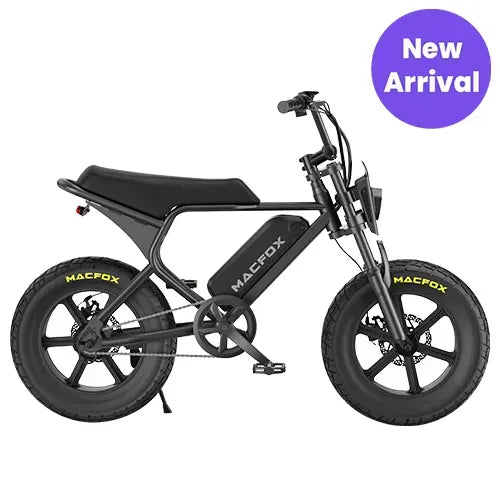
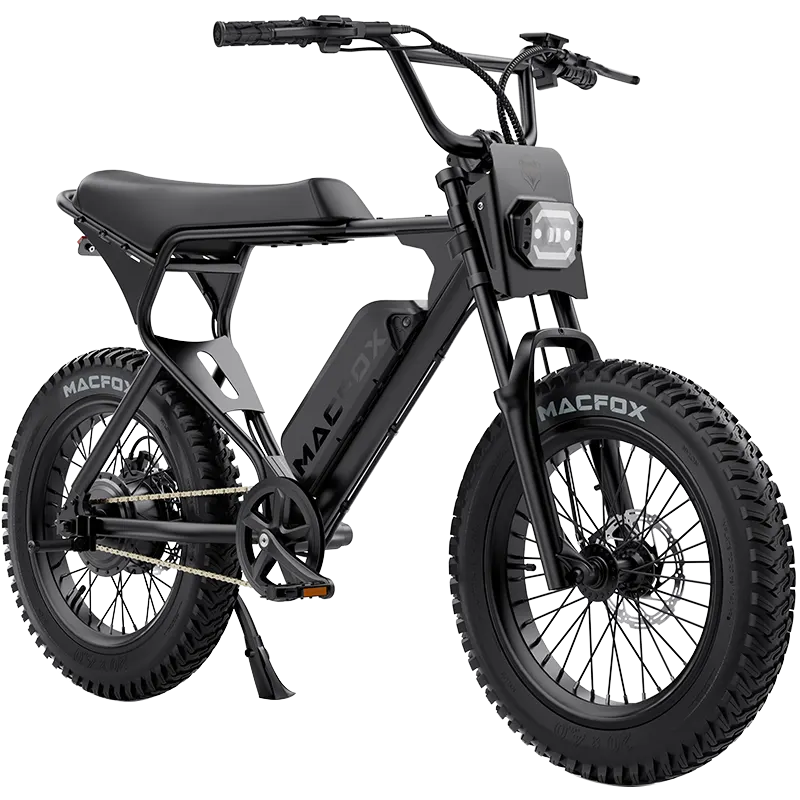
The Macfox X7 Front Suspension Electric Bike features a powerful 500W motor (750W peak power) for stable acceleration and climbing, perfect for city commuting and light off-roading. It comes with an adjustable front suspension fork for customized comfort and control. The bike offers up to 35 miles (56 km) of range on a single charge, extending to 70 miles (113 km) with a second battery. The 20×4.5-inch front tire and 20×5.0-inch rear tire provide excellent traction, while the high-carbon steel frame and hydraulic disc brakes ensure durability and safety.
Choosing the Right Suspension System
Choosing the right suspension system based on your primary riding needs is crucial:
-
If you primarily commute on city roads and have a limited budget, a hardtail suspension (no suspension) may be the most suitable choice.
-
If you occasionally ride on uneven surfaces and wish to improve comfort, front suspension is a great compromise.
-
For off-road riding or riders who prioritize comfort and handling, full suspension will provide the best riding experience.
Editor’s Note: On 03/10/2026, this article was updated to include a detailed example of adjusting the hydraulic front fork using a Macfox e-bike.










1 thought on “Comparison of 3 Suspension Systems for Electric Bikes: A Beginner's Guide”
Reed Saulque
Can you buy a upgrade kit for the X1S, or do you have to buy it with the bike?