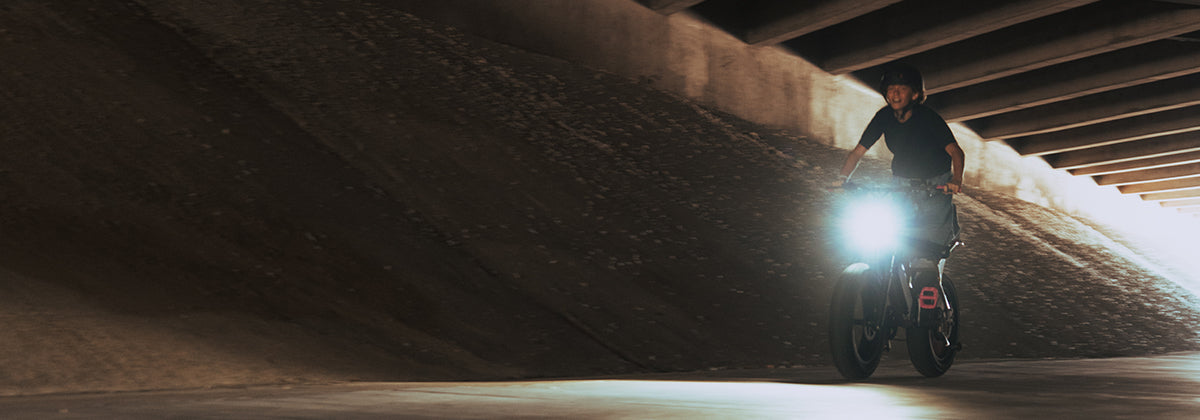

The best bike for wheelies is usually a bike that is easy to lift, predictable to brake, strong enough for repeated front-wheel lift, and simple to control at low speed. BMX bikes, dirt jump bikes, some mountain bikes, and selected fat tire e-bikes can all fit that description, but the safest choice depends on rider size, skill level, riding space, brakes, frame strength, and local rules.
This guide keeps the topic practical: which bike types are easier to control, what changes when the bike has a motor and battery, which setups are poor matches, and how to think about Macfox M16 and X7 without treating street riding as permission to take risks in traffic.
Best Bike Types for Wheelies

Most wheelie-friendly bikes share the same foundation: a manageable frame, strong rear brake, predictable tires, and a cockpit that lets the rider stay balanced. A light front end helps, but it is not the only factor. Braking control and frame strength matter just as much.
| Bike Type | Why Riders Choose It | Main Caution |
|---|---|---|
| BMX bike | Compact frame, simple drivetrain, low weight, and a trick-focused layout. | Small wheels and short frames require quick balance reactions. |
| Dirt jump bike | Strong frame, stable landing feel, and better impact tolerance than many casual bikes. | Still needs a controlled practice area, not traffic or crowded paths. |
| Mountain bike | Wide tires, strong brakes, and familiar handling for riders who already ride trails. | Soft suspension can absorb lift input; setup and skill matter. |
| Fat tire bike | Large tire contact patch can feel steady during low-speed balance and landings. | Heavy tires and longer frames can make the front wheel harder to lift. |
| E-bike | Motor assistance can make launch and low-speed control feel easier on the right model. | Extra weight, throttle response, battery placement, and speed rules raise the safety margin needed. |
What Changes on an E-Bike
An e-bike can make a wheelie feel easier because the motor can help with the first lift, but it also adds mass, electrical parts, and higher consequences when something goes wrong. If your real question is specifically about e-bike geometry, read Macfox's wheelie electric bike guide after this broader bike-type guide.
For general product browsing, start with electric bikes or the more specific wheelie electric bikes collection. Use the collection only after you have checked rider size, brake quality, local rules, and whether the bike is suitable for the riding space you have in mind.
- Motor response: sudden throttle input can make balance harder, not easier.
- Battery and motor weight: added mass changes the lift point and landing force.
- Rear brake control: the rear brake is the main recovery tool when the front end rises too far.
- Frame and fork stress: hard landings can stress welds, headset bearings, fork legs, wheels, spokes, and axle hardware.
- Legal class and riding area: the electric bike class guide and local rules still matter, especially on public paths or streets.
Single-Speed vs Gears for Wheelies
The old idea that a wheelie bike must have many gears is too simple. Gears can help riders choose cadence and torque on hills, but many classic BMX, dirt jump, and compact wheelie-style bikes are single-speed because short, predictable power delivery is useful for low-speed control.
If you are comparing setups, use Macfox's e-bike gears guide for the broader drivetrain question. For wheelies, judge the full system instead of gear count alone: throttle smoothness, brake feel, rider fit, tire grip, frame strength, and how the bike behaves at low speed.
| Setup | Wheelie Advantage | Best Use |
|---|---|---|
| Single-speed | Simple control, fewer shifting mistakes, predictable low-speed response. | BMX, compact street riding, neighborhood practice, and younger riders who need fewer controls. |
| Multi-speed | More cadence options and easier hill control. | Trail riding, mixed terrain, longer rides, and riders who already manage gears well. |
| Throttle-equipped e-bike | Can help with launch, but only if power delivery is smooth and the rider has brake discipline. | Controlled, legal spaces with protective gear and enough room to stop. |
Which Bikes Are Poor Matches?
Some bikes can technically lift the front wheel but still be poor choices. The issue is not whether a rider can force the bike up once. The issue is whether the bike gives enough control margin to practice safely and avoid damage.
- Weak or poorly adjusted brakes: if the rear brake cannot respond cleanly, do not practice wheelies.
- Loose cockpit or headset: any play in the bars, stem, fork, or headset can become dangerous under repeated lift and landing loads.
- Very long or heavy cargo-style bikes: long wheelbases and extra cargo weight make lift and recovery harder.
- Thin-tire road bikes: possible for skilled riders, but less forgiving for beginners and harder on narrow wheels.
- Speed-unlocked or modified e-bikes: changes to power delivery, braking distance, heat, and legal class can increase risk quickly.
Frame design also matters. If you are comparing geometry, read the bike frame type guide before assuming that motor power alone makes one bike easier to control.
Safety, Legal, and Damage Checks
Rider discussions on forums and social platforms tend to repeat the same concerns: traffic risk, hard landings, brake confidence, motor cutouts, battery security, and whether a bike is really built for repeated front-wheel lift. Those are practical concerns, not decoration, so this refresh treats wheelies as a control and safety topic rather than a stunt tutorial.
| Check | Why It Matters | Practical Rule |
|---|---|---|
| Practice area | Traffic, pedestrians, parked cars, and narrow paths leave little recovery room. | Use a flat, open, legal space with room to stop. |
| Protective gear | Falls often happen backward, sideways, or during landing. | Wear a helmet and consider gloves, knee pads, elbow pads, and sturdy shoes. |
| Rear brake | The rear brake helps bring the front wheel down before the bike loops out. | Do not practice until the brake bite point is predictable. |
| Post-ride inspection | Repeated lift and landing can loosen parts or reveal weak components. | Check spokes, axle nuts, headset, bars, fork, brakes, tires, and battery mount. |
| Rules | A wheelie can be treated as reckless riding in some public areas even if e-bikes are allowed there. | Check local access rules with Macfox's state e-bike regulations guide. |
Real Rider Questions Behind This Guide
Across rider forums, Q&A discussions, and e-bike communities, the useful questions are rarely about one stunt alone. They are usually about whether a bike gives enough control margin when a real rider makes a mistake. Those questions shaped the safety and product sections below.
| Rider Question or Case | What the Concern Really Means | How to Use This Guide |
|---|---|---|
| "I want a bike that can wheelie, but I still ride near cars or public paths." | The real issue is recovery space. Traffic, pedestrians, parked cars, and narrow paths leave little room to correct a bad lift. | Treat wheelie practice as a private/open-area skill, not a public-road habit. |
| "Will repeated wheelies damage an e-bike motor, battery, or frame?" | The main wear often comes from hard landings, loose hardware, hot motor loads, battery mount movement, and wheel or headset stress. | Use the damage checklist and inspect the bike after hard landings. |
| "Is more power always better for wheelies?" | Not always. Abrupt throttle response can make an e-bike harder to control even if it lifts more easily. | Prioritize predictable power, brake feel, rider fit, and tire contact over wattage alone. |
| "Is single-speed a problem?" | For short low-speed control, single-speed can be simpler. Gear count is not the same thing as control. | Compare the whole system: frame, tires, brake, rider size, throttle smoothness, and practice space. |
Macfox Fit Notes: M16 and X7
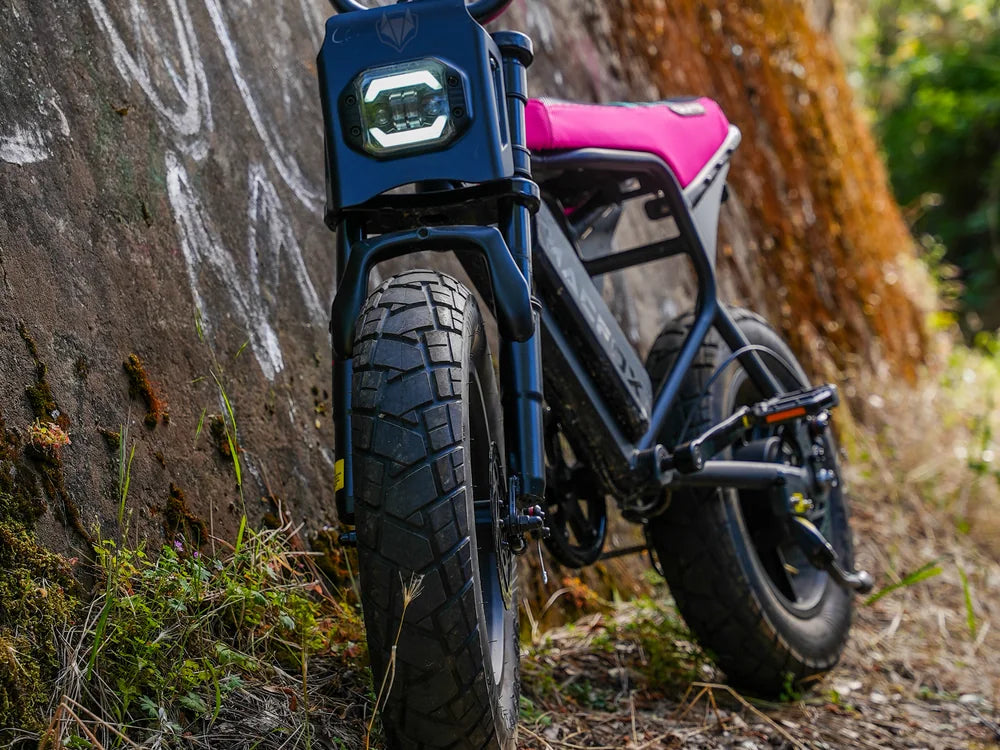
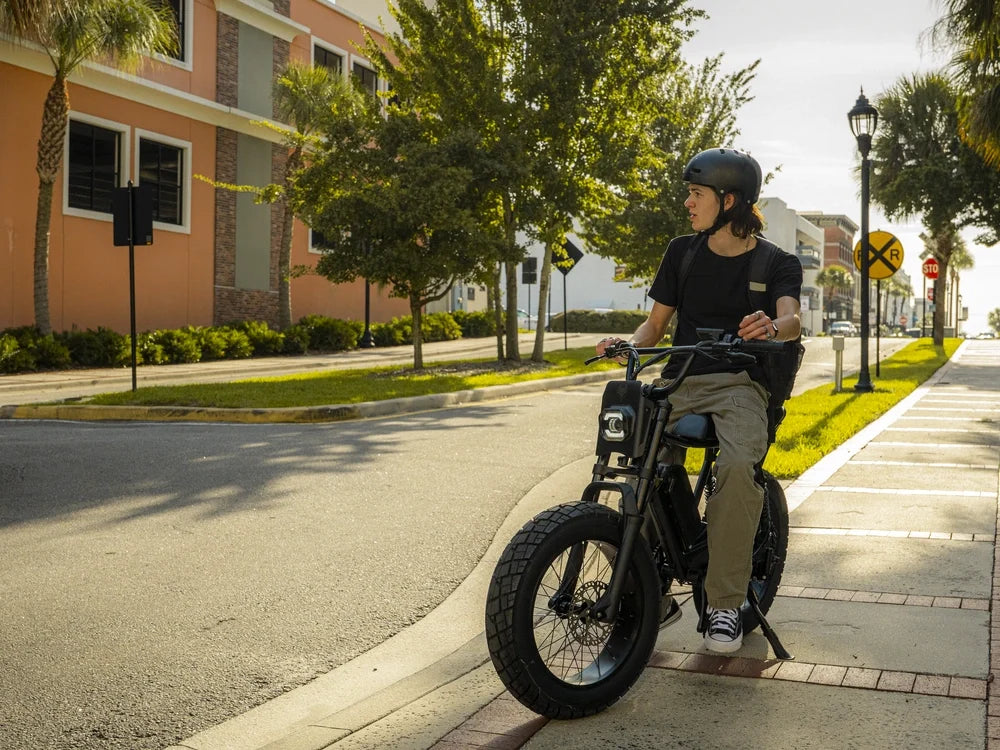
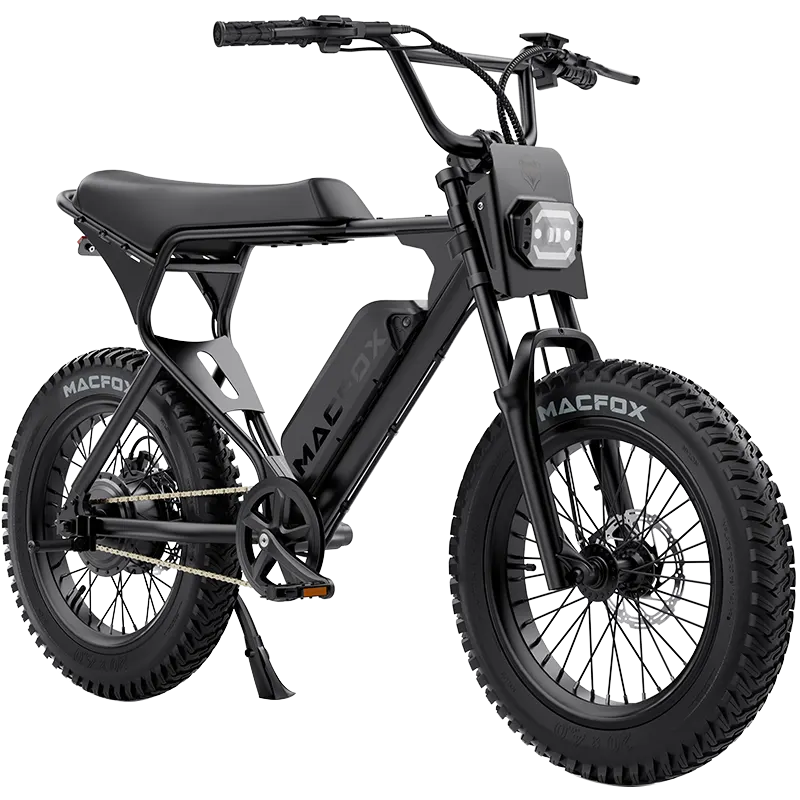
For this topic, product fit should be specific. The Macfox M16 e-bike is not a bike built only for wheelies. A more accurate way to frame it is that its compact frame, lower rider fit, fat tires, and simple single-speed control can make wheelie-style balance easier to manage for suitable riders in a legal open area.
The Macfox X7 e-bike is a different choice. Its value is a larger fat tire stance and stable street feel, not a promise that every rider should practice wheelies. One important detail is tire sizing: the X7 uses a 20x4.5 front tire and a larger 20x5.0 rear tire. That wider rear contact patch can help the bike feel more planted when balancing or landing, but it also means riders should compare size, weight, and control carefully before choosing it.
Both models still require the same safety boundary: ride in a legal open area, wear protective gear, keep the rear brake in good condition, and inspect the bike after hard landings.

Suspension and Landing Control
Suspension can help absorb rough surfaces, but it can also change how the front end lifts. A very soft fork may soak up the rider's input and make the bike feel less predictable, while a setup that is too stiff can make landings harsh. For the broader setup question, use the e-bike suspension guide.
For beginners, brake feel and rider fit usually matter more than chasing the most aggressive suspension setup. A bike that feels predictable at walking speed is more useful than a bike that looks powerful but reacts sharply.
FAQ
What is the easiest bike to wheelie?
For many riders, a BMX or dirt jump bike is easiest because it is compact, simple, and built around control. Some e-bikes can work, but they need smooth power, strong brakes, and enough room to practice safely.
Can any e-bike do a wheelie?
No. Some e-bikes are too long, heavy, front-loaded, weakly braked, or poorly suited to repeated lift and landing forces. The right question is whether the bike gives enough control margin for the rider and location.
Do wheelies damage an e-bike?
Occasional front-wheel lift does not automatically destroy an e-bike, but repeated hard landings can stress the headset, fork, wheels, spokes, brakes, frame, battery mount, and motor area. Inspect the bike more often if it is used this way.
Are wheelies legal on public roads?
Rules vary. Even where bicycles or e-bikes are allowed, a wheelie in traffic, on sidewalks, or around pedestrians may be treated as unsafe or reckless. Use a legal open space and check local regulations first.
Is single-speed bad for wheelies?
No. Single-speed can be useful for short, predictable control. Gears are helpful for hills and longer rides, but many wheelie-friendly bikes are single-speed because the rider can focus on balance, brake timing, and body position.