
Decide what to do before your tires reach wet leaves. Look for a bend, downhill section, painted line, drain, curb, or hidden road surface. Slow on clean pavement, choose a short straight path with a visible exit, and avoid combining hard braking with a sharp turn. If you cannot see underneath or cross without turning, stop and walk.
Decide Whether the Surface Is Rideable
Wet leaves reduce grip, but the hidden surface may be the bigger problem. A shallow layer can cover a pothole, glass, a grate, or the path edge. Leaves can also slide over one another even when a tire holds the top layer.
| What you see | Better decision |
|---|---|
| A short patch on level ground, with the pavement and exit still visible | Slow early and cross in a nearly straight line |
| Leaves covering a bend, downhill section, road marking, drain, or curb | Stop and reassess before entering |
| A thick layer with no visible surface or clear exit | Walk the bike or choose another route |
Do not swerve if that move would put you into traffic, a pedestrian, or another hazard. Stop and reassess instead of making a last-second line change.

Finish Your Main Braking Before the Leaves
Brake smoothly while the tires are still on a predictable surface. Leave more stopping room than on a dry road, select your line early, and look toward the visible exit rather than at the front tire.
There is no universal front-to-rear brake percentage here. Brake type, tire condition, slope, speed, load, and rider skill change the answer. The practical rule is to make the large speed change before the low-grip patch.
Ask Less of the Tires While Crossing
On the leaves, keep the bike upright and steering minimal. Avoid sudden throttle, a hard pedal stroke, a sharp turn, or heavy braking. Combining these actions leaves less traction margin.
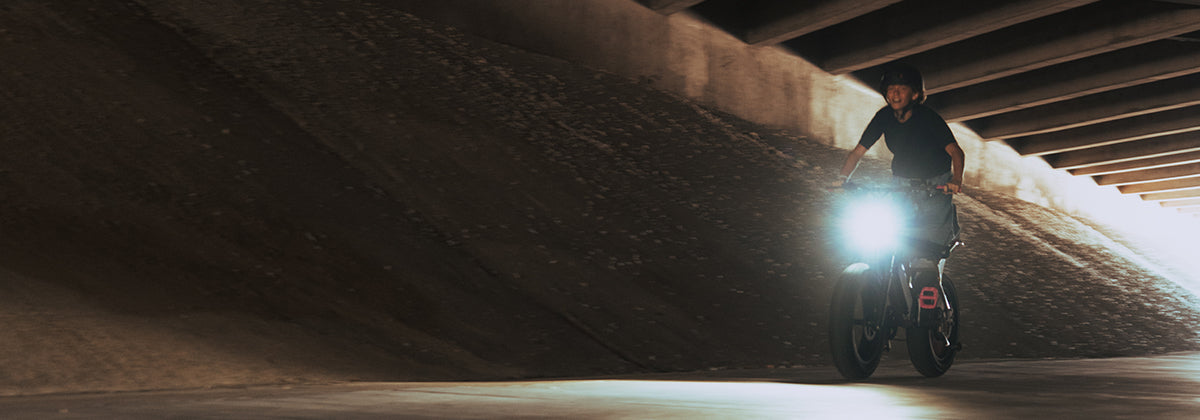
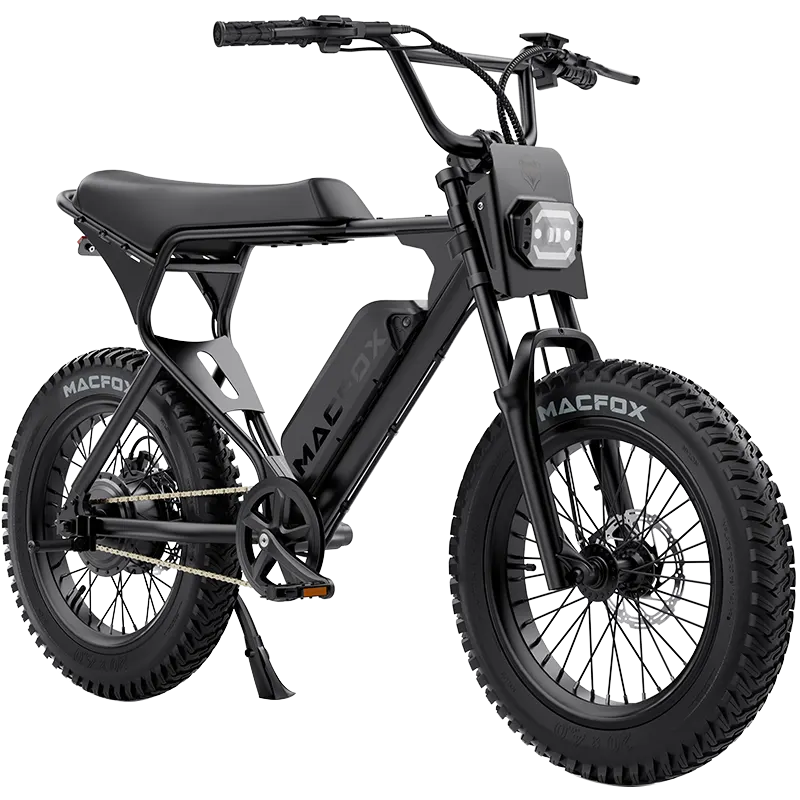
Wide or fat tires do not cancel the risk. A tire may grip the top leaf while wet layers underneath move across the pavement. Tire width cannot reveal a hidden pothole or make the surface predictable.
Know When Walking Is the Better Choice
Walk when leaves hide the route, cover a steep descent or tight turn, or leave no straight path with a clear exit. Dismount on clean, stable ground before the wheels enter the leaves.
For the broader autumn checks that belong before a seasonal ride, use this seasonal e-bike preparation guide. Tire condition and lighting matter, but neither turns an uncertain leaf-covered route into a safe one.
Check the Bike After You Are Clear
Stop on a clean surface if debris is caught around a tire or brake. Confirm that both brakes feel normal, the handlebar points correctly, and neither wheel looks damaged or out of line. If anything feels different, have the cause checked before continuing.
When comparing electric bike models for year-round routes, fit, braking, lighting, and tire condition are useful foundations. They cannot replace adjusting your line and speed to the surface ahead.
FAQ
Do fat tires prevent sliding on wet leaves?
No tire width guarantees grip on a moving layer of wet leaves. Use the same early-slowing, straight-line, and walk-or-ride judgment on a fat-tire e-bike.
Should I brake while crossing wet leaves?
Complete the main speed reduction before entering. If a small correction is unavoidable, keep it smooth and avoid combining heavy braking with a sharp turn.
What if leaves cover a painted line or drain?
Treat the hidden surface as an added hazard. If you cannot avoid it safely or cross it nearly straight after slowing, stop before the leaves and walk.