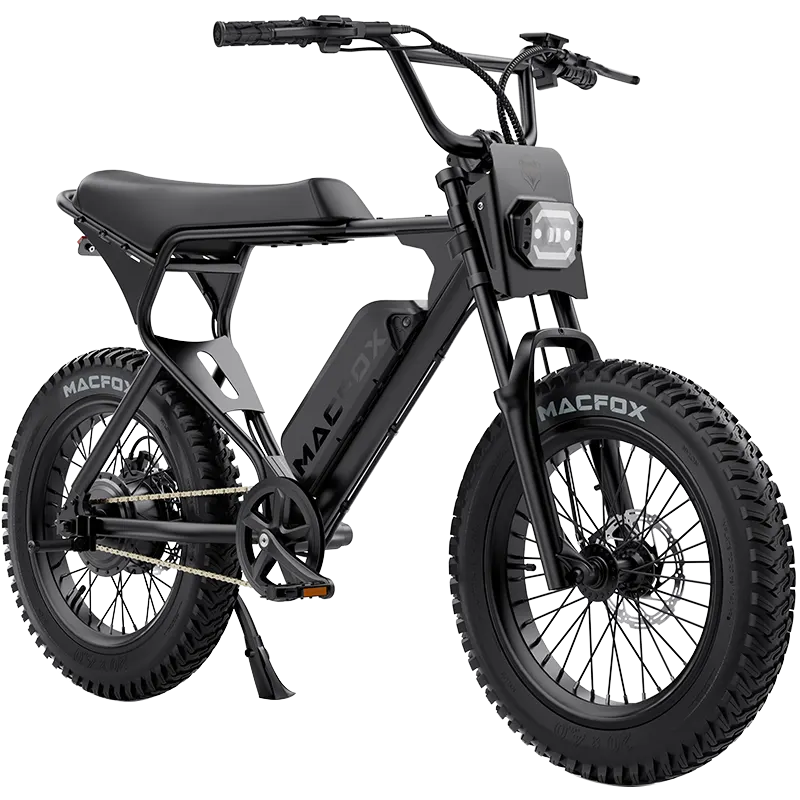

When you test ride a used fat tire e-bike, do not judge it only by whether it moves. Wide tires can make a bike feel stable even when pressure, rim condition, brake feel, battery seating, or steering alignment needs attention. Start slowly, listen carefully, and stop the ride if the bike feels unpredictable.
This is a test-ride checklist, not a full secondhand buying guide. If you are still checking ownership records, charger match, frame details, and serial number photos, start with Macfox's used e-bike checklist first.
Check the Bike Before You Ride
Before you get on the bike, match the seller's basic story to the bike in front of you. Look for the charger, keys, serial number area, battery seating, tire size, and obvious frame damage. A used fat tire e-bike is heavier than a regular bike, so small problems can feel bigger once you are moving.
Do not skip the tire sidewalls. Look for cracks, cuts, bulges, uneven wear, or one tire that looks much softer than the other. Fat tires can look large even when pressure is low, so press the tire by hand and ask when it was last inflated.

Start With a Low-Speed Roll
The first part of the test ride should be boring on purpose. Ride slowly in a clear area and check whether the bike tracks straight, turns smoothly, and stops without a scrape, grind, pull, or delay. If the seller pushes you to ride fast immediately, slow the process down.
Try gentle braking first, then a firmer stop in a safe space. Listen for rotor rub, grinding, or a brake lever that pulls too far before the bike slows. A fat tire bike may feel planted, but that does not make weak brakes acceptable.
Watch for Fat Tire-Specific Clues
Fat tires add comfort and grip, but they also hide certain problems. A soft tire can make the ride feel cushioned while increasing rolling drag. A dented rim or poorly seated tire can show up as wobble, rubbing, or a thumping feeling at low speed.
Look down briefly in a safe area and notice whether either tire moves side to side. Also check whether the tire rubs the fork, frame, fender, or brake area when turning. If the bike has been ridden with low pressure for a long time, the sidewalls and rims deserve extra attention.
Test Assist Without Forcing the Bike
Use low assist first. The bike should respond smoothly, not jump forward, cut out, or surge in a way that feels hard to control. If the bike has a throttle, test it gently in a clear area and make sure braking cuts motor power normally.
Watch the display during the ride. A small battery drop is normal, but a sudden drop, warning message, power cut, or restart during a short test ride is a reason to pause. If you are comparing this used bike to a new electric bike, remember that predictable assist and braking matter more than a quick first impression.
When to Stop the Test Ride
Stop the ride if the battery moves in the frame, the brakes grind badly, the steering wobbles, the motor cuts out, the tire rubs heavily, the serial number area looks altered, or the seller cannot explain the charger, keys, and service history.
A test ride is not a repair session. Do not open the battery, unplug random connectors, test the bike in traffic, or accept a rushed handoff because the price looks attractive. A clean used e-bike should feel controlled, explainable, and easy to document.
FAQ
How long should a used fat tire e-bike test ride be?
Long enough to test low-speed steering, braking, assist response, tire feel, and display behavior in a safe area. It does not need to be long, but it should not be rushed.
Should I buy a used fat tire e-bike without the charger?
Be very cautious. A missing charger makes it harder to verify normal battery use and can add cost or safety uncertainty after purchase.
Are fat tires always more stable?
They can feel more stable on rough pavement or loose surfaces, but tire pressure, rim condition, brake quality, bike weight, and rider control still matter.