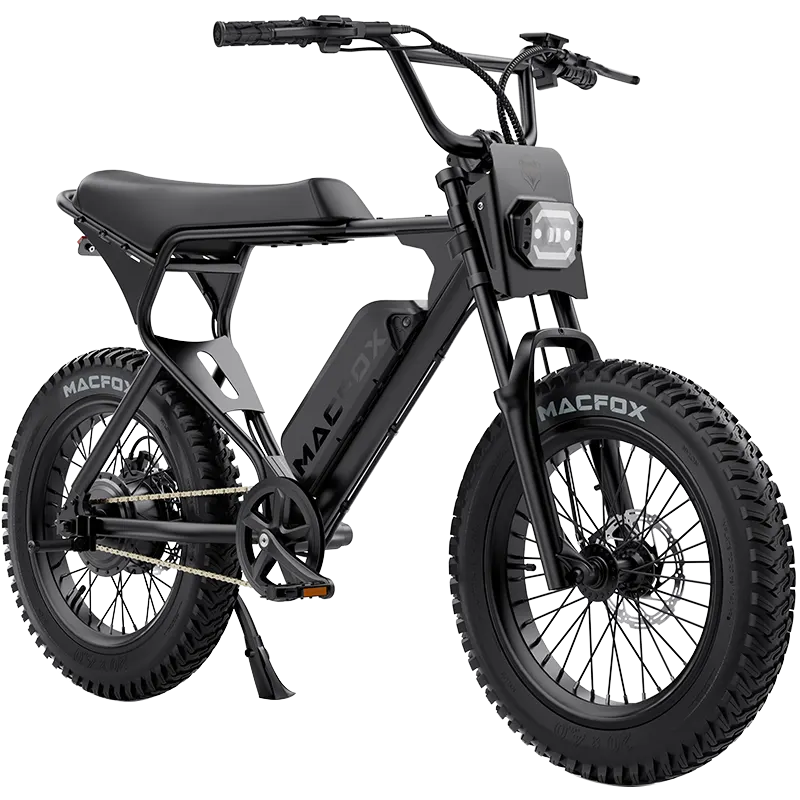

A fat-tire e-bike can feel planted, but wide tires and extra weight do not make it immune to wind. A steady headwind mostly changes your pace, travel time, and battery use. A side gust can move the bike across its intended line. Slow down before entering bridges, waterfront roads, open fields, or gaps between buildings. If repeated gusts push you toward traffic, a curb, or another lane, find a safe place to stop or reroute.
The useful question is not simply, "How windy is it?" It is whether you can still hold a predictable line without abrupt corrections.
Headwind and Crosswind Create Different Problems
A steady headwind usually makes the motor and rider work harder. It can shorten the practical distance available for the return trip, so do not plan around a calm-weather range estimate.
Crosswinds and gusts are more about control. Their effect can change suddenly when you leave a sheltered block, pass a building gap, reach the top of a bridge, or ride near a large vehicle.

Fat Tires Do Not Cancel Side Force
Wide tires may change how planted the bike feels, and a heavier e-bike may react differently from a light road bike. Neither guarantees a safe line. Your body, panniers, or a loose rain cover can give the wind more surface to push.
Secure anything that can flap or shift. Keep both hands ready to steer, leave more room from the curb, and reduce speed before an exposed section.
For rain, temperature, snow, and other seasonal effects, use this e-bike weather performance guide.
Decide Whether to Continue, Reroute, or Stop
| What you notice | Best next move |
|---|---|
| The wind is steady, the bike holds its line, and the route remains sheltered | Continue at a lower speed and recheck battery use early |
| Gusts increase near a bridge, open road, or waterfront | Take a sheltered route before entering the exposed section |
| The bike repeatedly drifts toward traffic, the curb, or another lane | Stop in a place fully clear of moving traffic |
| Flying debris, falling branches, or an official high-wind alert is present | Do not continue the ride |
| Headwind use leaves too little battery reserve for the return | Turn back or shorten the route early |
There is no single wind-speed cutoff that fits every rider and route. Gusts, surface grip, available space, cargo, rider size, and experience all change the decision. Loss of a stable line is a more immediate warning than discomfort alone.
If a Gust Hits While You Are Riding
Reduce speed smoothly and look for usable space and a safe stopping point. Avoid a sudden, large steering correction that could send the bike too far once the gust eases. Do not stop beside a large vehicle or at the most exposed point of a bridge if you can safely reach a protected area.
If several gusts require obvious corrections, wait, reroute, or end the ride. Wind-blown objects and official weather alerts are reasons to stay off the road, not tests of riding skill.
Before the next windy trip, plan a sheltered alternative and turn-back point. If exposed routes are normal for you, compare electric bikes by fit, handling, cargo setup, and realistic range rather than assuming tire width solves the problem.
FAQ
Are fat-tire e-bikes safer in crosswinds?
Do not assume so. Tire width and bike weight affect feel, but rider size, cargo, road surface, gusts, and available space still determine whether you can hold a stable line.
Is there one wind speed at which everyone should stop riding?
No universal number fits every situation. Follow official alerts and stop when debris, poor grip, repeated sideways movement, or limited road space makes control unreliable.
What if the outbound ride has a tailwind?
Plan for a headwind on the return. Leave extra time and battery reserve, and turn back early if consumption rises faster than expected.