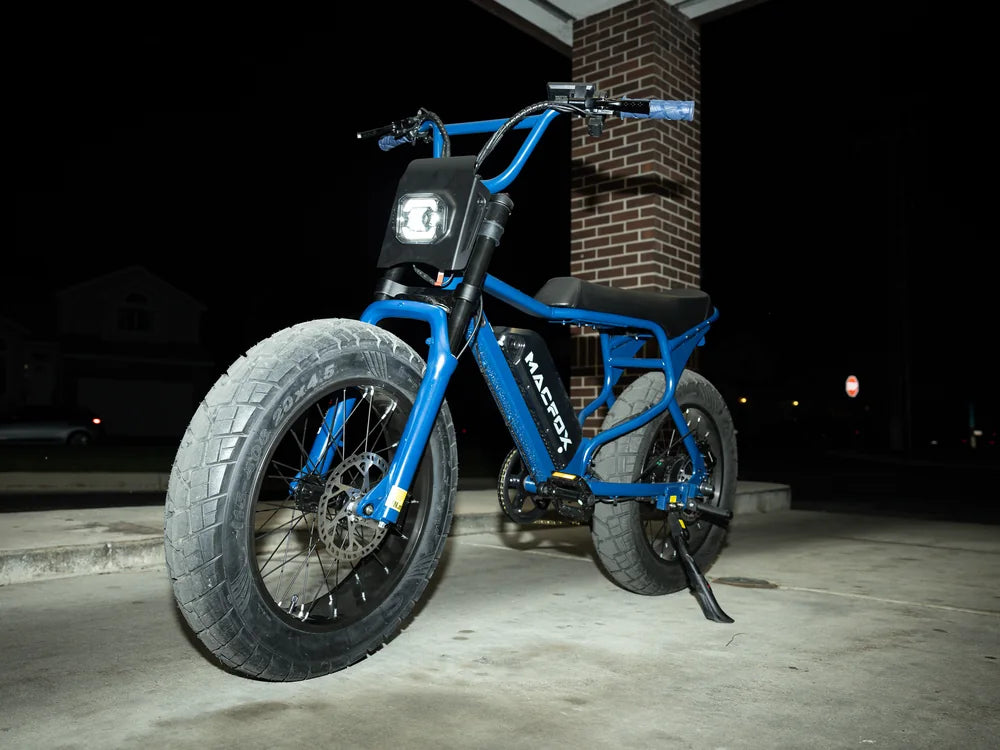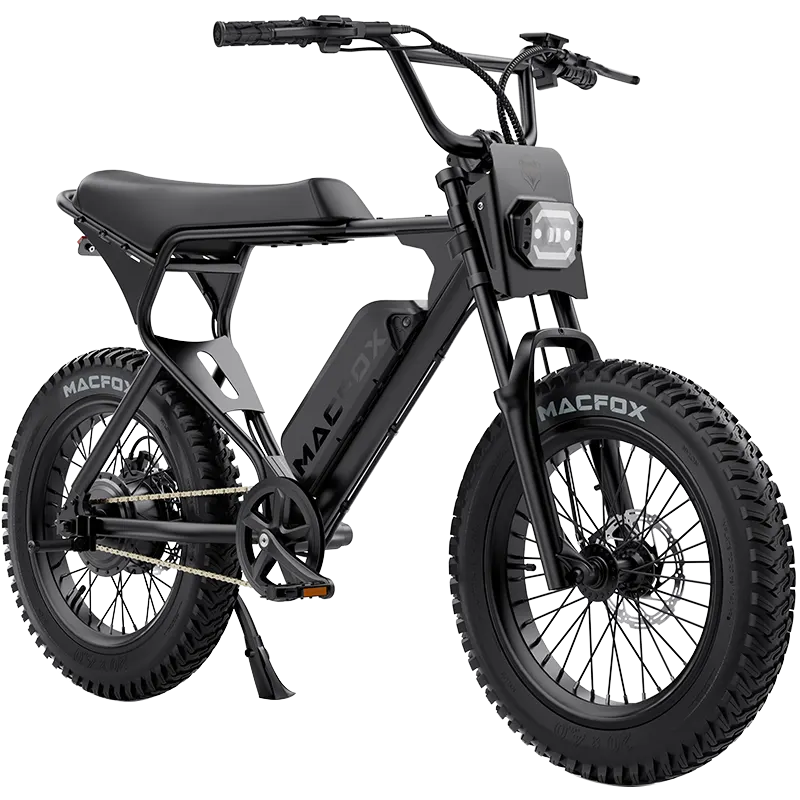

You load the e-bike onto a vehicle carrier, pull the front restraint down, and discover that it lands on the fender. Do not drive with that arrangement simply because the other straps are tight. A wheel hook is part of the carrier's primary retention system, and it must reach the location defined for that exact model.
Trace the Carrier's Primary Restraints

Read the loading diagram and list every required contact in order: tray, front restraint, rear strap, frame or axle attachment, and any secondary tie specified by the manufacturer. The names and number of these parts vary, so identify the carrier model before deciding what the front arm is meant to do.
Observe which component prevents forward, rearward, upward, and sideways movement. If the front arm is a required primary restraint, another strap cannot take over its job unless the carrier instructions describe that exact arrangement.
A Fender Is Not Automatically a Tire Contact Surface
With the vehicle parked, lower the arm slowly along its prescribed path. Stop when it first meets the fender. Do not compress the fender, shift the bike off-center, or move the arm to a convenient edge outside the illustrated zone.
Inspect for a light cable, mounting bracket, or fender support below the contact point. Pressure from the arm can be transferred into those parts even when the fender appears rigid. Repeat the observation at normal tire pressure with both wheels seated as the carrier requires.
A bus rack or wall-storage holder may use a different contact method. Its instructions do not establish what is acceptable on a vehicle carrier exposed to braking, turns, bumps, and sustained airflow.
Choose a Documented Restraint Architecture
Search the carrier maker's approved options for bikes with full fenders. A compatible alternative may restrain an axle, frame area, or another specified part, but that choice introduces its own bike-weight, wheelbase, receiver, and frame-contact limits.
Compare the complete setup through the e-bike hitch rack guide. Do not buy a single adapter before confirming that the carrier, adapter, vehicle, and bike are approved together.
Complete a Parked Pre-Drive Check
Load the electric bike only after every primary restraint reaches its documented position. Confirm that locks and straps close fully, loose ends are secured, and no brake control, wire, rotor, light, or fender hardware carries unintended pressure.
Removing the fender is not a quick default. First verify that removal is allowed and does not disturb wiring, required equipment, or mounting hardware. If the specified front restraint still cannot engage, change the carrier system. A successful driveway shake cannot validate a configuration the manufacturer does not permit.