
Electric Bike Definition in Missouri

- Class 1: Pedal-assist — the motor provides assistance only when the rider is pedaling, and the assistance stops once the e-bike reaches 20 mph.
- Class 2: Throttle-assisted — the motor can provide power via a throttle, and the assistance stops once the e-bike reaches 20 mph.
- Class 3: Pedal-assist — the motor provides assistance only when the rider is pedaling, and the assistance stops once the e-bike reaches 28 mph.
Motor power limit: Missouri law requires an electric bicycle’s motor to be less than 750 watts, regardless of whether it’s Class 1, 2, or 3. A vehicle that does not meet this limit falls outside the electric bicycle definition; its legal category depends on its full specifications.
Do You Need a License, Registration to Ride an E-Bike in Missouri?
Electric bicycles in Missouri are not subject to the same requirements as motor vehicles or all-terrain vehicles. This means electric bikes do not require vehicle registration, a certificate of title, a driver’s license, or proof of financial responsibility .
Missouri E-Bike Age Requirements
For Class 3 electric bicycles, Missouri law specifies that no person under the age of 16 may operate a Class 3 e-bike. However, a person under 16 may ride as a passenger on a Class 3 e-bike if the bicycle is specifically designed to carry passengers. In addition, all Class 3 electric bicycles must be equipped with a speedometer capable of displaying the vehicle’s current speed in miles per hour.
What are Missouri road riding rules?
In Missouri, electric bicycles can generally be ridden wherever traditional bicycles are allowed, such as bike lanes and multi-use paths. However, local authorities may restrict Class 1 or Class 2 e-bikes for safety or regulatory reasons—typically after public notice and a hearing—and Class 3 e-bikes are more likely to be prohibited on certain paths. In addition, for trails specifically designated as non-motorized with natural surfaces, e-bike access depends on local rules or posted signage.
Table: Cycling restrictions on different types of roads
| Location / Scenario | Can You Ride an E-Bike? | Applicable Class | Explanation |
|---|---|---|---|
| Bike lanes | ✅ Yes | Class 1 / 2 / 3 | If bicycles are allowed on the lane, e-bikes are generally allowed as well. |
| Multi-use paths / trails | ✅ Yes | Class 1 / 2 / 3 | Where bicycles are permitted, e-bikes are generally permitted. |
| Paths restricted after public notice & hearing | ⚠️ Possibly restricted | Class 1 / 2 | Class 1 and Class 2 e-bikes are normally allowed, but local authorities may prohibit them after public notice and a hearing if safety concerns exist. |
| Bike lanes or multi-use paths managed by local authorities | ⚠️ Possibly restricted | Class 3 |
|
| Nonmotorized natural-surface trails | ⚠️ Depends on local rules | Class 1 / 2 / 3 | The general “where bikes are allowed, e-bikes are allowed” rule does not apply; access is determined by the managing authority. |
Missouri State Parks E-Bike Rules
The Katy Trail and the open, developed sections of Rock Island Trail allow electrically assisted pedal-powered bicycles and tricycles with a maximum speed of 20 mph. Undeveloped sections of Rock Island Trail are not open for public use. Riding a Class 3 e-bike below 20 mph does not automatically make it eligible for these trails. Check other state parks’ access rules separately.
Can You Unlock or Modify an E-Bike?
In Missouri, changing an electric bicycle’s motor-powered speed capability or the way its motor engages requires a new label indicating the updated classification. Relabeling alone does not make a modified bike qualify as an electric bicycle: it must still meet the less-than-750-watt motor limit and the speed and assistance requirements for its class.
Do You Need to Wear a Helmet When Riding an E-Bike in Missouri?

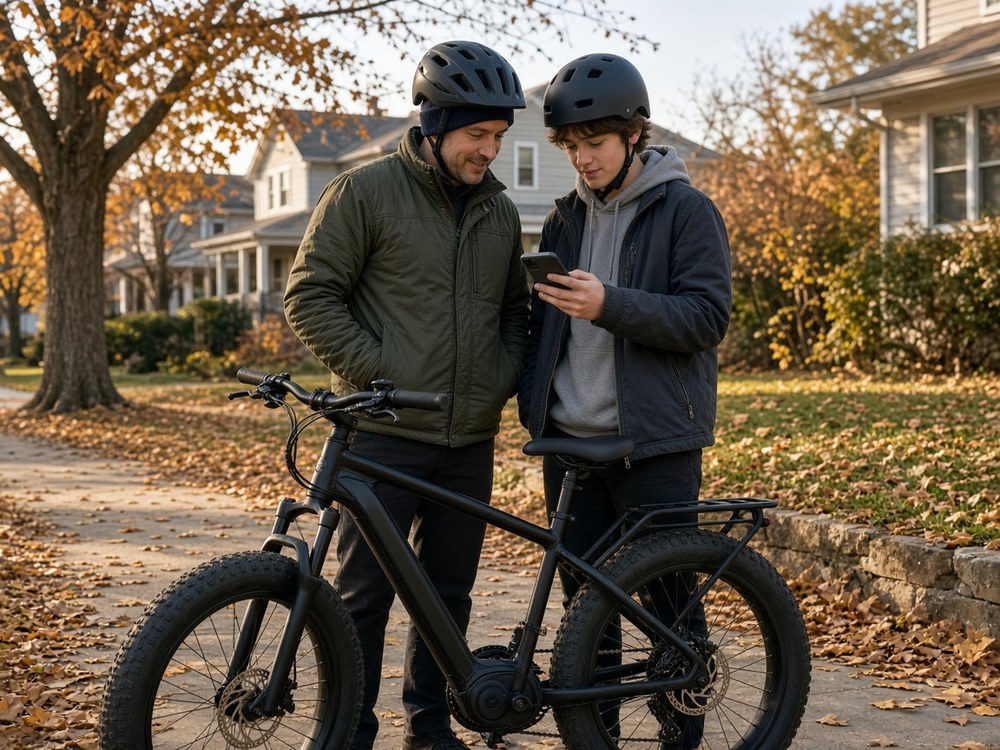
Missouri has no statewide helmet requirement that applies to all e-bike riders, but local rules may require one. Wear a properly fitted bicycle helmet on every ride, including when riding commuter e-bikes.
Night E-Bike Riding Safety 5 Tips
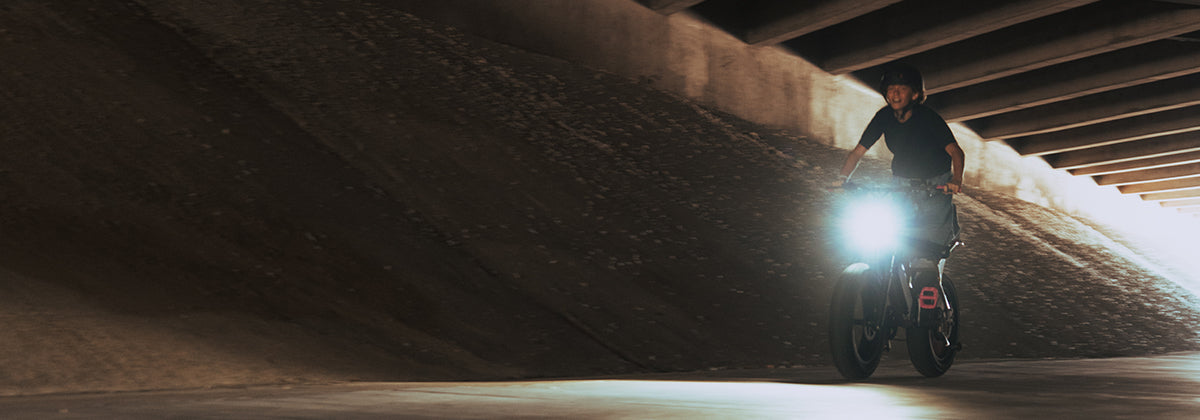
When riding a bicycle or electric bicycle on a Missouri street or highway from one-half hour after sunset to one-half hour before sunrise, state law requires the following minimum equipment:
1. Front light: A white light mounted on the bicycle or carried by the rider, visible from 500 feet under normal conditions.
2. Rear visibility: Either a red rear reflector (at least 2 square inches) or a red rear light, visible from 600 feet under normal conditions.
3. Pedal or rider reflectors/lights: Reflective material or lights on the pedals, crank arms, shoes, or lower legs, visible from 200 feet to the front and rear.
4. Side visibility: Reflectors or lights visible from the left and right sides at a distance of 300 feet.
5. In addition, the bicycle must be equipped with working brakes capable of stopping within 25 feet when traveling at 10 mph on a dry, level surface.
Considering Purchasing an Electric Bike?
Now that you’ve learned about the laws and regulations, if you’re considering purchasing a brand-new electric bike, this model might be of interest to you.
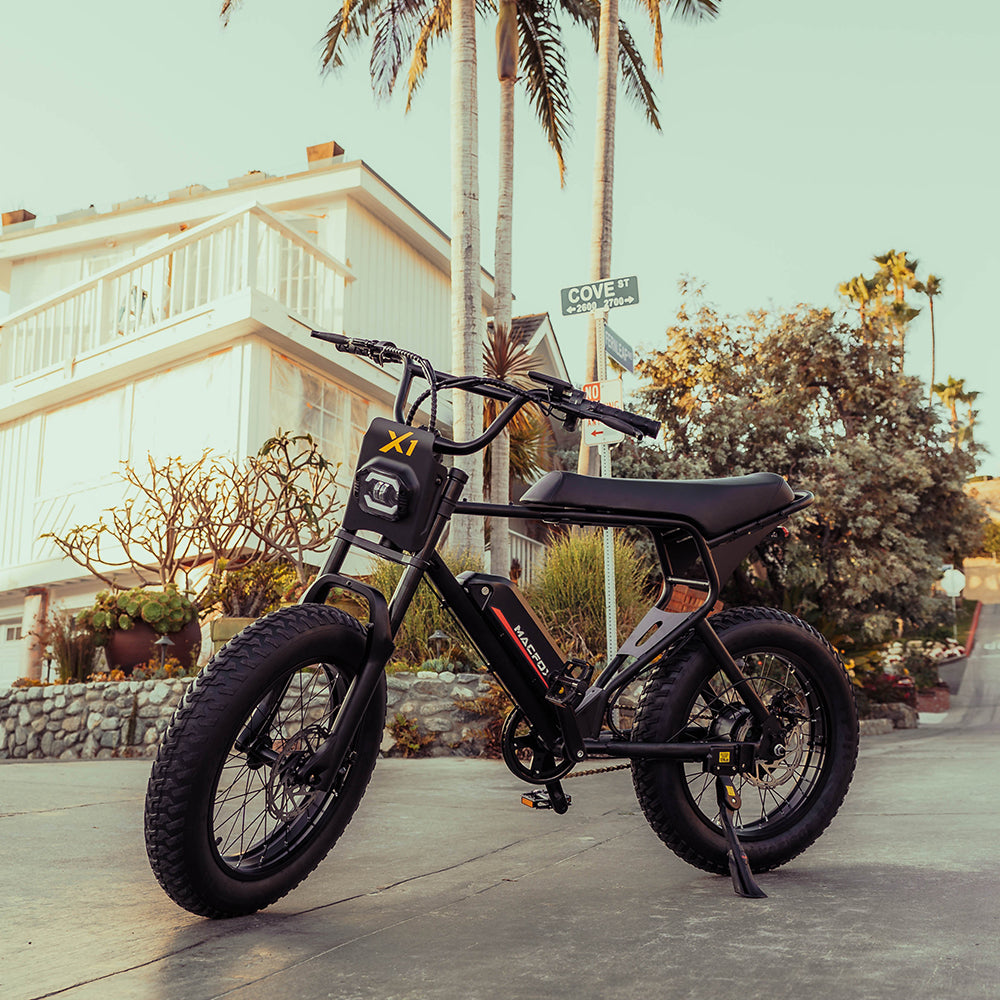
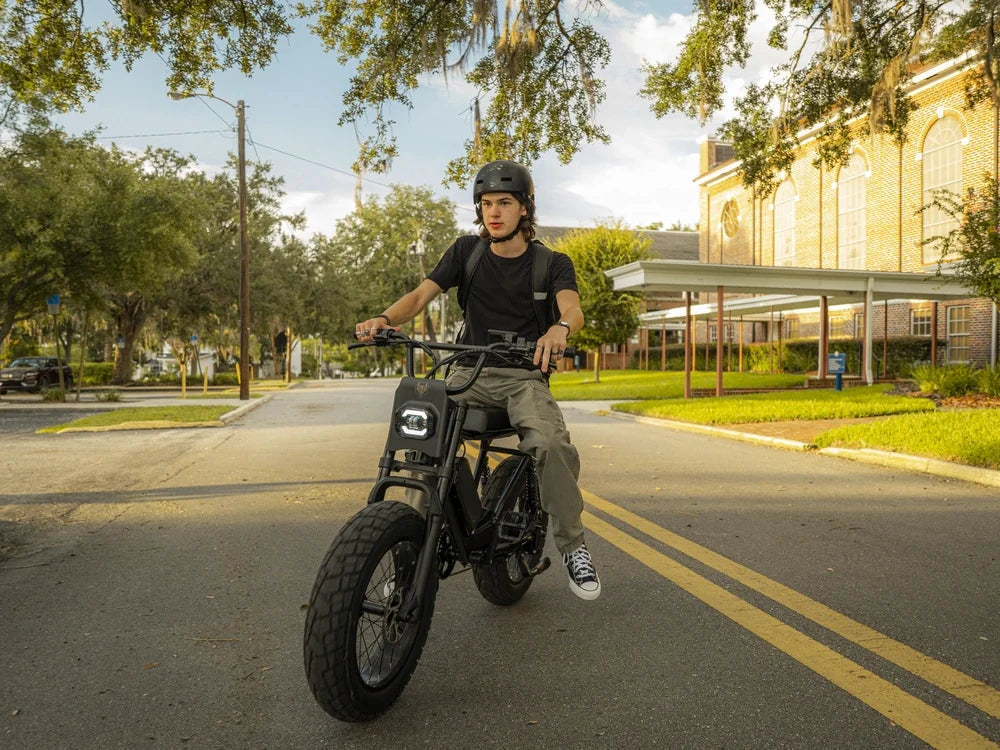
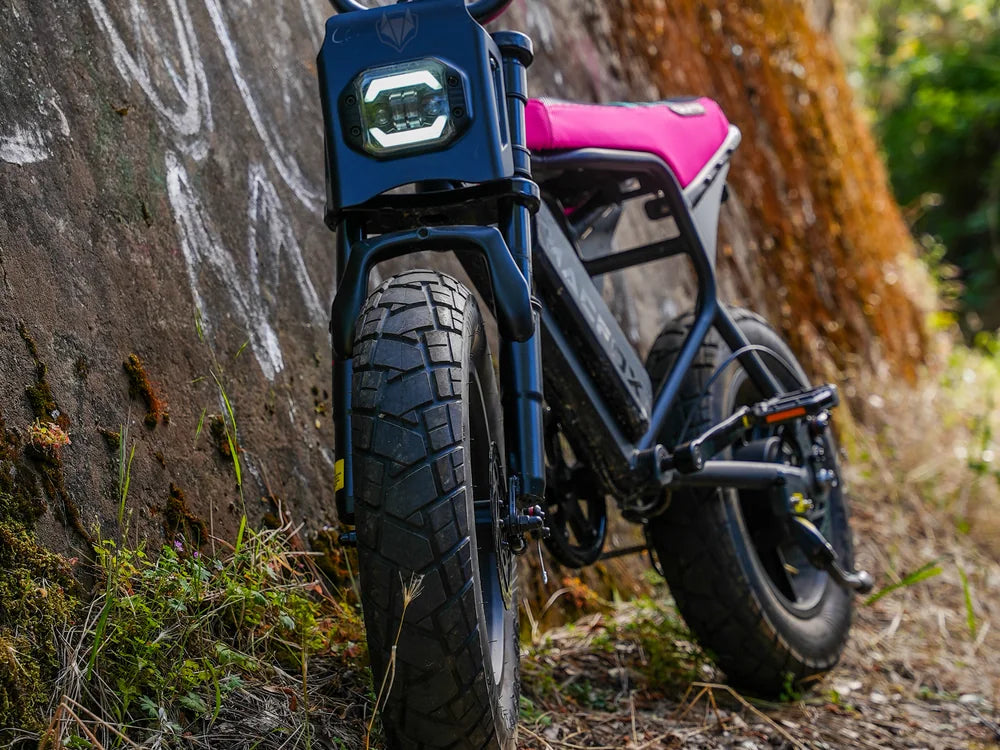
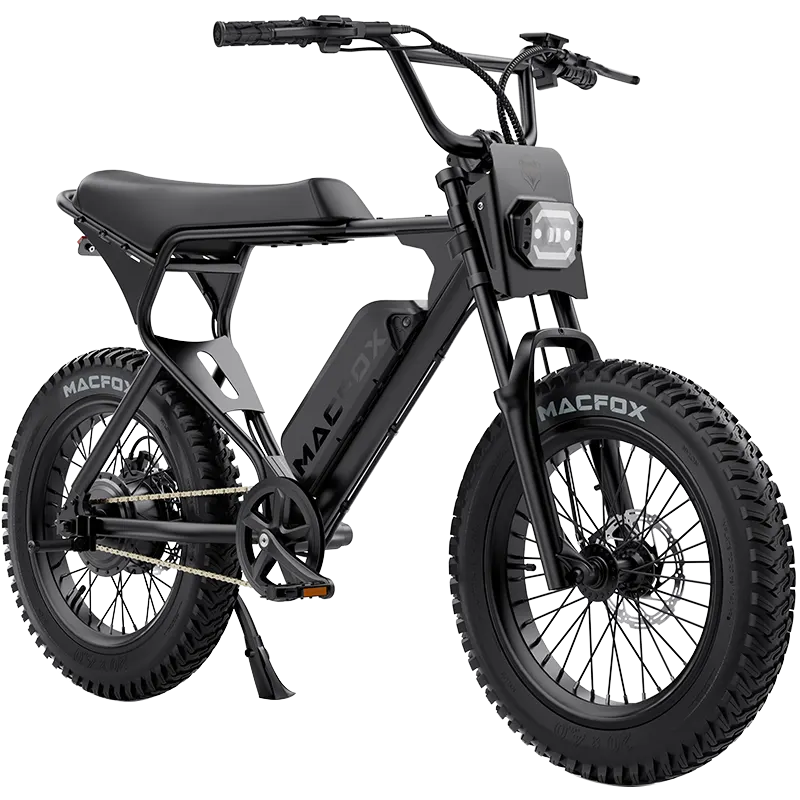
The Macfox X7 e-bike features a 500W nominal motor power, with a peak power of up to 750W, and a top speed of 20mph. It also has hydraulic brakes, front suspension, an adjustable thumb throttle, and fat tires. For commuting or leisure rides, compare its fit and handling with your route: make sure you can reach the controls comfortably and manage the bike through starts, turns, and stops.
Final Tips
Regulations may vary by municipality and by state park or trail authority—and because laws and policies can change over time—actual access rules and equipment requirements should always be confirmed through the latest local regulations, official notices, and posted signage. For specific situations such as commuting, on-road compliance, or vehicle modifications, or when legal responsibility is involved, it’s recommended to consult local authorities or a qualified professional for the most accurate guidance.
References / Sources :
Missouri State Parks: Katy Trail
Missouri State Parks: Rock Island Trail
Missouri Revisor of Statutes: Electric Bicycle Definition (301.010)
Missouri Revisor of Statutes