
Yes, you can ride an e-bike in light rain if the bike is in good condition, visibility is acceptable, and you avoid deep water. Normal rain on the frame is usually less risky than water forced into electrical connections, battery contacts, the display, controller area, motor wiring, brake surfaces, or bearings.
Do not treat an e-bike as waterproof. Heavy rain, flooded roads, pressure washing, deep puddles, saltwater, and repeated wet storage can turn a normal ride into a battery, wiring, braking, or corrosion problem. The safest answer depends on rain intensity, road depth, your route, and what you do after the ride.
Quick Answer: When Rain Riding Is Reasonable
| Condition | Ride or Avoid? | Why It Matters |
|---|---|---|
| Light rain on normal roads | Ride with caution. | Use lower speed, longer braking distance, lights, and a shorter route. |
| Steady rain with low visibility | Only ride if necessary. | Drivers see less, braking takes longer, and water collects around curbs and drains. |
| Heavy rain or thunderstorm | Avoid riding. | Visibility, traction, wind, and electrical exposure all become harder to control. |
| Standing water or flooded streets | Do not ride through it. | If you cannot see the bottom, you cannot judge depth, debris, or wiring risk. |
| Bike was submerged or shut off after water exposure | Stop and inspect first. | Repeated restarts can make a real electrical fault worse. |
If your main question is whether water can touch the bike at all, read can electric bikes get wet. This page is narrower: it is about deciding whether to ride in rain, how to ride safely, and what to check afterward.
A useful decision is to judge the ride by the worst part of the route, not the best part. A short stretch of clean wet pavement may be fine, but one flooded underpass, one fast downhill corner, or one street with poor lighting can change the answer. If you cannot keep the route shallow, visible, and predictable, postponing the ride is the safer choice.
Water-Resistant Is Not Waterproof

Most modern e-bikes are built to handle some road spray and light rain, but that does not mean the bike can be soaked, submerged, or washed like outdoor furniture. Water resistance is about managing normal exposure. Waterproofing would mean a much stronger level of sealing that riders should not assume unless the maker clearly states it.
The practical risk areas are the battery mount, charging port, display, controller housing, wiring connectors, brake components, bottom bracket area, wheel bearings, and rear motor cable path. For a deeper explanation of ratings and sealing language, use the e-bike waterproof guide, but avoid inventing a rating for a bike when the product page or manual does not state one.
A light wet commute is different from riding through a flooded intersection. Puddles create splash pressure, and moving water can push moisture into places normal rain would not reach. That is why the best wet-weather habit is not only riding slower; it is choosing a route that avoids water depth.
Also remember that rain affects more than electronics. It changes how quickly tires grip, how long brakes take to bite, how well drivers can see you, and how much debris is pushed toward the shoulder. A bike that can tolerate light rain still needs a rider who changes speed, distance, and route choice for the conditions.
Before You Ride: Wet-Weather Checklist
- Check the battery is seated and locked. A loose battery connection can become worse when vibration and moisture are present.
- Close the charging-port cover. Never start a ride with the charge port exposed to rain or spray.
- Test both brakes before leaving. Wet pads and rotors can feel weaker until they clear water.
- Inspect tires and tread. Worn tires lose grip faster on painted lines, metal plates, leaves, and oily pavement.
- Turn on lights early. Rain reduces driver visibility before the sky looks fully dark.
- Choose a route with fewer puddles. Avoid low streets, flooded curbs, construction zones, and fast traffic when possible.
If you are still choosing an electric bike for rainy commuting, look past the headline specs. A practical wet-weather setup should have predictable brakes, useful lighting, stable tires, a comfortable riding position, and enough range that you are not rushing home with a low battery in bad weather.
For paved work routes, a commuter e-bike is usually the first comparison. If your route includes gravel shoulders, rough pavement, park paths, or slick debris, a fat tire e-bike may feel more planted, though wider tires do not remove the need to slow down.
How to Ride Safely on Wet Roads
Rain riding rewards smooth inputs. Accelerate gently, brake earlier, and avoid hard cornering. A throttle burst that feels fine on dry pavement can make the rear tire step out on wet paint, metal covers, leaves, or oil that has risen to the road surface.
- Lower your speed before turns. Brake while upright, then turn smoothly.
- Leave more following distance. Wet roads stretch stopping distance for you and for cars around you.
- Avoid slick surfaces. Painted lines, crosswalk paint, metal grates, bridge plates, leaves, and mud can surprise you.
- Do not cut through deep puddles. Ride around them or dismount if the road is blocked.
- Use a lower assist level when traction is poor. Smooth power is easier to control than sudden torque.
- Keep both hands available. Rain is not the time to ride one-handed with a phone or umbrella.
If your brakes feel weak, noisy, or inconsistent after water exposure, stop and inspect them before continuing at speed. Use the e-bike brake troubleshooting guide for brake-specific symptoms rather than assuming every wet-road issue is electrical.
Puddles, Standing Water, and Flooded Streets
The safest rule is simple: if you cannot see the bottom, do not ride through it. Standing water can hide potholes, curbs, broken glass, drains, wires, or uneven pavement. It can also reach the battery mount, motor cable, controller area, or bearings faster than you expect.
Short shallow splashes are not the same as deep water. The problem grows when the wheel throws water upward at speed, when the bike sits in a puddle, or when water reaches electrical connectors. Saltwater and dirty floodwater are especially harsh because they can leave conductive residue and accelerate corrosion.
If a puddle is unavoidable and clearly shallow, coast through slowly without hard acceleration, then check brake feel afterward. Do not enter at speed for fun or to test the bike. Splash force rises quickly, and the same puddle that looks harmless from the saddle may be deep enough near the curb to hit components you expected to stay dry.
If the bike shuts off, flashes an error, loses assist, smells hot, or behaves unpredictably after water exposure, power it down and move it somewhere dry. Continue with the Macfox e-bike troubleshooting guide only after the bike is safe to handle. Repeatedly restarting a wet electrical system is not a good diagnostic method.
What to Do After a Rainy Ride
Post-ride care is what separates a normal rainy commute from long-term damage. The goal is to remove surface water, keep moisture away from charging points, and let hidden damp areas dry before storage or charging.
- Power the bike off. Do this before wiping around the battery, display, or connectors.
- Wipe the frame and drivetrain. Use a towel, not a pressure washer.
- Dry around the battery mount and charge port. Do not charge while the port or battery contacts are damp.
- Let the bike air out. Store it in a covered, ventilated place rather than trapping moisture under a tight cover immediately.
- Check brake feel before the next ride. Light surface moisture can clear quickly, but grinding or weak braking needs attention.
- Watch for rust-prone areas. Bolts, chain, exposed fasteners, and scratched metal need more care after repeated wet rides.
For a step-by-step drying routine, use how to dry a bike after rain. If the bike needs to be parked outside during wet weather, separate that question from riding and read leaving an e-bike in the rain because storage exposure lasts longer than a commute.
Charging should wait until the bike and battery area are dry. The e-bike battery charging tips covers safe battery habits, while the bike rust prevention guide is useful if rain riding is becoming a regular part of your week.
Tires, Pressure, and Visibility in Rain
Do not randomly drop tire pressure just because it is raining. Too much pressure can reduce comfort and grip on rough wet pavement, but too little pressure can make the bike sluggish, increase pinch-flat risk, and reduce stability. Start with the tire sidewall and bike guidance, then adjust carefully for rider weight, load, and surface.
Use the electric bike tire pressure guide when the pressure question becomes more important than the rain question. For visibility and comfort, waterproof outer layers, gloves, and eye protection can matter as much as the bike setup; the waterproof commuting gear guide covers that supporting gear without turning this page into a shopping list.
Where Macfox Fits in Wet-Weather Riding

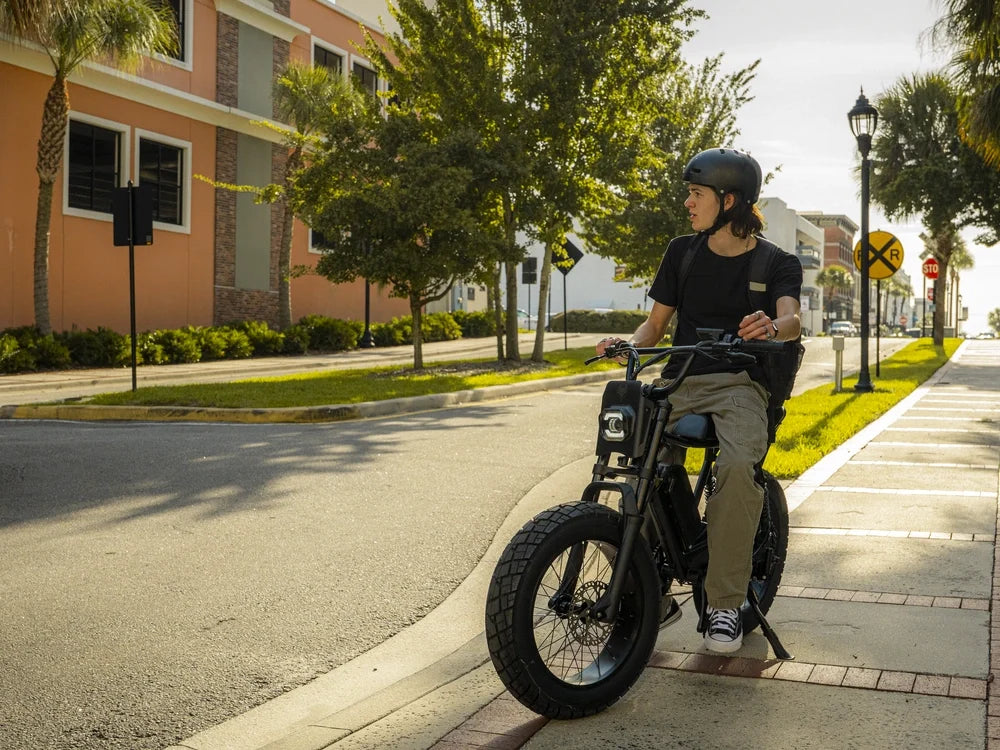
For daily city routes, the Macfox X1S e-bike is the Macfox model to consider when your rainy riding is mostly paved commuting, errands, and short trips where comfort, lighting, brake checks, and route choice matter more than off-road traction.
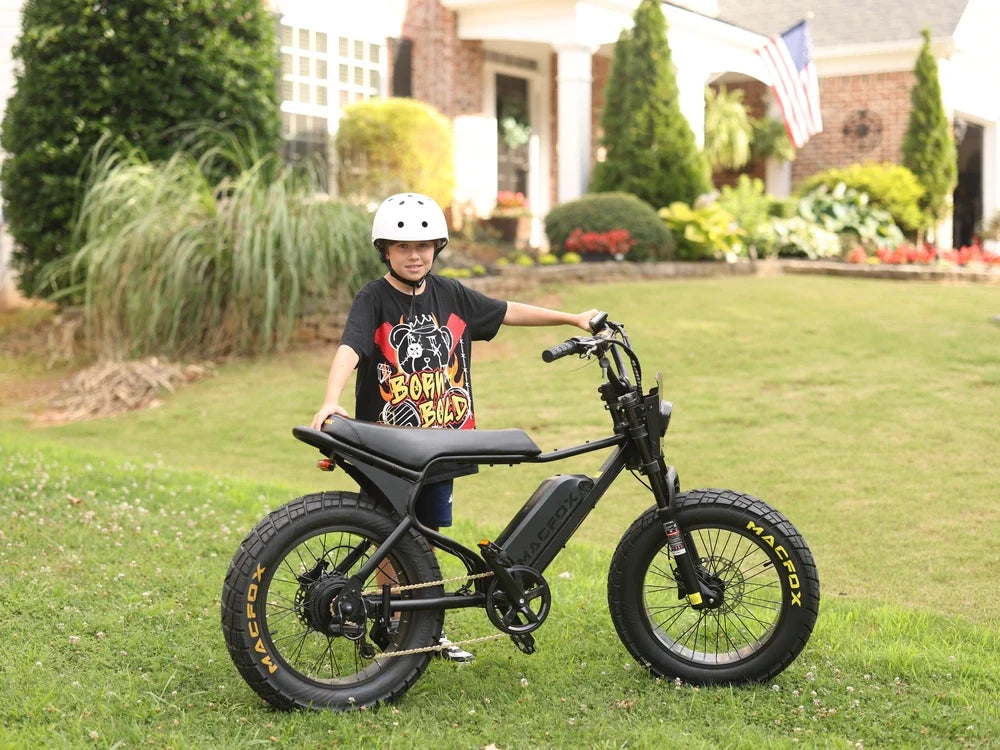
For rough pavement, mixed surfaces, or riders who prefer a wider-tire feel, the Macfox X7 e-bike is the more relevant Macfox example. That does not mean it should be ridden through floodwater. Fat tires can help stability and grip, but they do not make electrical parts waterproof.
If you are deciding between models for year-round use, start with route and storage, then compare tire type, battery habits, braking confidence, and post-ride care. The e-bike buyer guide is a better next step than choosing only from a rainy-day feature list.
When Not to Ride
- Do not ride through floodwater. Hidden depth and debris create both crash and electrical risk.
- Do not ride in lightning or severe wind. Bike control and road visibility can change fast.
- Do not ride with weak brakes. Rain already increases stopping distance.
- Do not ride after the bike was submerged. Let it dry and get support before testing under load.
- Do not ride if the display, throttle, assist, or motor behaves unpredictably. Water exposure should be treated as a real clue, not ignored.
FAQ
Can I ride an e-bike in light rain?
Yes, light rain is usually manageable if the bike is in good condition, the charging port is closed, visibility is safe, and you avoid deep water. Ride slower, brake earlier, and dry the bike afterward.
Are e-bikes waterproof?
Do not assume that. Many e-bikes are water-resistant enough for normal road spray and light rain, but that is different from being waterproof, washable with pressure, or safe to submerge.
Will rain damage the battery?
Rain is most risky around the battery mount, contacts, charging port, and damaged seals. Keep the port closed, avoid deep water, dry the area after the ride, and do not charge while anything is wet.
Can I charge an e-bike after riding in rain?
Only after the charge port, battery area, and charger connection are dry. If water may have reached the battery contacts or the bike behaved strangely, wait and inspect before charging.
Should I lower tire pressure for wet roads?
Not automatically. Use the recommended tire range first. Adjust only within a safe range for rider weight, load, and terrain, because too-low pressure can hurt handling and increase flat risk.
What if my e-bike shuts off after rain?
Stop riding, power it down, move it somewhere dry, and inspect visible connectors, the battery area, and the display. If it repeats, contact support or a qualified technician instead of restarting it again and again.
Bottom Line
Riding an e-bike in light rain can be reasonable, but wet-weather riding is about limits. Avoid heavy rain, flooded streets, deep puddles, pressure washing, wet charging, and long wet storage. Ride smoothly, keep braking distance generous, dry the bike after the ride, and treat any water-related electrical symptom as a reason to stop and inspect.