
no—especially if it is a flat tire ebike rather than a regular bicycle. Once a tire loses too much air, the bike becomes harder to control, the tire and tube take more direct stress, and the rim is more likely to be damaged. On an electric bike, this problem gets worse faster because the bike is heavier and often carries more load. In most cases, the safer move is to stop, inspect the tire, and fix the problem before riding again.
Why riding on a flat tire is a bigger problem on an eBike

A flat tire is not just a comfort issue. It changes how the whole bike feels and behaves. Normally, tire pressure helps absorb impacts from the road and supports the bike’s weight. Once the tire goes soft or completely flat, that support drops sharply. What used to be a small puncture can quickly turn into a damaged tube, torn tire, or bent rim.
This matters even more on an electric bike. Because the bike is heavier, the wheel takes more load once the tire is no longer doing its job. The result is more rolling resistance, more drag, and a greater chance that a simple puncture becomes a bigger repair. That is why a flat tire ebike situation should be taken more seriously than the same problem on a lighter, non-electric bike.
What happens if you keep riding a flat tire eBike?
If you keep riding a flat tire ebike, the problem usually spreads beyond the tire itself. The first parts to suffer are the tire and inner tube, but the rim, handling, braking feel, and overall stability can also be affected.
1. The inner tube and tire
These are usually the first parts to get damaged. What starts as a small puncture can become a pinch flat, tear, or sidewall problem if you keep going. Once the tire loses pressure, it can no longer absorb impacts normally, so the tube and tire take on more direct compression and friction. In simple terms, something that could have been a quick patch may turn into a full replacement.
2. The rim
A lot of riders assume a flat only damages the tire, but that is not always true. When the tire is properly inflated, it absorbs much of the impact from potholes, curbs, rough pavement, and speed bumps. Once it is flat, that cushioning effect is greatly reduced, and the force is transferred more directly into the rim. That can leave dents, deformation, or problems with tire seating later on. On an eBike, this usually happens faster because the bike is heavier.
3. Handling and braking performance
A flat tire does not just damage parts—it also changes how the bike rides. If the front tire is flat, steering can start to feel vague and unstable. If the rear tire is flat, the bike can feel draggy, unsettled, and harder to balance. Braking also becomes less predictable because the tire is no longer supporting the bike properly or maintaining normal grip. The real danger is not only whether you damage the tire, but whether the bike starts becoming difficult to control.
4. Overall ride quality
A flat tire affects more than one part of the bike. Rolling resistance increases, the bike feels heavier, and correcting direction takes more effort. On an electric bike, these changes feel more obvious because the bike already carries more weight. Once proper tire support is gone, a small issue can get bigger very quickly.

What should you do right after a flat tire?
1. Stop first
Do not rush to keep riding. If the tire still has a little support and you only need to get to a safer place, move very slowly. But if the tire is clearly collapsed—especially the front tire—the safer move is usually to get off and walk the bike.
2. Decide whether it is a small roadside issue or a bigger one
Not every flat can be handled the same way. A small nail or a slow leak may still be manageable on the roadside. But if the tire sidewall is cut, the tire is visibly deformed, the rim looks damaged, or the rear wheel is complicated to remove, the better question is not “Can I fix it here?” but “Will I make it worse if I keep trying?”
3. If you have tools, do a temporary repair
If you have basic tools with you, a temporary repair is usually better than forcing the bike home on a flat. The practical order is simple:
-
Remove the wheel
-
Take out the tube
-
Check the tire for nails, glass, or sharp debris
-
Find the leak
-
Decide whether patching or replacing the tube is faster
For most riders, replacing the tube is the easier roadside fix if they already have a spare.
4. Stop using “Can I still ride it?” as the main question
At this point, the better question is: Will riding farther turn a small repair into a bigger one?
If the tire is fully flat—especially in the front—walking the bike is usually the smarter choice. If you only need to get out of a dangerous spot, move it very slowly and only for a very short distance. That should be treated as getting to safety, not continuing the ride.
5. Do not rush back onto the road before checking everything
Once you are somewhere safe, do not just pump the tire back up and roll out again. Check the full tire and wheel system first:
-
Look for debris still stuck in the tire
Small nails, glass shards, metal pieces, or sharp stones can still be lodged inside. If something remains in the tire, a fresh tube can go flat again almost immediately. -
Check the kind of tube damage
A single small hole usually suggests a puncture. Two holes close together often suggest a pinch flat. A larger tear may mean the tube is not worth patching. -
Inspect the rim for dents or damage
If the bike was ridden after the tire lost air, look closely for dents, warping, or sharp spots on the rim edge. -
Make sure the tire bead is seated correctly
If the tire is not sitting evenly on the rim, reinflating it can create wobble, bulges, or unstable handling. -
Confirm the pressure is back in the proper range
If the tire is still too soft, you are still at risk of another pinch flat, tire damage, or rim damage.
How far can you go with an e bike flat tire?
This is one of the most common questions, but there is no universal safe distance for an e bike flat tire. Whether you can move the bike at all depends on three things:
-
whether the tire is completely flat or only low
-
whether it is the front or rear wheel
-
whether the ground is smooth or rough
If the tire is only slightly low and still has some support, you may be able to move very slowly for a short distance to a safer location, such as the side of the road or a nearby parking area. But that is really about getting out of danger, not continuing the ride.
If the tire is completely flat—especially the front tire—the safest advice is simple: get off the bike. At that point, it is no longer about how far you can go. It is about how much damage and risk you are willing to accept for a little extra distance.
Small repair kit worth carrying
If you ride regularly, a small repair kit can save a lot of hassle when a flat happens.
-
Portable pump
Useful for slow leaks or reinflating after a tube change. -
Spare inner tube
Usually faster than patching on the roadside. -
Tire levers
Essential for removing the tire. -
Multi-tool
Helpful for basic bolts and quick adjustments.
For everyday commuting, these four items are usually enough to handle a basic flat without turning it into a much bigger problem. For more details, see: How to Avoid Flat Tires on Electric Bikes
A fat tire eBike worth considering
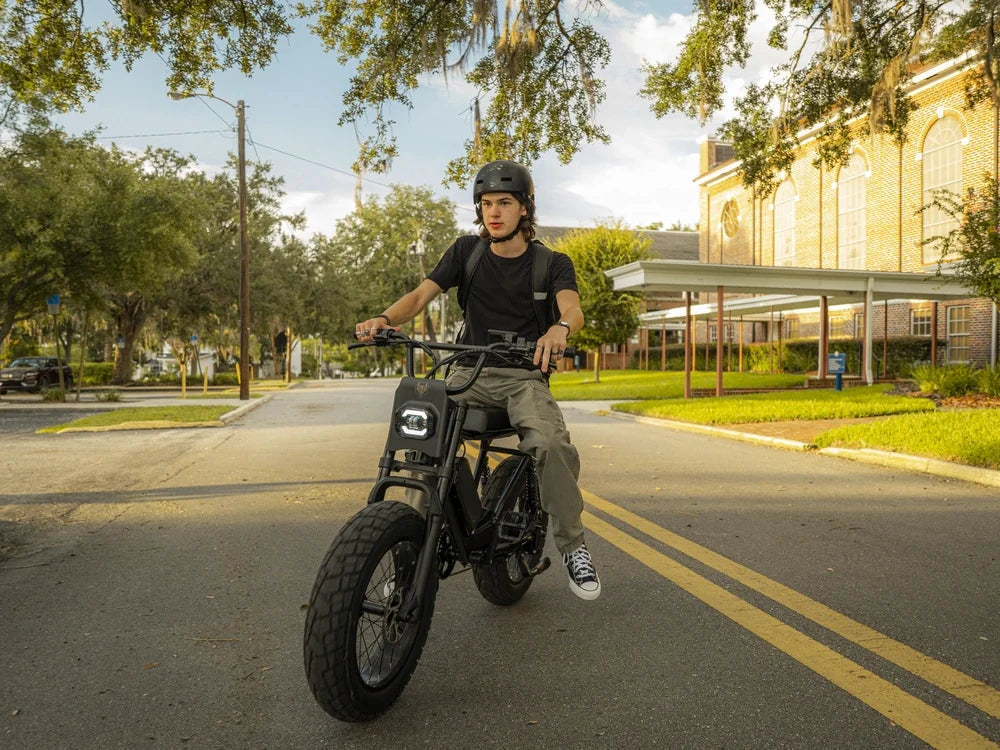
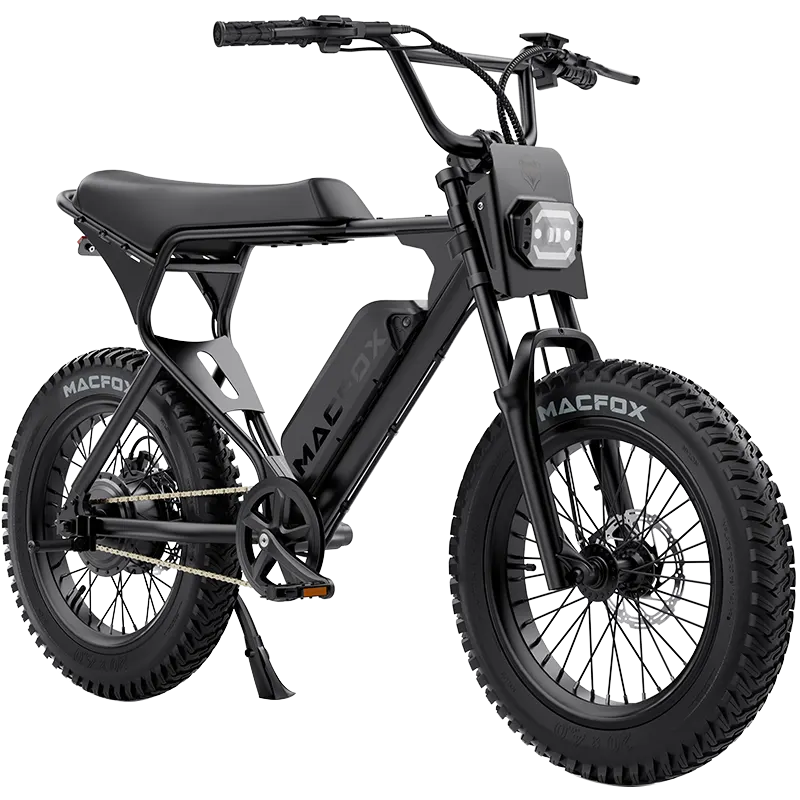
If you want a fat tire ebike that feels more stable on rough pavement, speed bumps, gravel edges, and uneven city connectors, the Macfox X7 is worth considering. Its strength is not just the wide tires themselves, but the mixed-size setup: 20×4.5'' in the front and 20×5.0'' in the rear. Compared with a more typical commuter eBike, that wider footprint creates a more planted ride feel and better tolerance for imperfect roads.
Add front suspension and hydraulic disc brakes, and the result is a bike that feels more confident and controlled when the surface is less than ideal.
Key specs:
-
Tire size: 20×4.5'' front / 20×5.0'' rear
-
Tire highlight: wide fat-tire setup for more stability, confidence, and all-around road tolerance
-
Tire upgrade: improved durability and puncture resistance
-
Suspension: front suspension
-
Brakes: hydraulic disc brakes
-
Motor: 500W, 750W peak
-
Top speed: 20 mph
-
Range: 35–70 miles
-
Bike weight: 87 lbs
FAQ
Can you ride a bike with a flat tire?
Usually, no. A flat tire can damage the tube, tire, rim, and make the bike harder to control, especially on an eBike.
What happens if I ride my ebike with a flat tire?
You may turn a small puncture into damage to the tire, tube, rim, and overall ride stability. The heavier weight of an eBike makes this happen faster than on a regular bike.
Can you ride an electric bike when the battery is flat?
Yes, in most cases you can still pedal it like a regular bike, but motor assist will be gone and the bike will feel heavier and harder to ride than a standard bicycle.
What is the tire pressure for a Macfox ebike?
The safest approach is to follow the tire pressure range printed on the tire sidewall. For fat tires, pressure may be lower on softer terrain, but the right PSI still depends on your tire, riding surface, and load.