
A bike can be a useful low-impact way to stay active when your knees are uncomfortable, provided the fit, pedaling effort and riding conditions suit you. The best bike for bad knees is not automatically the one with the biggest motor or softest seat. It is one you can mount, pedal and stop on comfortably, without forcing your knee through a painful movement.
Knee pain has different causes. If pain is persistent, follows an injury or limits everyday movement, get advice from a qualified health professional before choosing cycling as exercise. A bike is not a treatment for every knee condition.
Why Cycling May Suit Riders With Knee Discomfort

Cycling avoids the repeated foot-strike impact of running, and the effort can be adjusted. That can make it an option for some riders who find higher-impact exercise uncomfortable. It does not mean cycling places no load on the knees or that every ride will be pain-free.
Indoor and outdoor cycling also ask different things of you. A stationary bike avoids traffic, uneven surfaces and the need to balance or put a foot down suddenly. An outdoor bike adds those demands, so consider your confidence and mobility as well as how pedaling feels.
What to Look for in a Bike for Bad Knees
1. Frame Size and Fit
Start with a frame you can get on and off without a difficult step or a large leg swing. Check reach to the handlebars and brakes, and whether you can support the bike at a stop. A step-through frame can make access easier, but the rest of the fit still needs to work.
A suitable saddle height leaves a slight bend in the knee at the bottom of the pedal stroke. Too little or too much reach can make pedaling uncomfortable. Adjustable saddle height and position are useful when you need to fine-tune fit; a fixed moped-style seat offers less adjustment than a conventional seatpost.
2. Comfortable Pedaling Effort
On a multi-speed bicycle, an easier gear lets you pedal with less force per stroke. Change gear before a climb rather than waiting until you are pushing hard. Choose a manageable pace instead of forcing a resistance that causes discomfort.
Single-speed e-bikes work differently. The mechanical gear ratio stays fixed, while motor assistance can reduce the effort needed to move the bike. Assistance is not another mechanical gear and cannot correct an unsuitable saddle position or painful range of motion.
3. Predictable Pedal Assistance
When trying an e-bike, pay attention to how assistance starts, increases and stops. Begin with a low setting in a clear area. You should feel able to control the bike through turns and stops, not just when riding straight.
Motor wattage alone does not tell you whether a bike will suit your knees. Fit, the assistance response, terrain and the load you carry all matter. There is no universal minimum motor rating that makes cycling comfortable for a rider with knee pain.
4. Tires, Suspension and Handling
Tires and suspension can reduce some road vibration, but they cannot remove every bump or compensate for a poor fit. Start with smooth, familiar surfaces and follow the recommended tire-pressure range.
Check how the bike feels when pushing it, turning slowly and parking. A bike that feels comfortable under power may still be difficult to move when the motor is off. If walk assistance matters to you, confirm that the particular bike has it and learn how to use it before relying on it.
5. Range and Everyday Practicality
Plan a short route with an easy way home. An e-bike battery needs enough charge for the return journey; published maximum range is not a promise for your route. Hills, rider load and high assistance can reduce the distance available.
Storage and charging are part of the choice, too. Lifting a bike up steps may be more demanding than the ride itself. Test those everyday movements where possible.
Where the Macfox X1S Fits

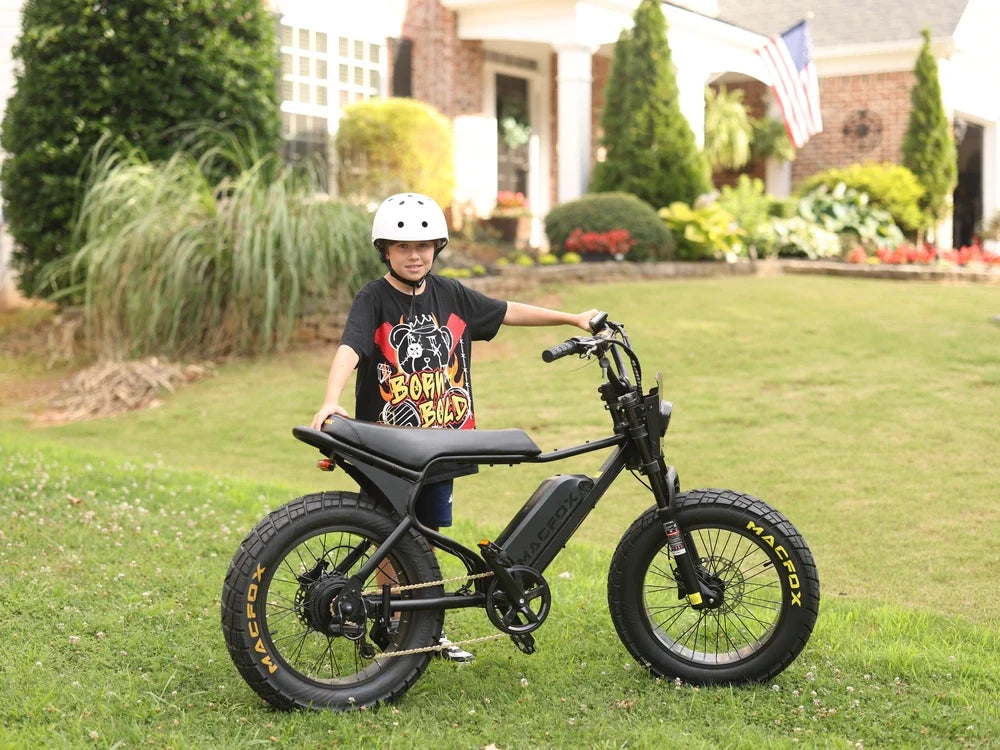
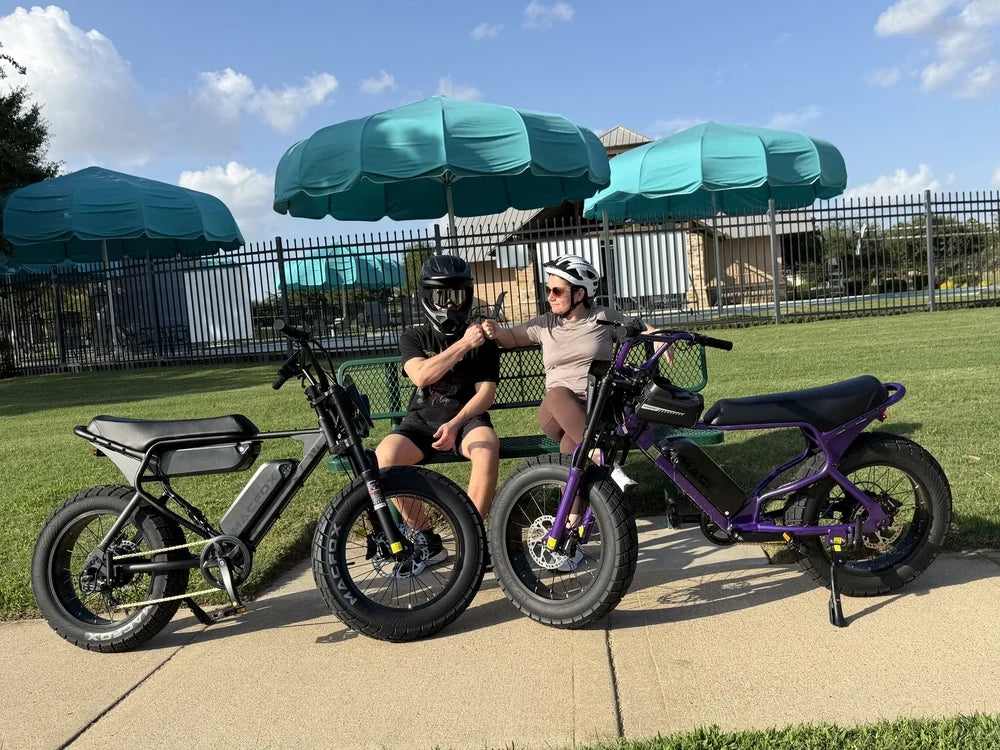
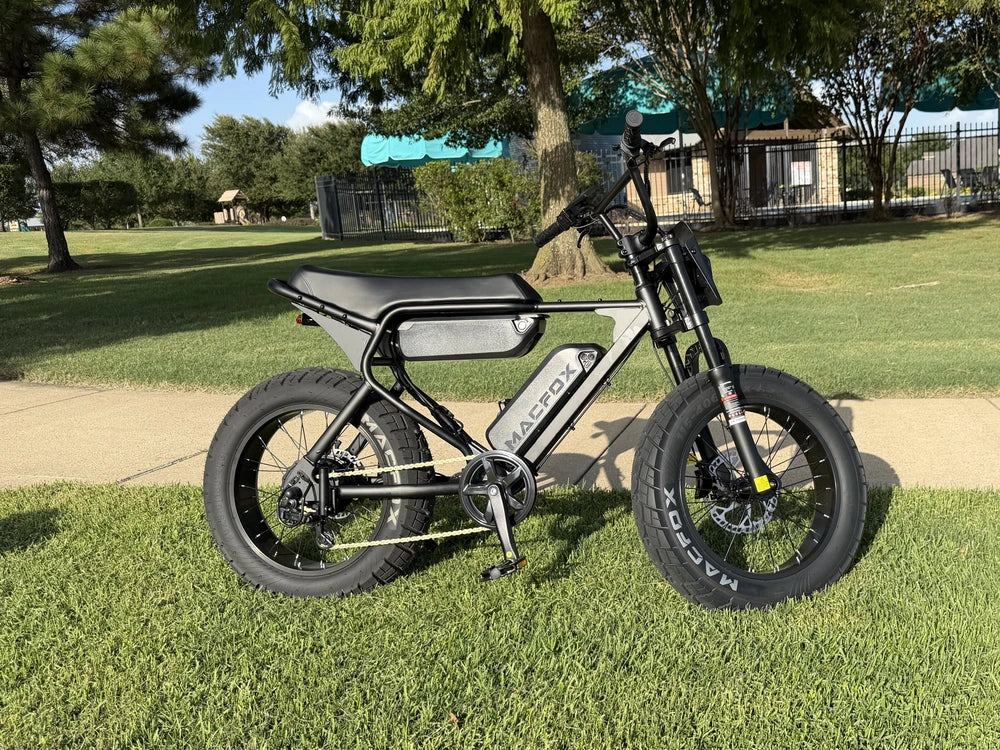
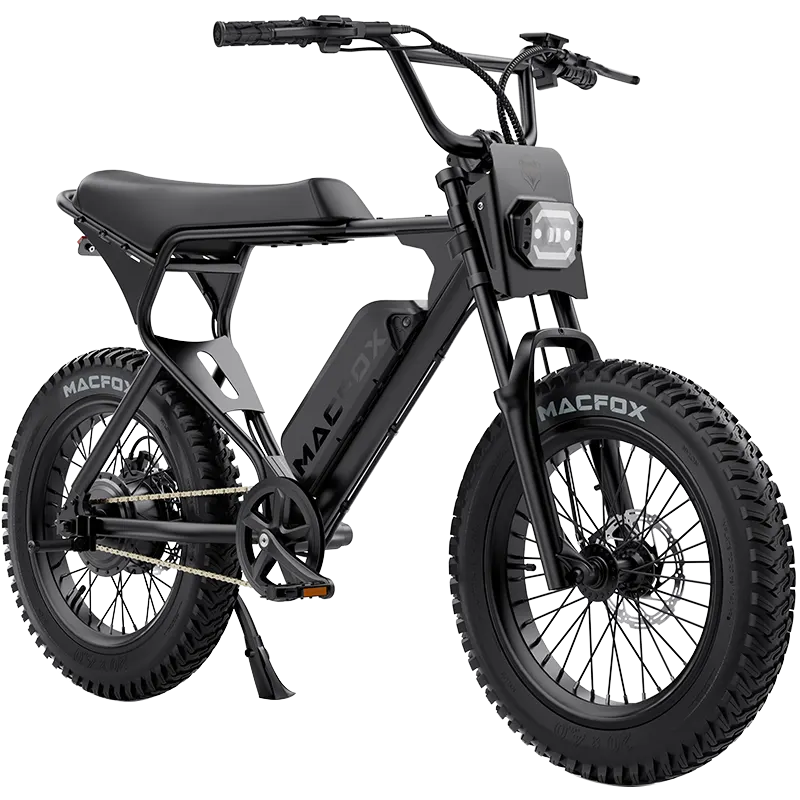
The Macfox X1S offers a single-speed drivetrain, motor assistance, front suspension and 20 × 4.0 tires for everyday riding. It does not have a Shimano seven-speed derailleur. Its extended moped-style seat also differs from a height-adjustable bicycle saddle.
If you are considering electric bikes for young riders, check fit and control first. With knee discomfort, try the complete pedaling motion and make sure mounting, stopping and moving the bike are manageable. Choose an adjustable-fit alternative if the X1S seating position does not suit you; motor assistance is not a substitute for that fit.
Quick Tips for Getting Started
- Start gently: use a short session with easy resistance, increasing activity gradually only if it remains comfortable.
- Choose a simple route: smooth surfaces and a nearby turnaround reduce the need to push through a difficult climb.
- Check your position: avoid forcing your reach to the pedals or handlebars. A qualified bike fitter can help assess adjustments.
- Listen to symptoms: stop if pain becomes sharp or increases. Seek professional advice if discomfort persists rather than trying to ride through it.
- Prepare for stops: wear a helmet and practise braking, dismounting and supporting the bike in a quiet area.
If riding is already causing discomfort, learn more about knee pain while cycling. For choosing a bike, keep the priority simple: comfortable movement, manageable effort and control throughout the ride.
FAQs
Is cycling good for bad knees?
It can be a suitable low-impact activity for some knee conditions, but the right exercise and effort depend on your symptoms and individual needs. Comfortable fit matters, and persistent or worsening pain needs professional assessment.
Are electric bikes better than regular bikes for knee discomfort?
Motor assistance can reduce pedaling effort, particularly on a climb. It does not guarantee comfort, and an e-bike's weight, seating position and handling may make it less suitable for some riders.
Do more gears always mean a better bike for bad knees?
No. A useful range of easy gears can help you manage effort, but the number alone says little about fit. On a single-speed e-bike, test the fixed pedaling ratio and assistance together.