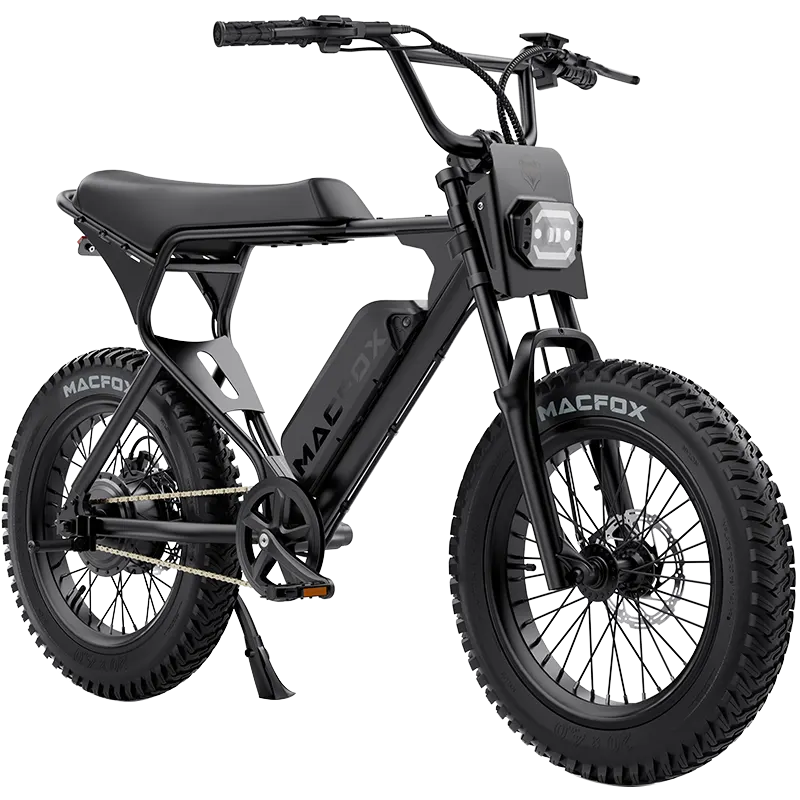

You turn the pedals, the chain moves, but the rear wheel does not drive the bike forward. That symptom can look electrical because it is happening on an e-bike, but the first useful evidence is mechanical: which rotating part stops passing motion to the next one?
Switch the bike off and do not use the throttle to work around the problem. If pedal drive is unreliable, riding until the battery runs out can leave you without a dependable way home.
Follow the Motion From the Crank

Support the electric bike securely with the rear wheel clear of the ground. If its weight makes that unsafe, leave the test to a shop. Turn the crank slowly by hand and watch the front chainring. A pedal moving around does not prove that the crank is firmly driving the chainring.
Next, stop all movement and inspect the chain. Is it sitting on both sprockets, broken, trapped by a guard, or running beside the teeth? Remove only a loose outside object that can be lifted away without disturbing a guard or drivetrain part. A displaced or damaged chain needs its own repair before you test anything farther downstream.
Confirm the Chain Reaches the Rear Sprocket
Turn the crank again by hand. Watch a marked chain link travel to the rear, then watch the rear sprocket. This separates a chain that merely moves near the wheel from one that actually pulls the sprocket forward.
If the chain climbs, skips, or falls off the teeth, stop. Do not increase pedal force to make the failure more obvious. Those symptoms belong with the broader chain-slipping guide, not an internal hub diagnosis.
Separate Sprocket Movement From Hub Engagement
If the rear sprocket turns forward while the hub or wheel remains still, record that relative movement. A short, power-off video can help a technician see whether engagement is absent or intermittent. Do not identify a failed freewheel, freehub, motor clutch, or internal gear from sound alone; different rear-drive designs put the one-way mechanism in different places.
If the sprocket engages only sometimes, the bike is not cleared for another ride. An intermittent catch can release again under load. Do not pour lubricant into an unknown mechanism, open a hub motor, or use motor power as a substitute for pedal drive.
Bring the Right Evidence to Service
Note whether the front chainring turned, whether the chain stayed fully engaged, whether the rear sprocket turned, and whether the hub followed it. Mention any recent wheel, chain, guard, or sprocket work. That sequence tells a technician where the mechanical path breaks and avoids replacing electrical parts simply because the bike has a motor.